


Results of Saunologia Sauna Stone Durability Tests
Sauna stones are not forever, but how long do they last and how large are the differences between the products? To investigate this, I developed a method called the Saunologia Sauna Stone Protocol, and in this post, I reveal the results concerning natural and ceramic stones. For one, the difference between the best natural stones and the worst ceramic pieces is clear, demonstrating an almost fourfold increase in lifetime expectancy.
In the previous post, I introduced the world’s first realistic method for studying the durability of sauna stones. Now I present the results on the durability of Finnish natural and artificial sauna stones.
Part 1: Natural stones – a review of the results
The differences between stone types were moderate. Judged by survival rate, there was a difference of almost 30 percentage points between the weakest and the best-surviving sample. In order, the best-surviving samples were peridotite, olivine, vulcanite, and olivine diabase. If the volatility review shown in the figure, meaning the effect of one random stone changing in one direction or the other, is taken into account, it must be stated that the most reliable differences concerned peridotites and olivine diabases, with the former likely being more durable than the latter. Larger olivine diabases were also more durable than smaller ones, but they still survived less well than the other stone types. As a comparison point, olivines of roughly corresponding size performed slightly better.

the most durable stone in the test could remain usable for as much as three times longer than the weakest stone type!
What significance do the differences observed in the test have?
The theoretical effect of durability differences is illustrated in the accompanying graph, which assumes that a suitable time to replace the stones is when 90% of them are still intact. If the aging of stones happened linearly, the most durable stone in the test could remain usable for as much as three times longer than the weakest stone type! This assumption is unlikely to hold true, and unfortunately it could not even be evaluated in this research setting, because measurements were made only at the end of the test period. Nevertheless, it shows the potential significance of relatively small differences.
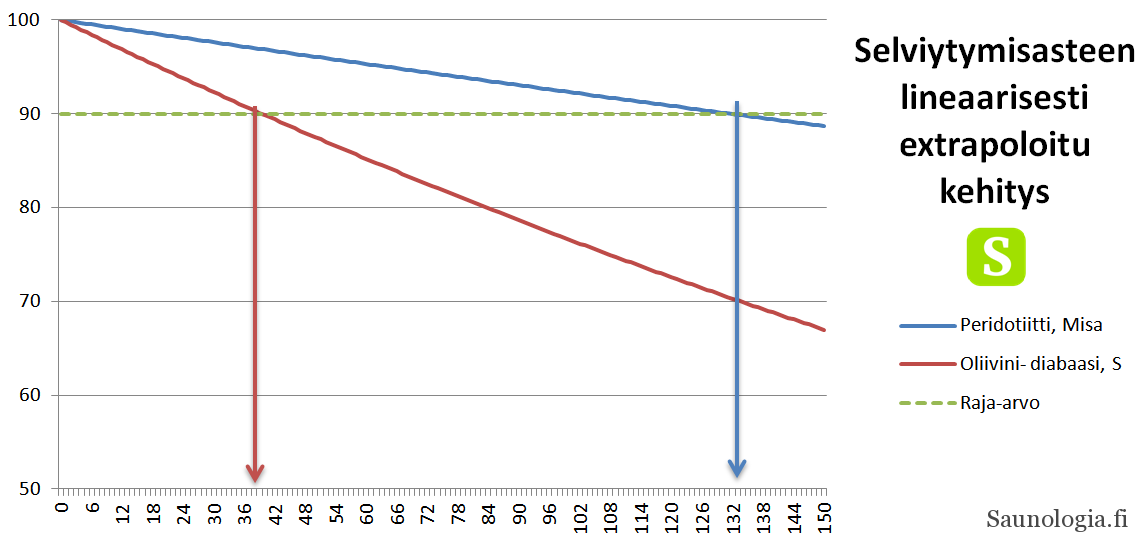
If the survival rate developed in the way shown in the graph (which in reality we do not know), then when using the popular olivine diabase as a sauna stone and bathing once a week, it would be good to check the condition of the stones once every six months. Once a year, the stones should be removed and all stones showing signs of aging replaced, or simply all stones replaced. With more durable stones, the replacement interval is longer, although inspections can be done every six months, perhaps three times, before replacing the stones every two years.
Qualitatitive differences in aging
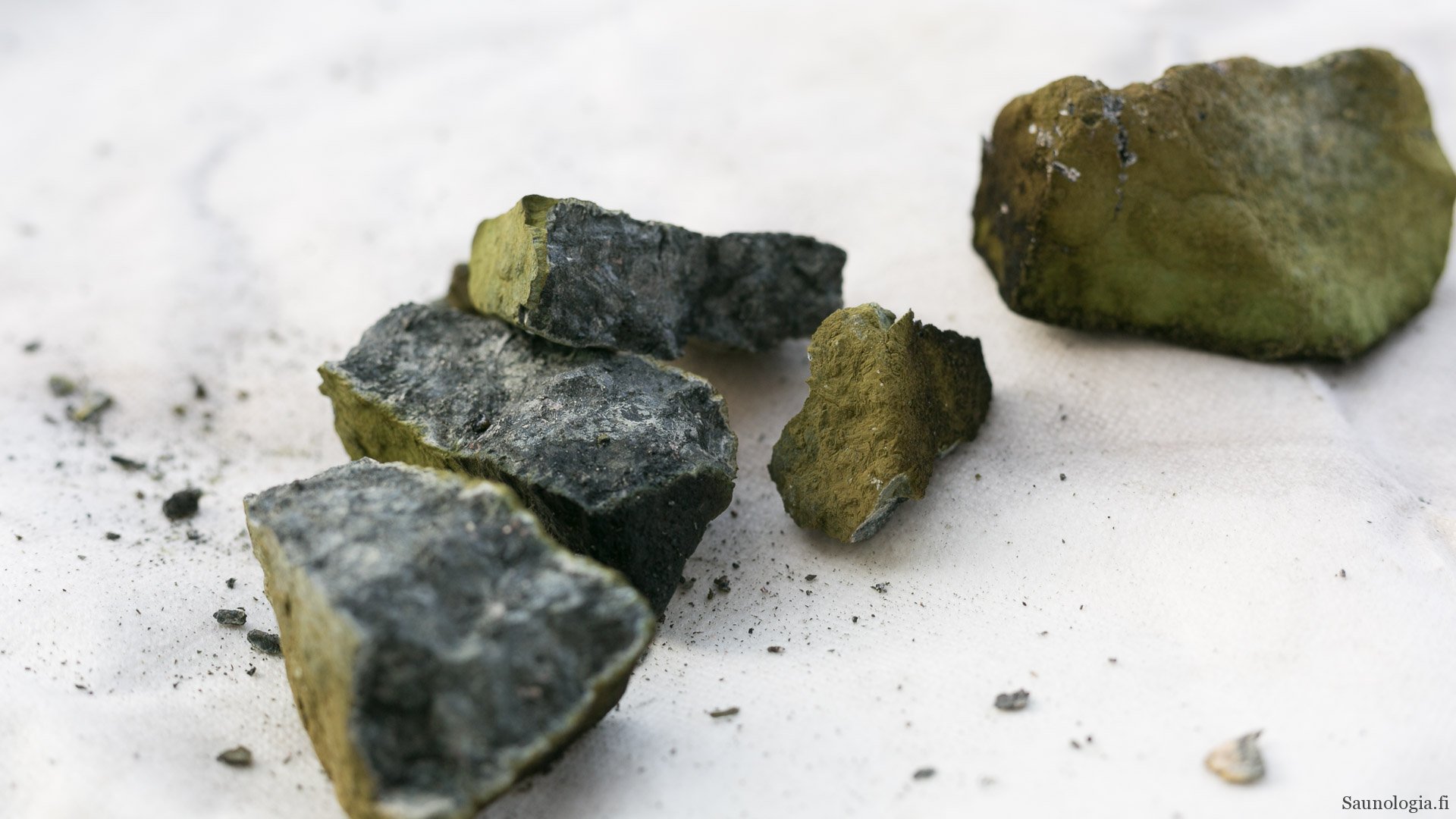
Another genuinely significant factor is how the stones age. The mineralization clearly visible in the images is a real cosmetic and practical drawback. However, it is also easy to detect if steam has been created in the traditional way from the surface stones. Stone aging also takes place in the lower, invisible layers. In this respect, it is highly relevant what happens to a stone when it begins to weaken.
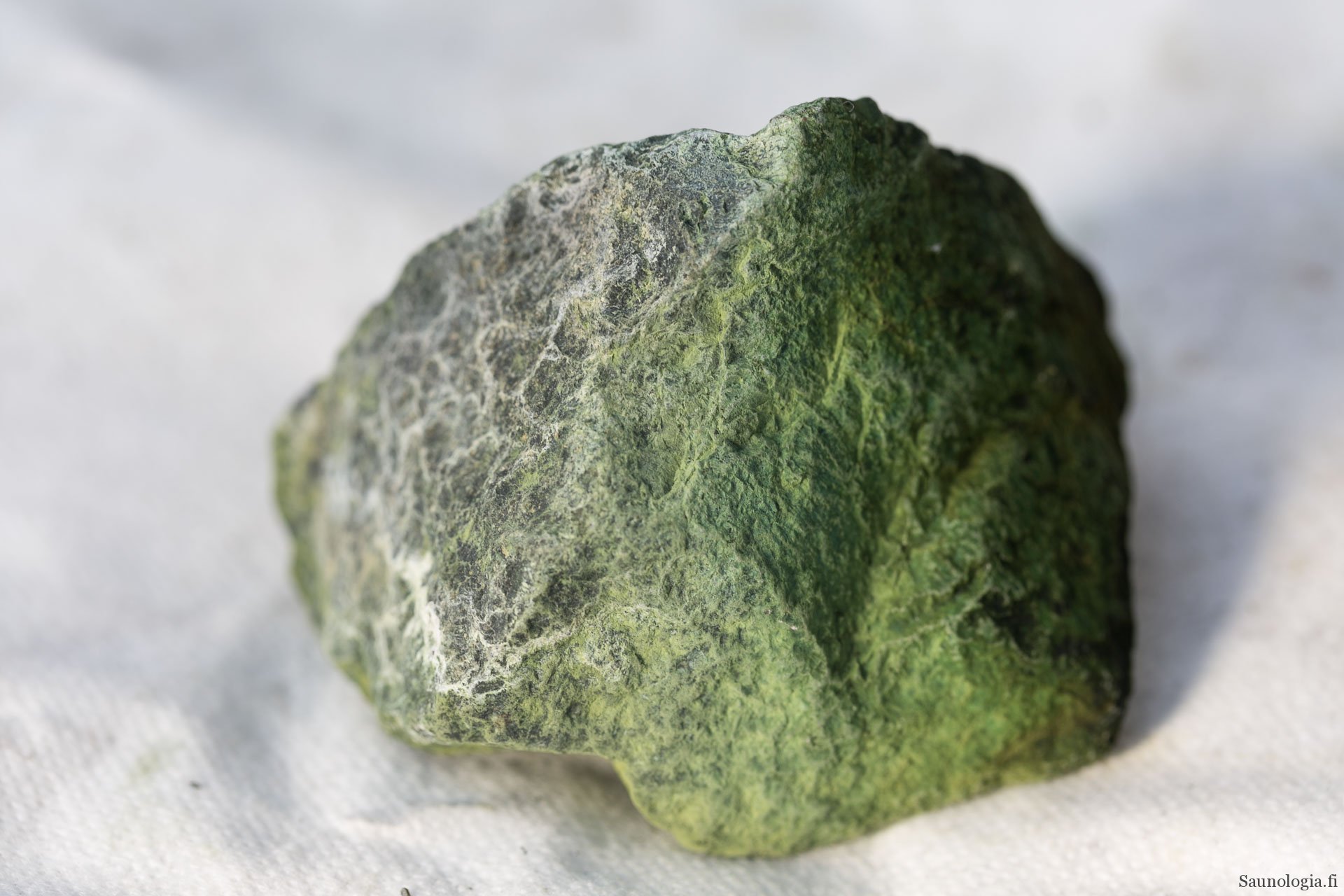
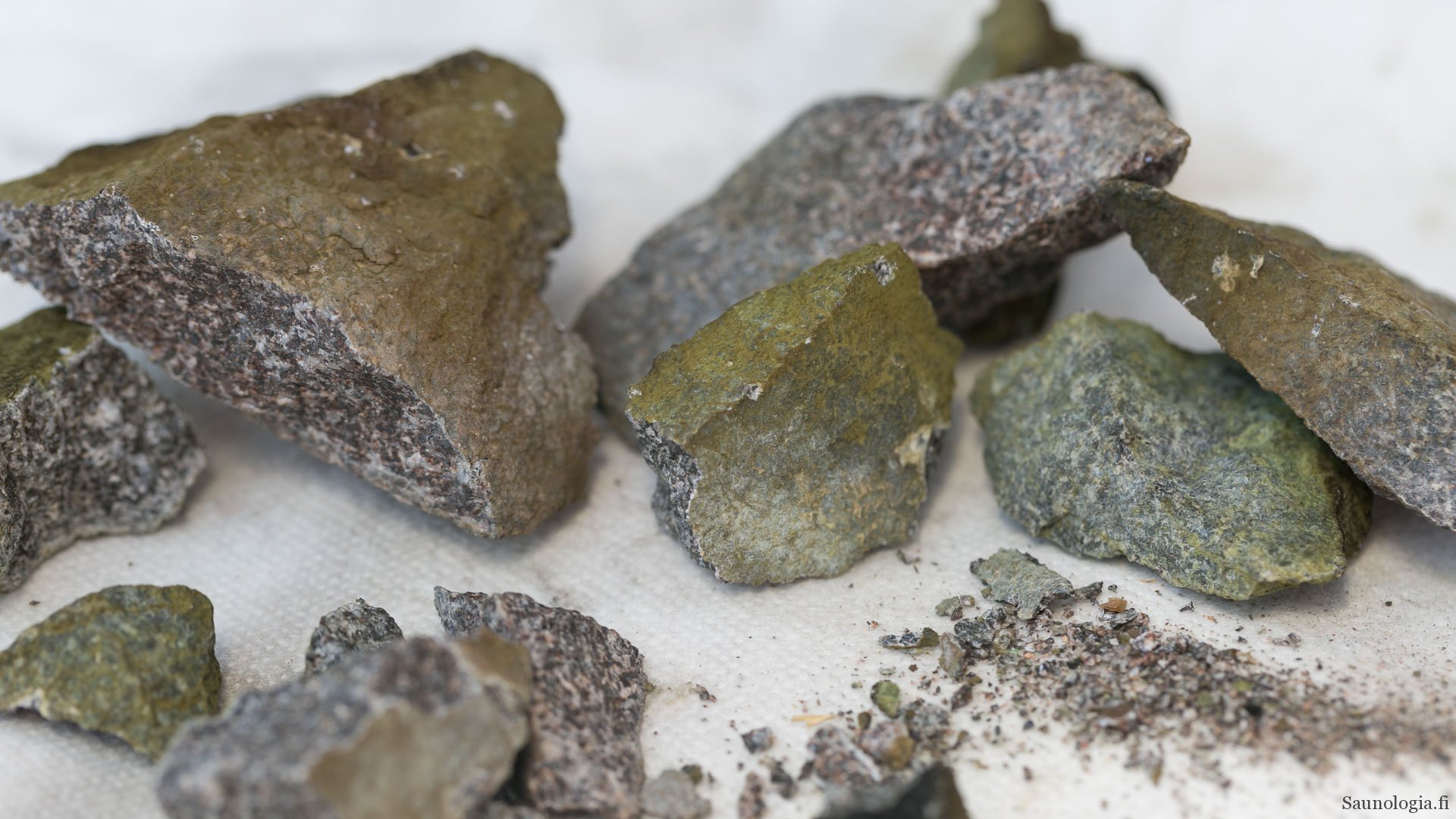
The most problematic stone types immediately break down into fine gravel. Of the tested stones, olivine diabase and vulcanite behaved this way. Considerably larger pieces split off from peridotite and olivine, and these do not ”clog” the heater in the same way. In the long run, however, they too continue cracking.
Which stone is the toughest?
Because of the limitations of this study, far-reaching conclusions should not be drawn about differences between stone types. First, larger stones last better than small ones. Especially as a surface stone, a medium-sized 10 to 15 cm stone could be a good idea for durability, also in electric heaters where they are not usually used.
The most popular stone on the market, olivine diabase, did not perform especially well in the test, but it also did not perform much worse than average. If the sauna operator is motivated and aware enough to maintain the heater, there is no reason based on this study to avoid this product. The stone is, however, unquestionably excellent in terms of price-to-quality ratio.
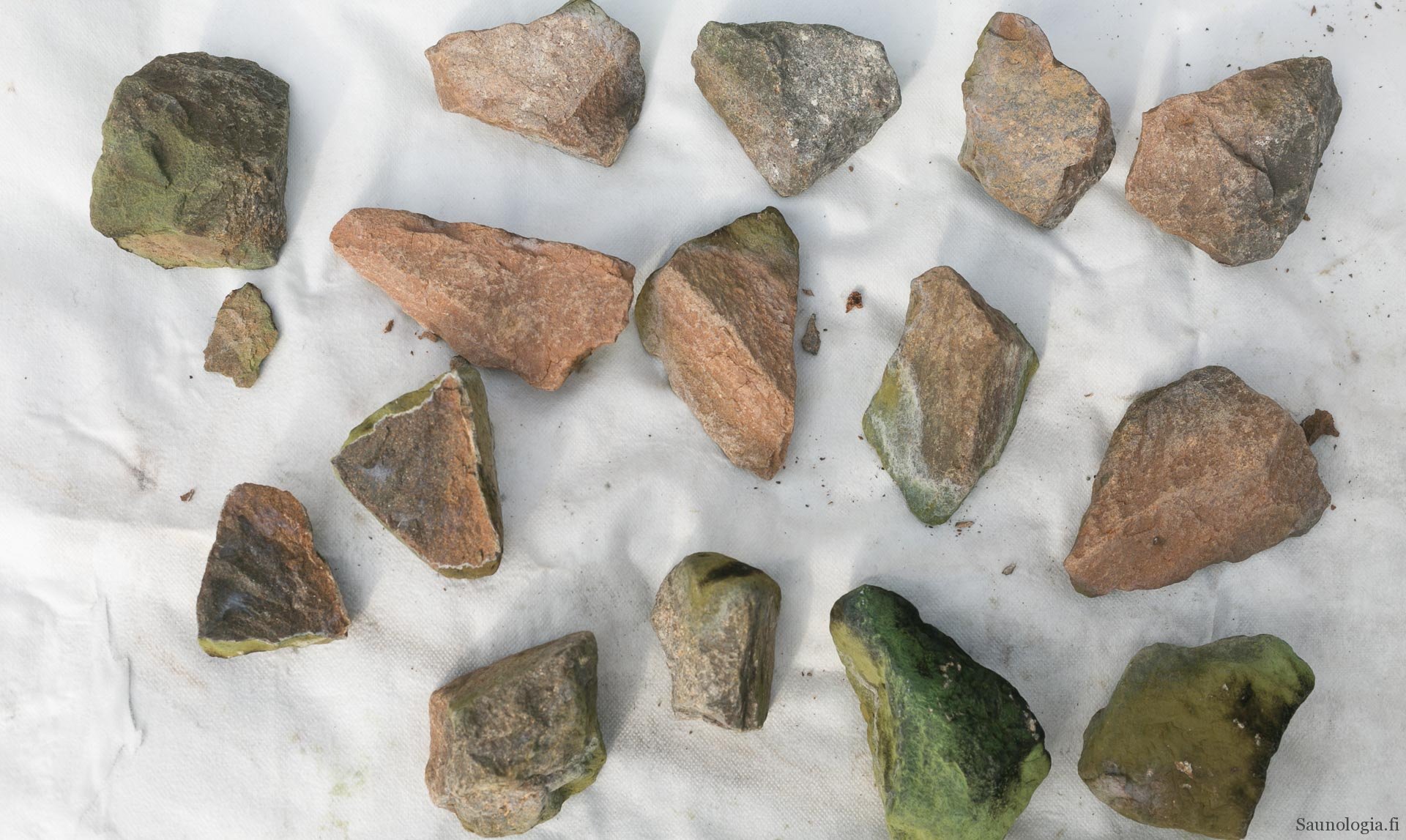
The best-surviving peridotite is a contradictory case. Based on the results, it is easy to understand why it was once the most popular sauna stone, until its availability became scarce. In addition to durability characteristics, the stone is heavy and conducts heat well, both good properties for steam. The downside of peridotite’s good durability is its relatively small and sharp-edged cracking products. Another practical disadvantage is that Misa’s peridotites are relatively dirty, and if they are stacked straight from the package into the heater like the olivine diabase produced by Sauna-Eurox, the water throws create a great deal of mess.
The comparison peridotites from Russia survived practically equally well, but cracked more cleanly and showed clearer reddening. However, these stones cannot be bought in Finland, and their asbestos risk has not been investigated.
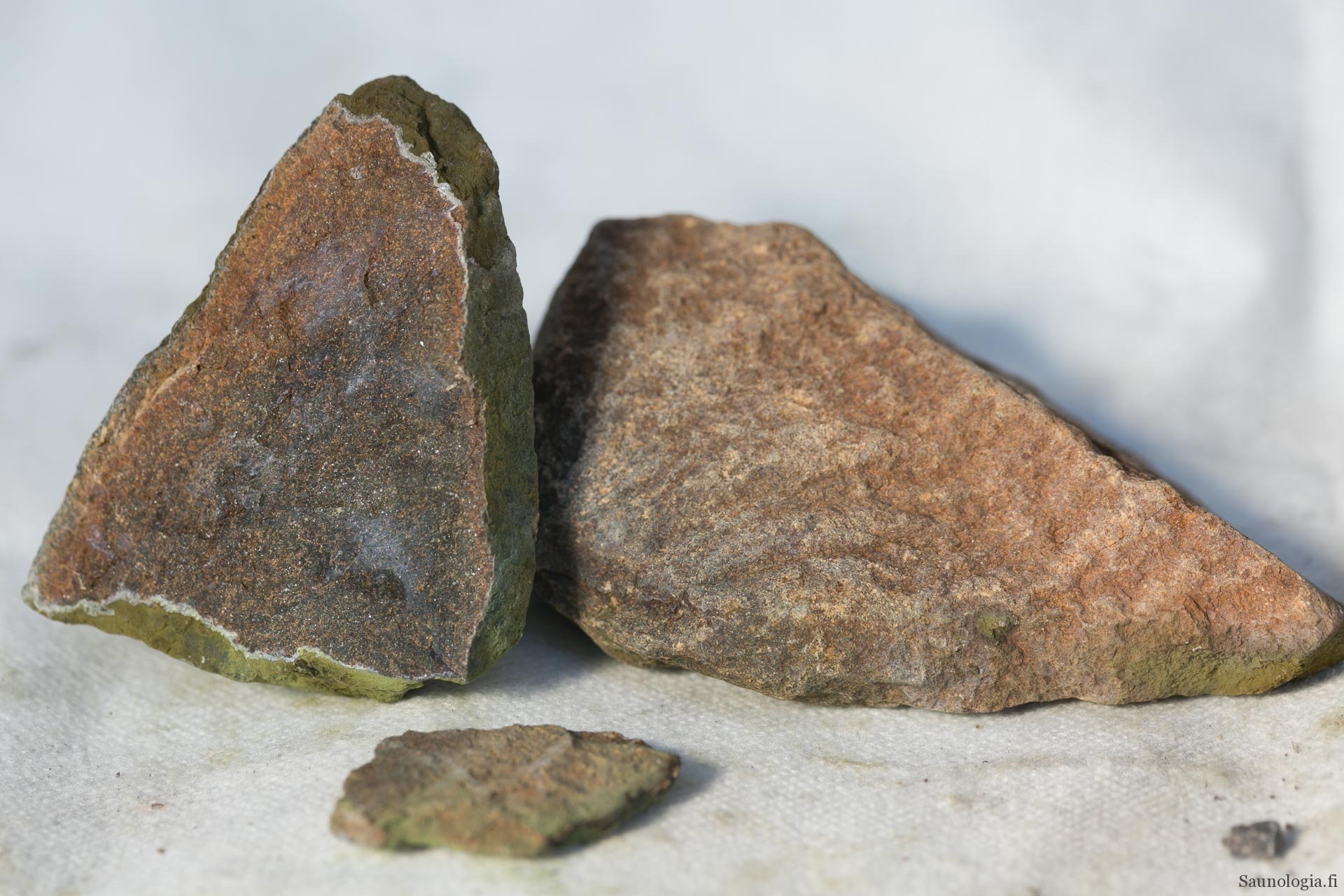
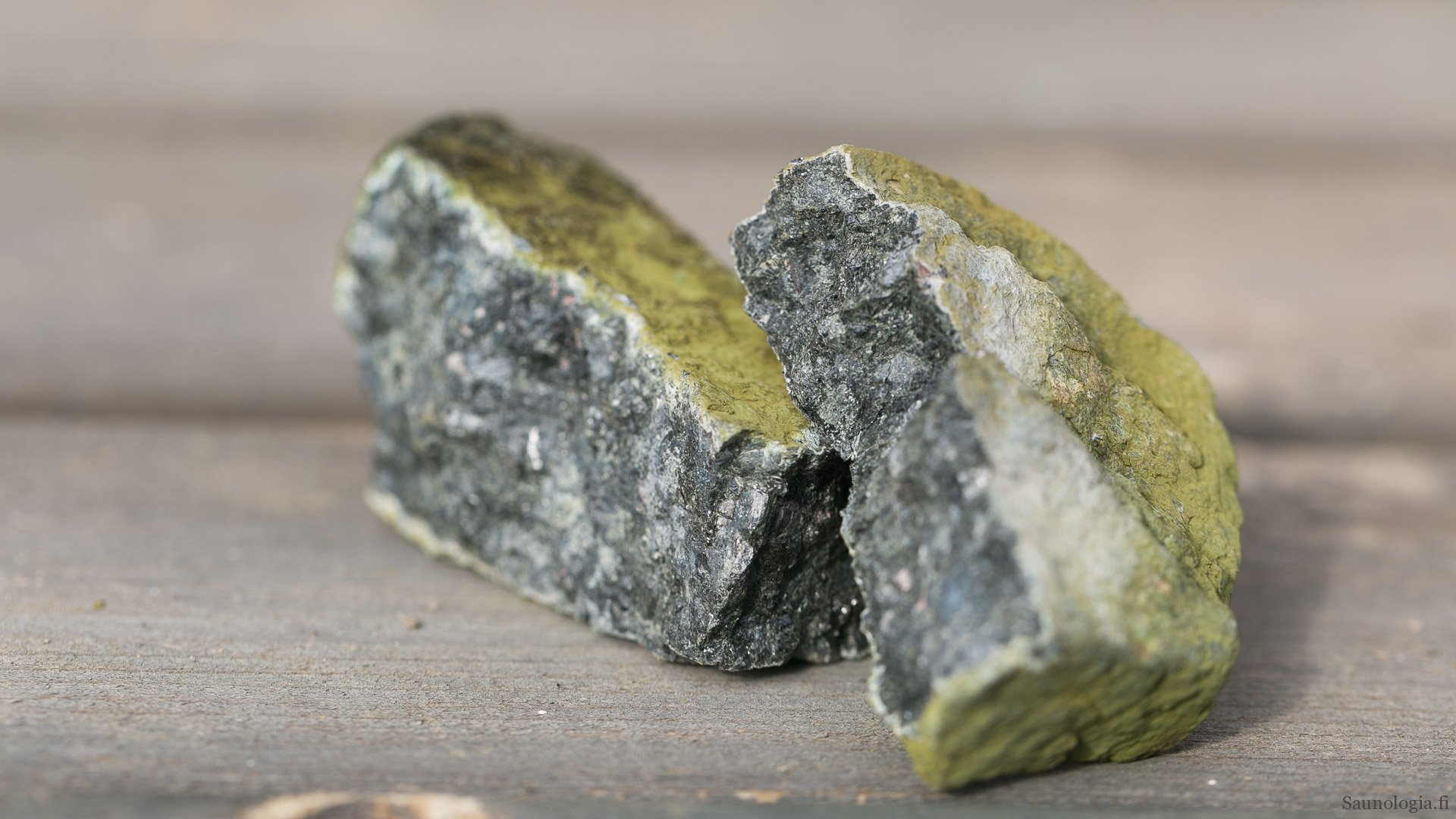
The difference between the two ”peridotites” is probably explained by the fact that, according to the reseller, the Russian stones are dunite, meaning olivine-rich, while the peridotites sold by Misa appear on the basis of their appearance to contain hornblende (hornblendite). Geologically, both do belong to the group of deep rocks called peridotites. From the perspective of sauna stones, the subtypes should be kept separate in the future.
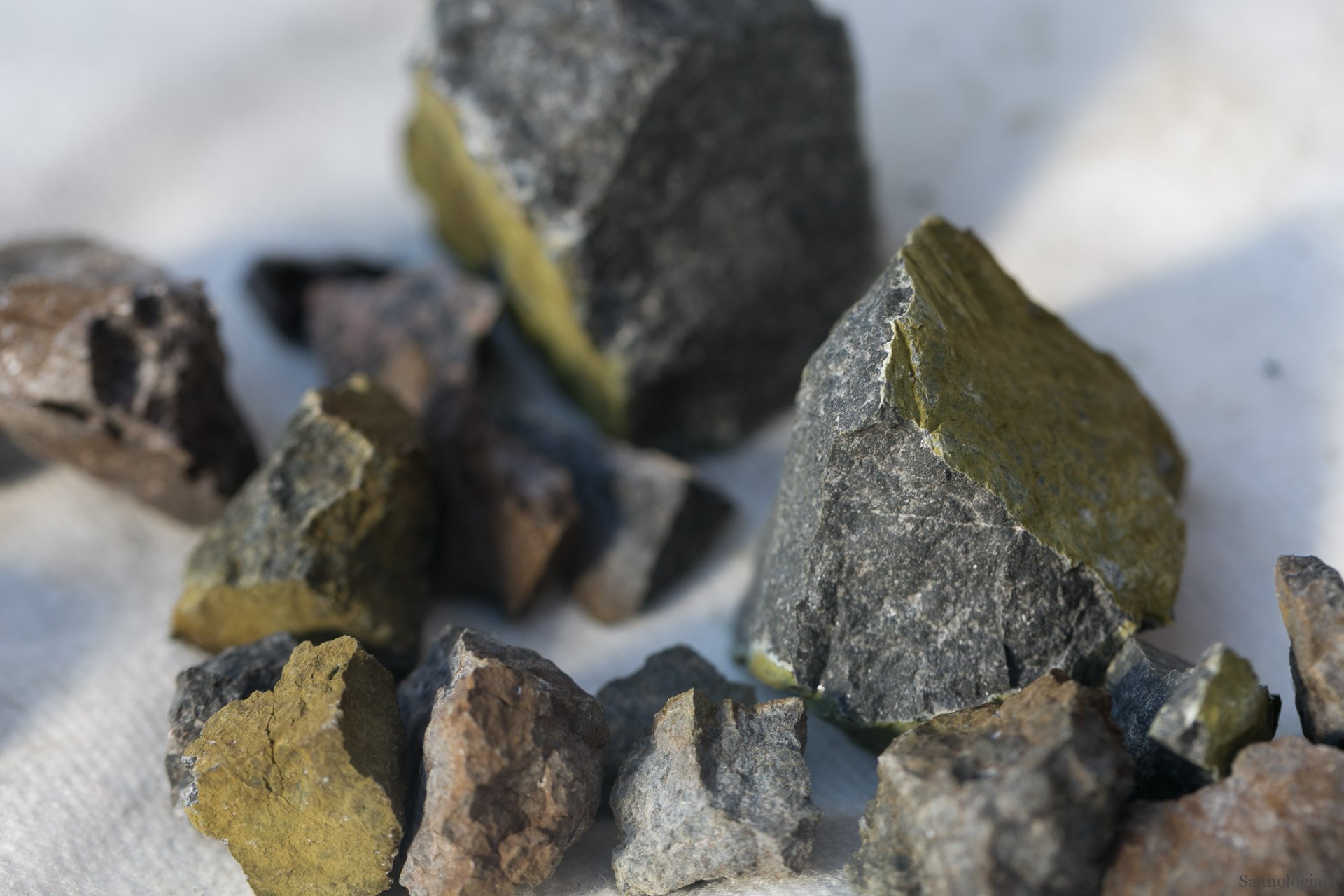
Vulcanite and olivine were the middle tier in the comparison. Olivine behaved overall in an exemplary way, but its samples were also the largest in every respect, which was probably to its advantage. With smaller samples, the results would be more comparable. Vulcanite has been my own favorite stone because of its dark appearance and better thermal conductivity than olivine diabase. It also lasted well, but unfortunately, in the end, it breaks down into small crushed particles like olivine diabase. So the product is not substantially better, but on the other hand it is not worse either.
Part 2: Ceramic stones
Ceramic sauna stones were not included in the phase of the durability study, only thin research evidence was available on the durability of these products. Earlier studies carried out by others had not managed to clarify the matter properly. So as a follow-up, in winter 2019-2020, using Saunologia’s sauna stone protocol, I tested whether ceramic sauna stones are more durable than natural stones, as claims and beliefs suggest.
In a test twice as long as the standard test protocol (nearly one third of a year), it was observed that ceramic stones do indeed last longer than natural stones, but not forever.
The properties of ceramic products are not uniform, and they age in different ways. Based on the results, ceramic products can be recommended to lazy sauna owners, at least in the hope of a longer replacement interval, with certain reservations.
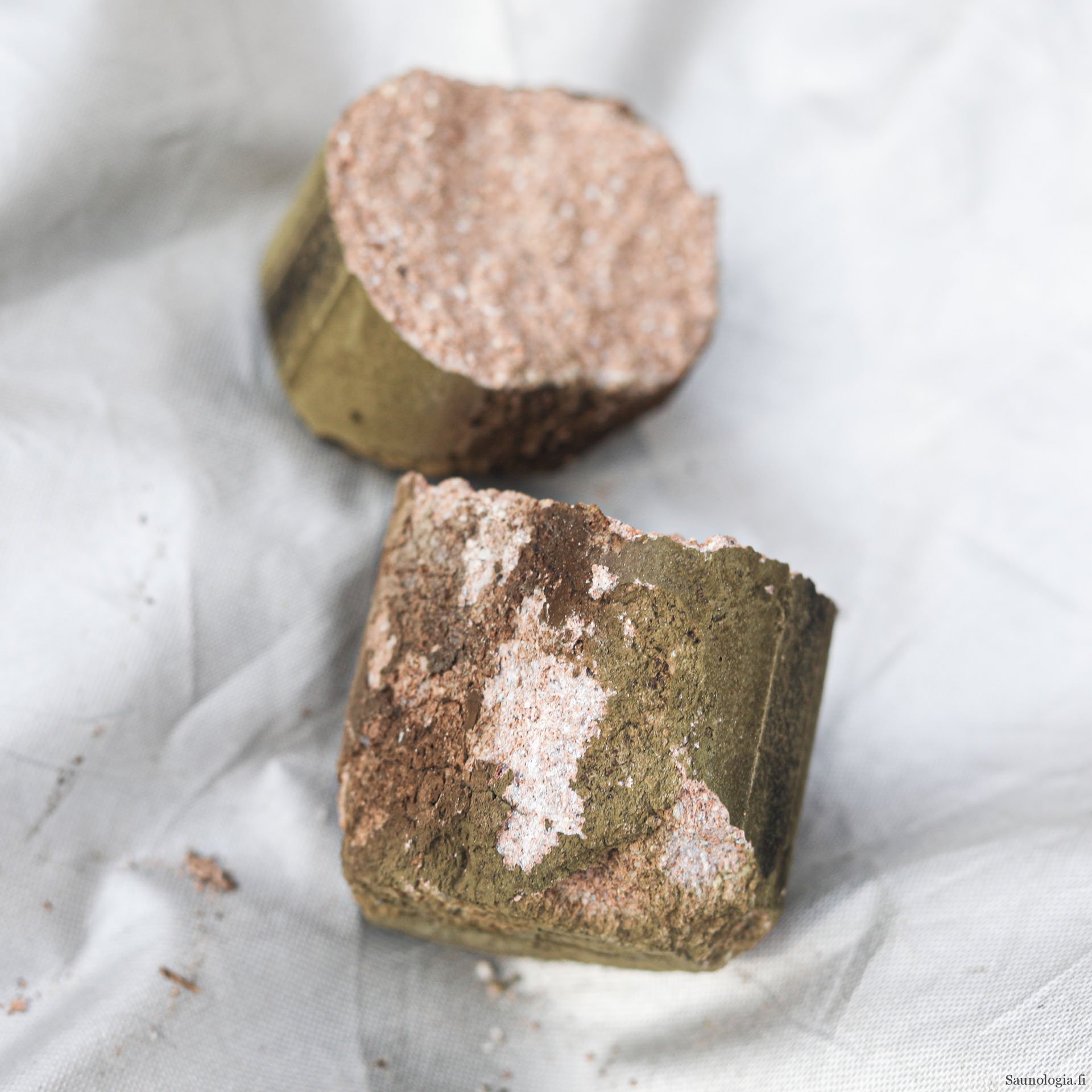
What was studied and how
The test included intermediate heater stones and small tetra stones made by Kerkes for electric heaters, as well as ceramic shaped pieces made by Tiileri, which are available in only one size.
The stones were stacked in the same test heater according to the instructions, and the test was started. In the test, the heater is heated for three hours at a time and 2 dl of water is dosed every 10 minutes. Unlike Protocol 1.0, the duration of the test was extended so that the properties of the stones would come out. The test ultimately lasted about 90 days comparable to the protocol’s 50 days, meaning 180%. For technical reasons, there was at one point a week-long period without water throws and a couple of weeks of water throwing around the clock.
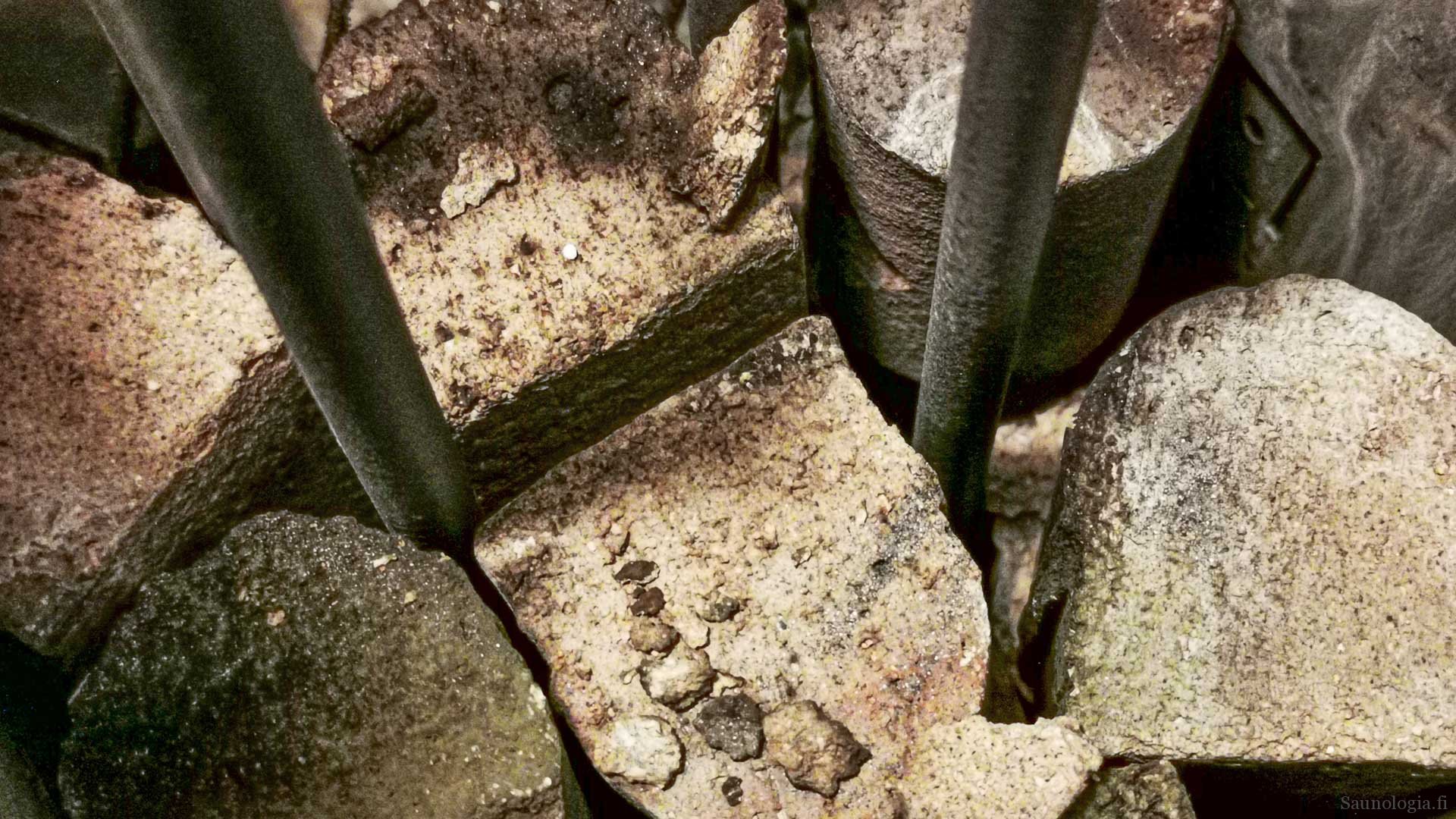
Endurance test of ceramic stones: Saunologia.fi
What was observed
The first thing to break in the test, soon after startup, was one Kerkes stone on the surface of the heater. This came as a slight surprise, although it was expected that the automatic water-throwing device might be a challenging companion for Kerkes. However, this automation did not leak, so this damage was attributed to random variation. After that, the aging of the Kerkes stones continued slowly. In the Tiileri section, no striking change occurred during the test. The pieces remained relatively intact-looking until the end, with only the amount of debris under the heater steadily increasing.
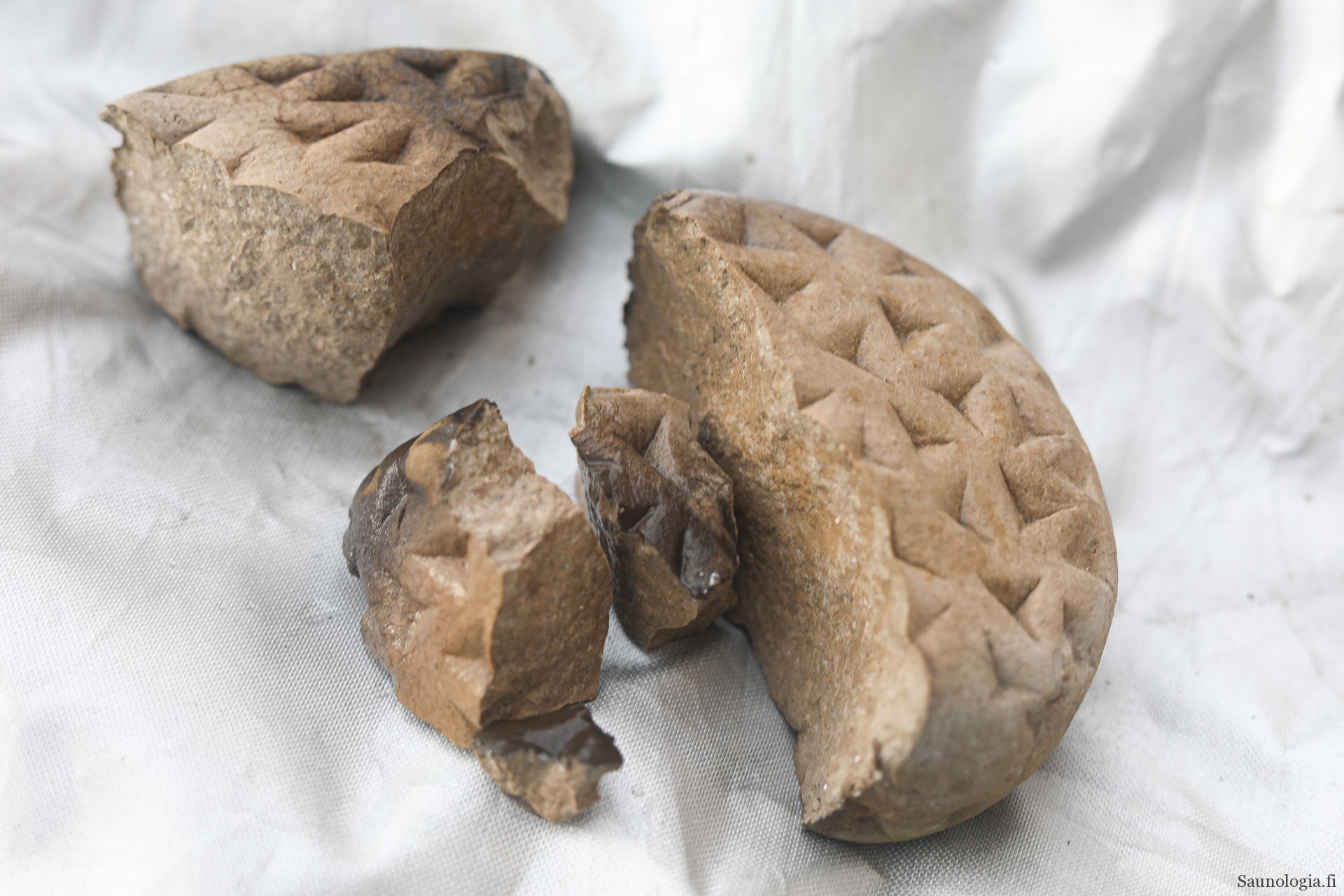
Endurance test of ceramic stones: Saunologia.fi
When the test period ended and the stones were dug out of the heater, it became clear that the differences between the products were considerable.
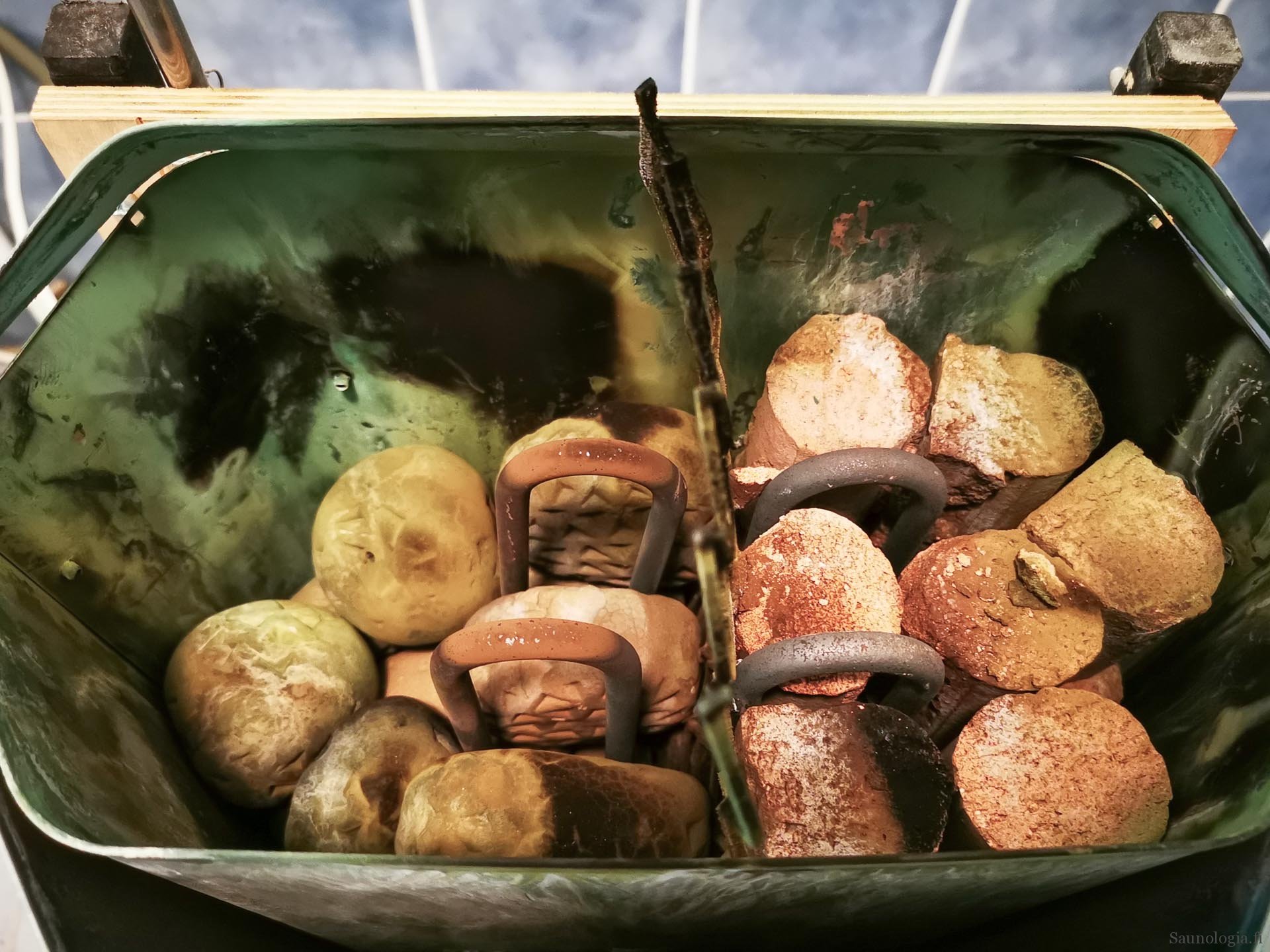
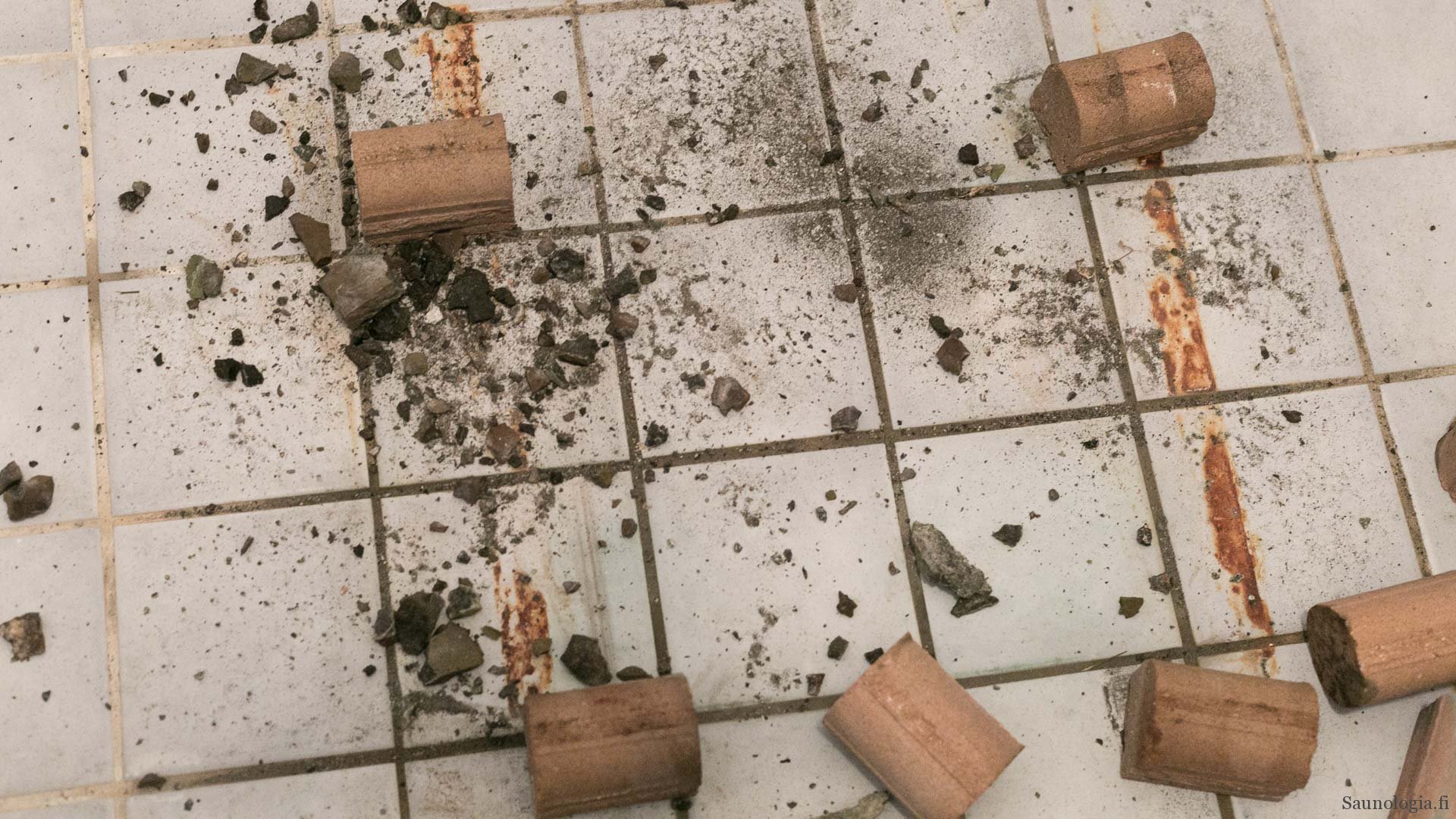
The largest difference concerned surface integrity: the Kerkes surface remained smooth and uniform in 18/21 pieces (86%), but 53% of the Tiileri pieces had begun to flake substantially. Another interesting observation was that only one piece of each tested product had cracked in the entire batch! If the cracking criterion used in previous studies is applied to this test batch, Tiileri turns out to be the more durable of the products, due to the large number of pieces. The following image compares the result with natural stones:

- Kerkes: 20/21 survived, two of these with minor flaking, one cracked
- Tiileri: 15/34 survived, 18 with weathering, cracking, flaking, one cracked
If strict survival criteria are applied to the review of the results, Tiileri’s results remain at the same level as olivine diabase.
It must be stated, however, that Tiileri was by no means damaged in this time as badly as olivine diabase. Neither interpretation gives the correct picture of Tiileri’s behavior, because it breaks down in a different way from any other product. Tiileri breaks down like natural stone, or brick, into small crumbs and creates an impressive mess on the floor.
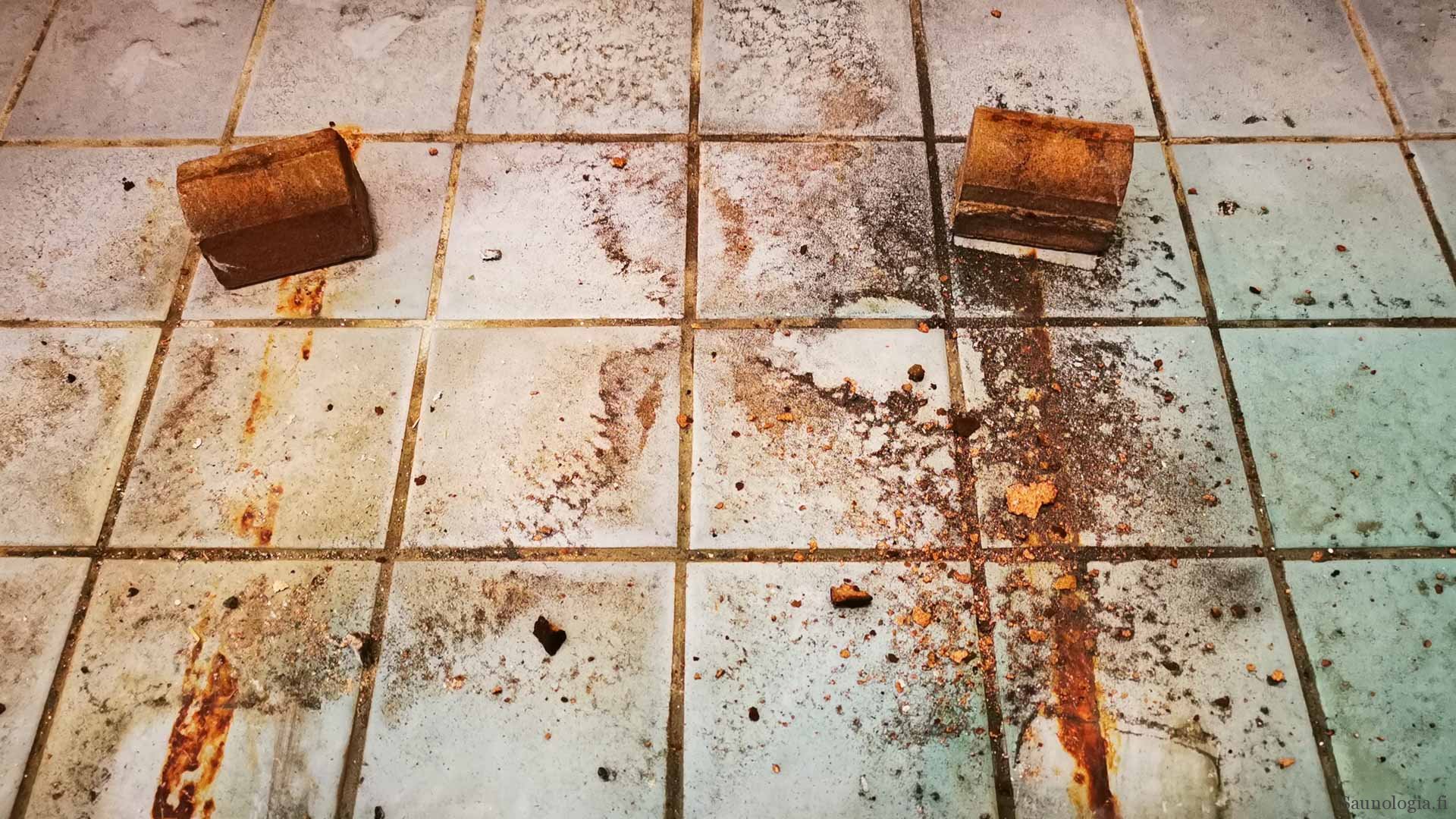
Endurance test of ceramic stones: Saunologia.fi
When developing the original research setup, I abandoned weighing the stones before and after, but in this case the scale would probably have told a more realistic story of Tiileri’s aging, because its flaking is substantial. The Tiileri pieces were clearly due for replacement before the end of the research period, whereas the Kerkes stones generally were not.
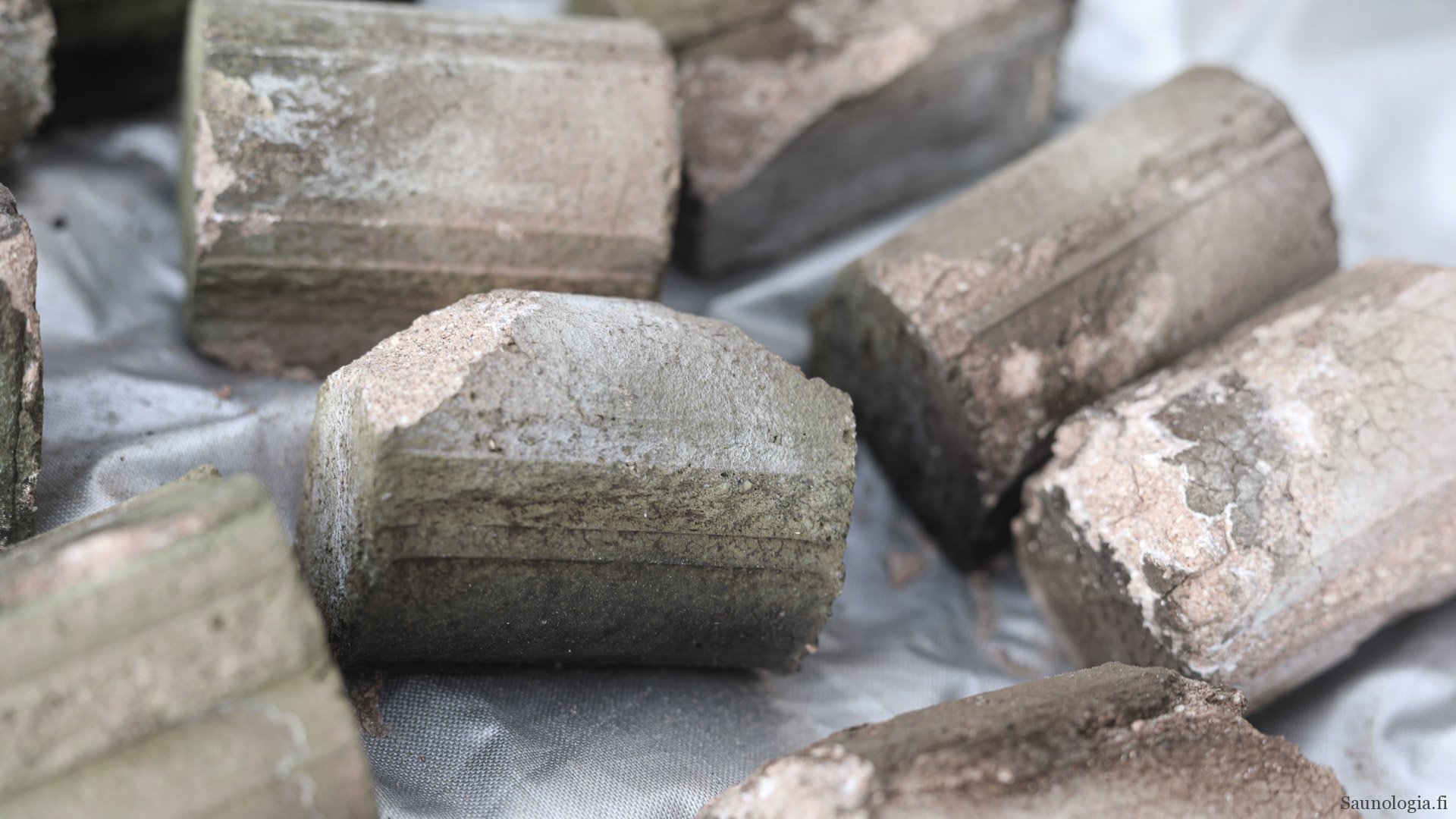
On the other hand, if one takes into account that Tiileri survived relatively well in the lower stone layers of the electric heater and that only one stone cracked, Tiileri’s durability in relation to natural stones is superior. Its aging is simply different in nature.
Compare the results with the images from the natural stone test below:
Long-term survival differences
We can evaluate the differences between varieties on estimated long-term survival rates. I chose an exponential model to compare five varieties in the graph below, with the 80% threshold shown. Here, the difference between the best natural stones and the worst ceramic pieces is clear and well visible, showing almost a fourfold increase in lifetime expectancy. The exponential model is more realistic in terms of using the only known data point (survival at day X) and using that to extrapolate the daily rate of change instead of constant level of absolute change.

Conclusions: ceramic stones are superior in the long run
If the results of this test are compared with the previously published natural stone test results, it can credibly be argued that ceramic stones can extend the heater maintenance interval without problems and avoid some of the problems associated with natural stones. It can also be stated that the clear bans by certain manufacturers concerning ceramic sauna stones are not justified. I did not deliberately try to break the heater by stacking the stones incorrectly, and the heater itself survived the use of ceramic pieces well despite everything (but do read all the way to the end of this article).
Ceramic stones are therefore a fairly durable choice, but there is no need to fill the entire heater with them if you want to enjoy the appearance and different steam characteristics of natural stones.
Kerkes’s place of honor
Kerkes performed extremely well in the test, fulfilling the promises that earlier investigations had attached to it. I consider this test its first realistic endurance test under controlled conditions. The breakage of one Kerkes stone is still forgivable given its otherwise clean performance, because replacing this surface stone would have been easy and would probably have happened in home use within the scope of the five-year warranty. So you do get good value for your money.
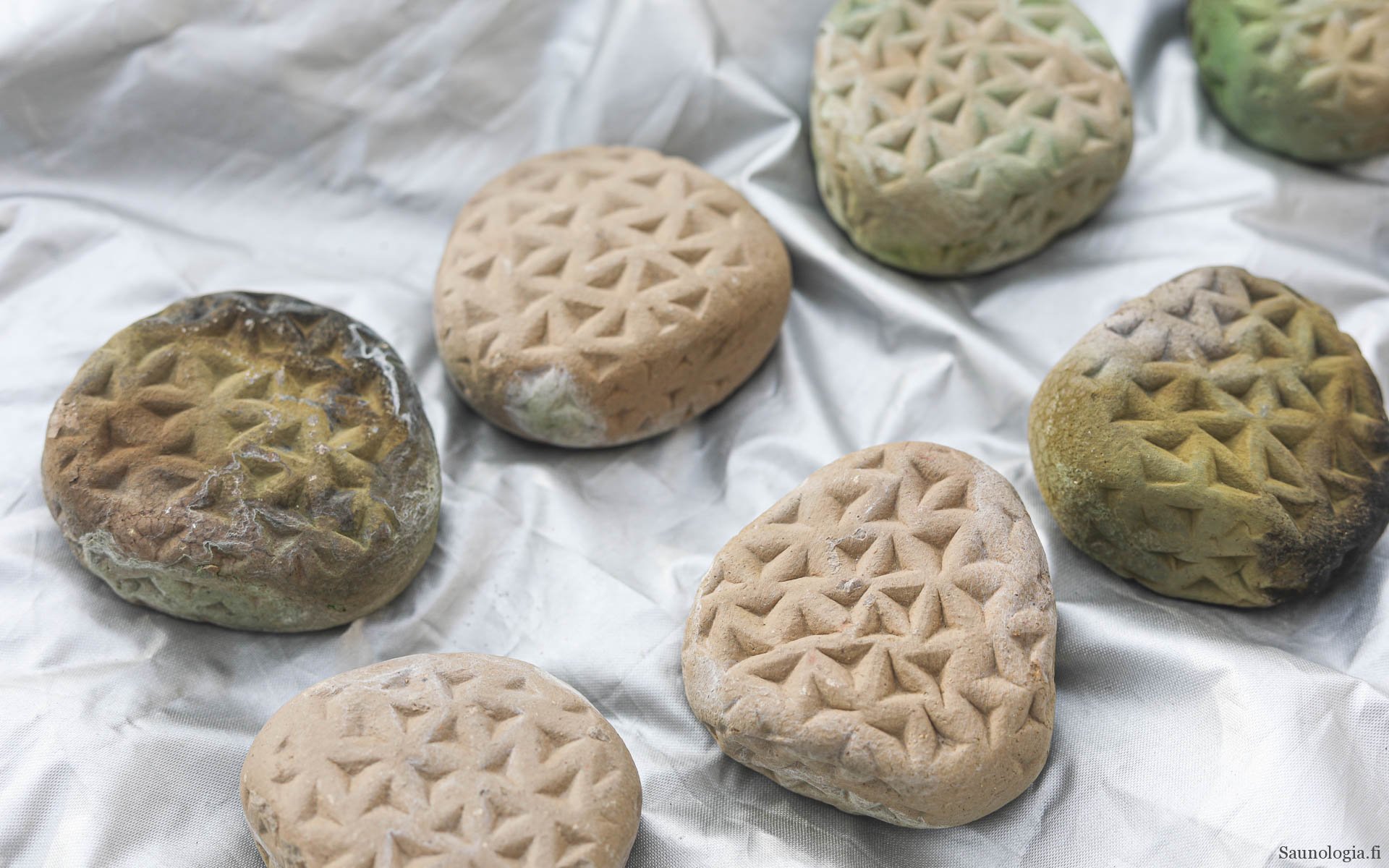
On the other hand, the photographs from this test remind us that water quality can affect the usability of stones before they crack or crumble. In this case, the minerals in the water and piping stained even the Kerkes stones thoroughly messy, so that one third of them (the surface stones) would at least have had to be rotated to the bottom of the heater, even though there was nothing wrong with them other than an aesthetic defect.
Tiileri, a strong runner-up
I have not previously praised Tiileri very much. During the sauna stone laboratory work, I have used Tiileri stones as fill in the lower layers of the heater and, to my surprise, observed that they last quite well there. The test now carried out confirmed this view. Tiileri’s durability weakened in the upper layers, but compared with previously tested natural stones, it still survived excellently. The result, however, was not very pretty.
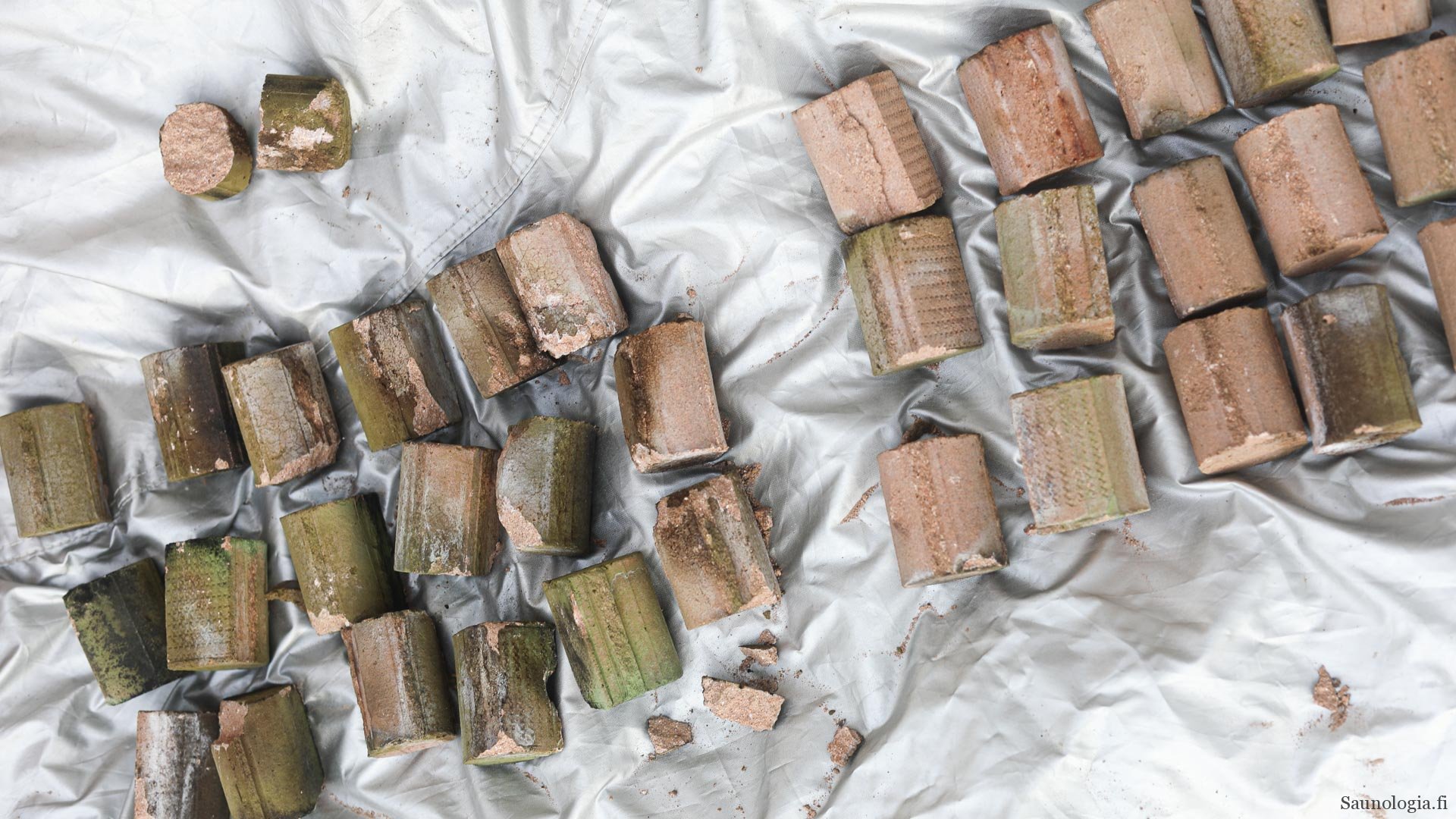
The good side of the Tiileri pieces not cracking is that the stone stacking can hardly shift at all, and no wedging phenomenon occurs in the heater that would stress the structures or heating elements of an enclosed heater. So if Tiileri pieces are placed carefully in an electric heater, taking care not to wedge them against the heating elements from the start, you can probably sauna with them worry-free for years. A clever user, however, chooses some other stone for the surface layers, such as ordinary olivine diabase, which can be changed whenever it visually begins to age or calcify.
Bonus: electric heater endurance test
During this severe test, it became clear how long high-quality electric heater heating elements last under heavy use. In this case, more than 3,000 hours! In home use, heating elements are therefore in practice almost eternal, if one has the patience to take care of the condition of the sauna stones (see instructions).
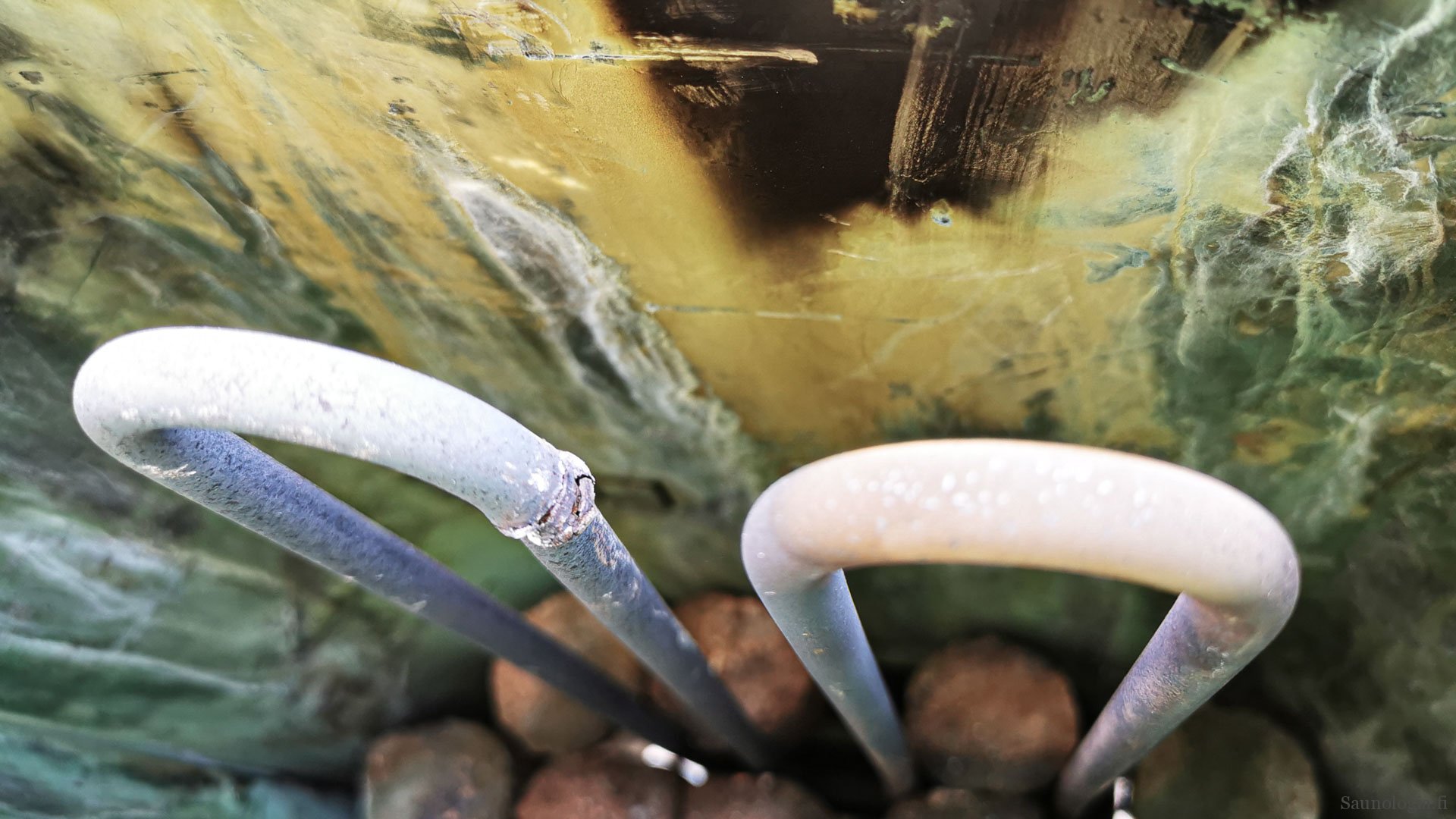
Ironically, however, during this ceramic stone test, one heating element suffered surface damage, and after the test I replaced both elements. The reason was only indirectly related to the stones, because the steel mesh separating the stone compartments in the test heater eventually came into contact with the heating element between stones that stacked very differently, damaging its sheath. The same wedging occurs with all irregular or round stones, so ceramic stones cannot be blamed for this.
Thanks to Kerkes for donating the test pieces and to Narvi for the new heating elements!