


Saunologia Sauna Stone Test Protocol 1.0
Since late 2018, a sauna heater has been clocking thousands of hours in Saunologia’s sauna stone laboratory. The purpose has been to develop a method to assess how durable different sauna stones are under real-world conditions and to determine the practical differences among stones. In this post, I introduce the research method, Saunologia’s sauna stone test protocol 1.0, standard and extended. The results are described briefly, with a longer story to follow.
This article is a translated piece that combines posts published at Saunologia.fi in Finnish in 2019 and 2020.
In brief, in the standard version of protocol, stones are subjected to 150 heating cycles, 450 heating hours, and 2,100 throws of water. For a maximum of 40 samples in a 3 kW heater, a directed water spray dose of 15 centiliters was eventually adopted. The primary measured variable is the survival rate, but visual inspection is also used to evaluate aging. In the extended protocol, the experiment running time is extended 100% to avoid ceiling effects on more durable samples.
The sauna heater and the stones are constant subjects of speculation in sauna discussions. In Finland, heaters were tested a few times during the 2010-2020 decade, but sauna stones have been almost completely forgotten. This part of Saunologia’s presents my attempt to do something about it!
What to look into?
Based on previous knowledge, sauna stones have several properties that affect sauna use. These properties include thermal conductivity, heat capacity, appearance, shape, and durability.
Durability is the most difficult of these properties to assess. It is known that sauna stones usually age substantially faster than heaters and, as a result, begin to break down. The stone stacking changes, stone debris appears in the sauna room, heating slows down, energy consumption increases, and the heater may be damaged. For this reason, stone durability should be understood better. Salespeople talk about surface stones or decorative stones when they mean stones whose durability is weaker than usual. However, there is no standard, or even any quantitative measure, for stone durability.
Additional understanding of stone durability would be useful in many ways. First, even stone manufacturers cannot say very precisely how long the stones last, or how often they should be replaced. Second, comparative data on possible differences between stone alternatives could, for example, justify spending more or less money on stones in different price ranges.
Previous research methods
Sauna enthusiasts have different opinions about the durability of different stone types, but seriously speaking, the matter has never really been investigated. One reason is that no credible research method has ever existed. There are very few existing solutions for studying the durability of sauna stones.
The most recent, and to my understanding the only, study specifically concerning sauna stones was carried out by TM Rakennusmaailma in 2005 (see the longer article about the study results). In that study, durability was tested with a fragmentation or fragment-number test copied from the DIN 51068/1 thermal shock test standard for ceramics, which was introduced in Saunologia’s thermal shock test.
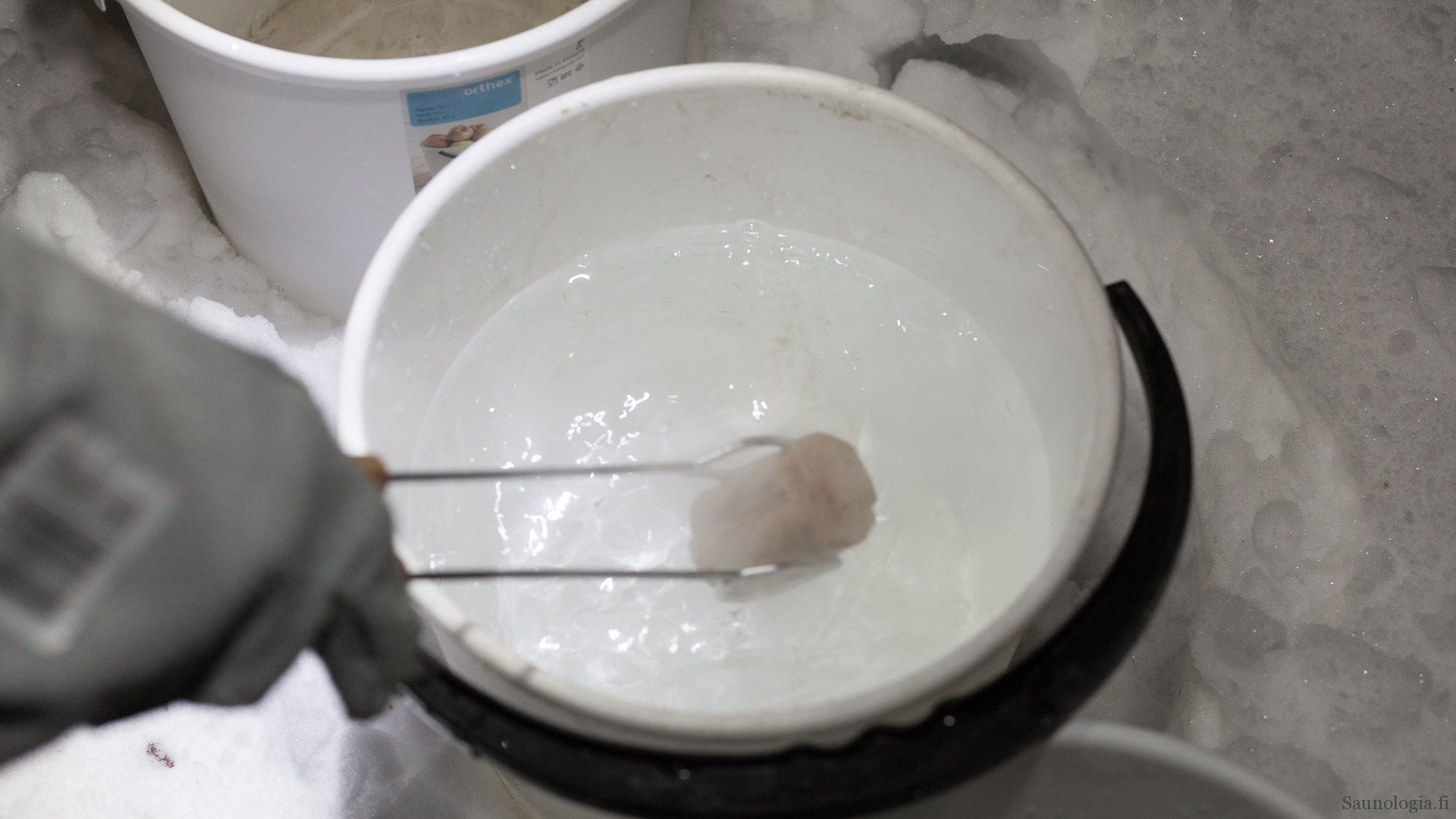
In the Rakennusmaailma test, stone samples were heated 20 times in a 450-degree ceramic kiln for 15 minutes, then cooled for 3 minutes in ice-cold water, and after that dried for half an hour at 110 degrees. The primary metric was the average number of heating cycles after which six test pieces remained intact. The article also mentions weighing mass loss and visual inspection of fragmentation, but these results were not reported. The resulting fragment numbers varied by stone model between 5 and 20. The arrangement corresponds to some extent to the heating of stones in a continuously heated heater, but it involves various problems.
Shock hits the ceiling
The results were somewhat contradictory, because similar stone types produced different results. The results also suffered from a ”ceiling effect” in the metric, meaning that the measurement could not distinguish between products on the measurement scale used. A third practical problem is the labor intensity of the method. Each cycle lasted at least about 50 minutes, so 20 repetitions meant about 16 hours of work, more than two normal working days. This still has to be multiplied by ten if different samples are not processed in parallel. If this research is handled by a human laboratory technician, the price tag becomes high.
Finally, the representativeness of this experiment adapted from the DIN standard is questionable. In the standard, ceramics are heated to 950 degrees, and the process is repeated up to 30 times or until the piece cracks. The temperatures in Rakennusmaailma’s test were lower, and the number of repetitions was 20. The study also did not report what temperature the stones had reached before cooling, because 15 minutes in a conventional oven is not necessarily enough to heat a stone throughout, even though the starting temperature was 110 degreesC (a temperature rise of 340 degrees would require a hard pace of 22 degrees per minute; the DIN test uses the same procedure but a sample size of 50×50 mm).
Introducing the new method from Saunologia stone lab
The central goal of the new method is ecological validity. This means that the observations produced by the method should correspond as closely as possible to the aging of sauna stones in real use. This requires choosing which heater type to simulate, because the load imposed on stones by heat-storage and continuously heated heaters differs significantly. Although heat-storage heaters are close to the hearts of sauna lovers, they are marginal products, which is why this method was directed toward simulating the use of continuously heated heaters. More precisely, it simulates an electric heater, although the results should be broadly similar to those of wood-burning heaters.
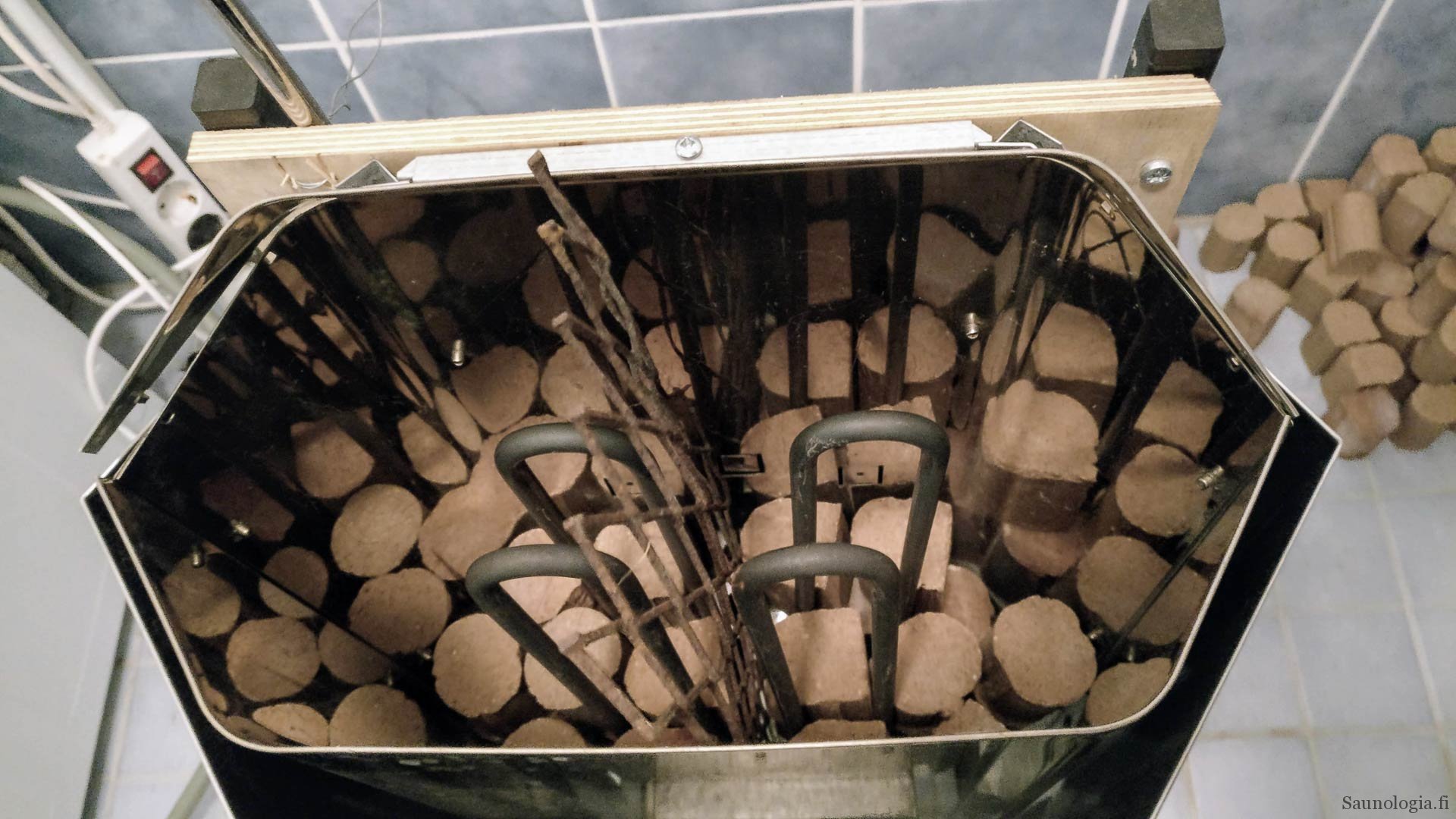
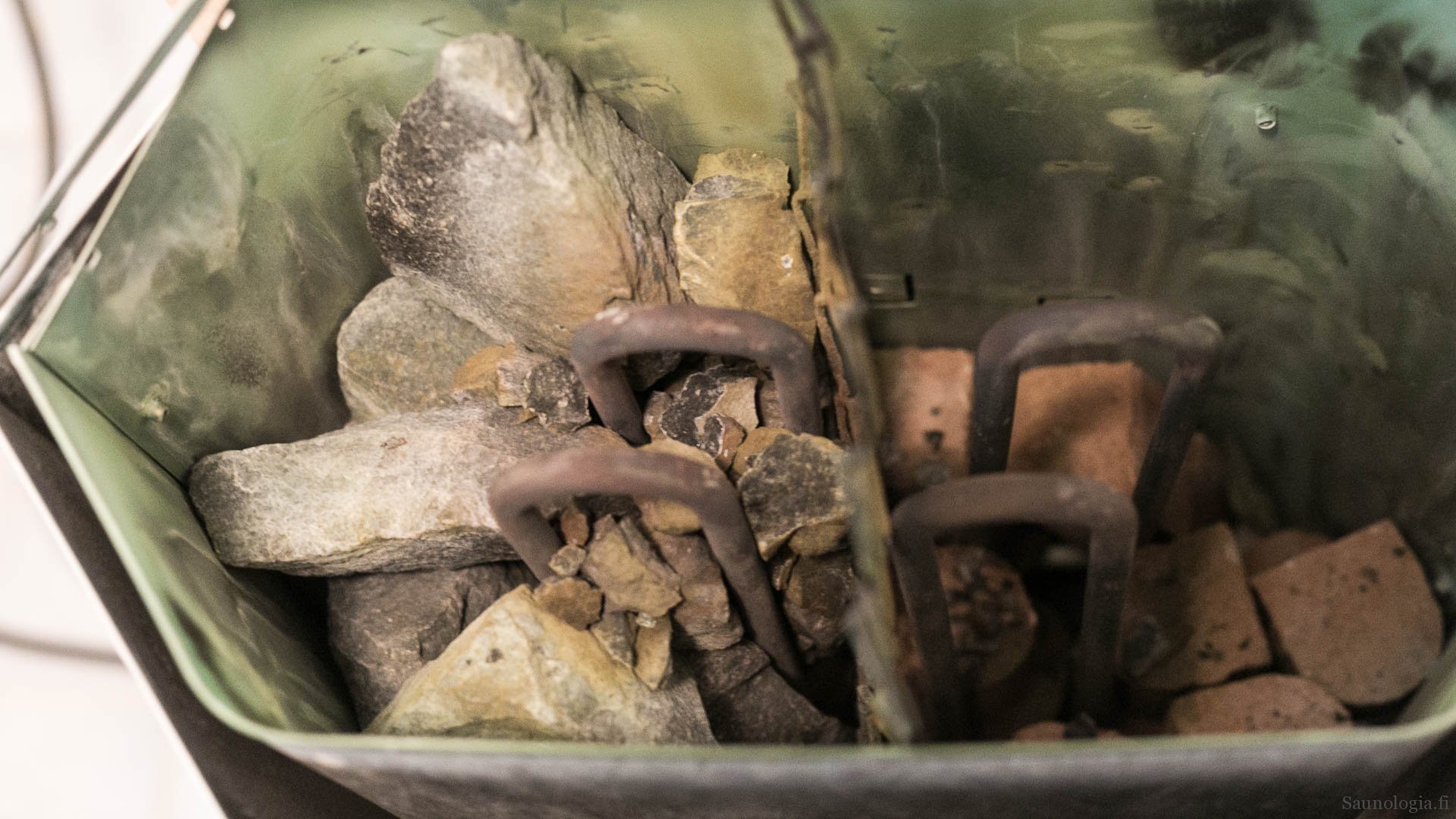
Saunologia’s sauna stone protocol 1.0. Fresh Tiileri ceramic sauna stones are used to fill the lower layers.
The use case to be simulated must be specified. Private use and shared use have a substantial impact on heater use. In a private sauna, the sauna is heated as needed, used for at most two or three hours, and then allowed to cool. In shared-use saunas, the best examples are hot almost around the clock, much of the time standing idle. Because Saunologia is generally on the side of consumers, and private saunas are numerically the largest sauna cluster in Finland, this method takes its model from there.
Once these boundaries have been decided, clear requirements can be set for the method:
- The stones are heated to a typical temperature
- A controlled amount of water is regularly applied to the stones
- The stones are allowed to cool briefly between ”throws of water”
- The entire heater is allowed to cool completely between use periods
Detailed test setup
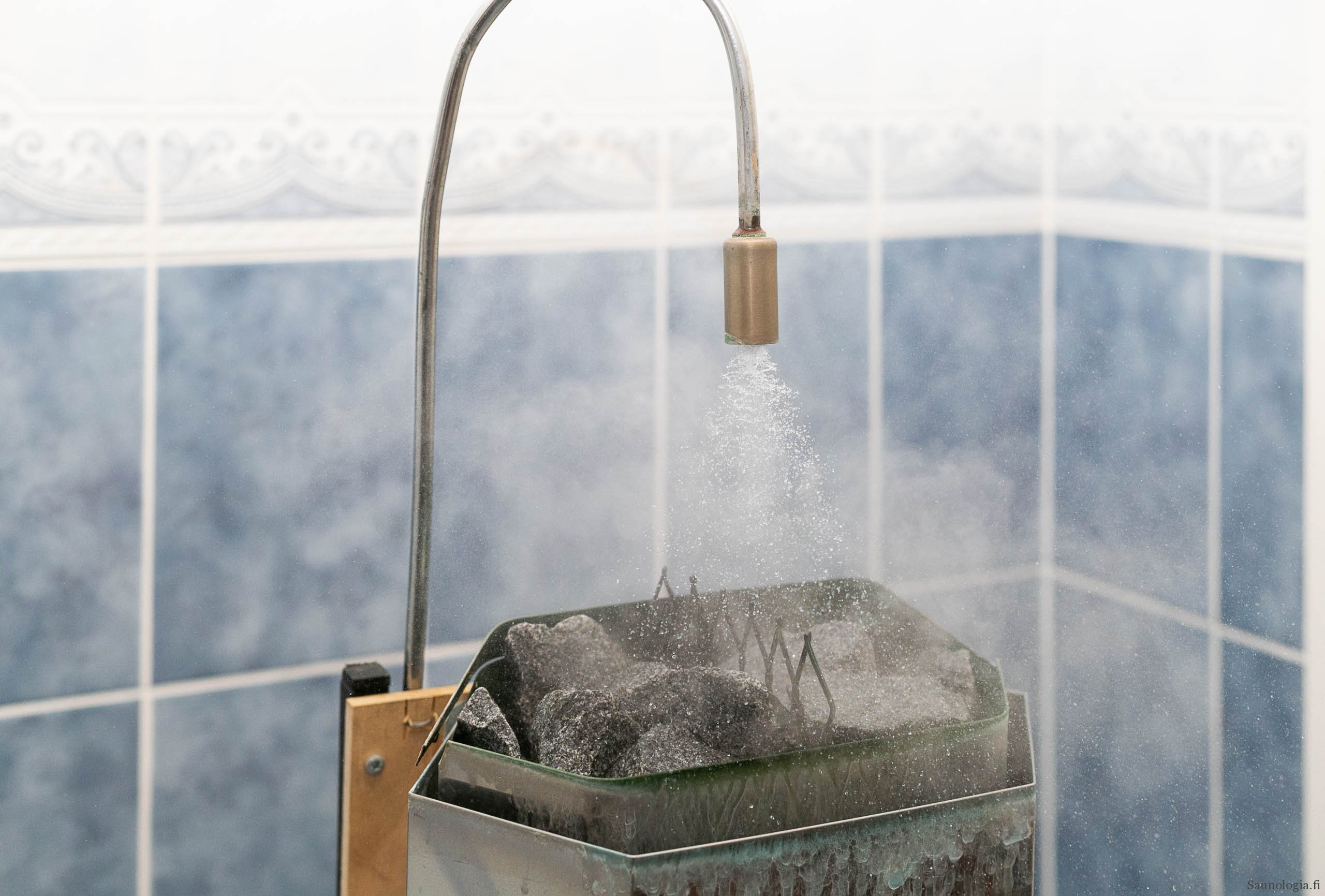
The result is an arrangement that simulates normal home use, in which the thermal stress on the stones is controlled and realistic. In this proposal, the stones are heated in a traditional electric heater, and water is dosed with an automatic water-spray dispensing device. ”Water is thrown” every ten minutes, starting 30 minutes after the heater is switched on. The water dose is two deciliters (2 dl), and it is sprayed over the stones in a couple of seconds from about 20 cm above them.
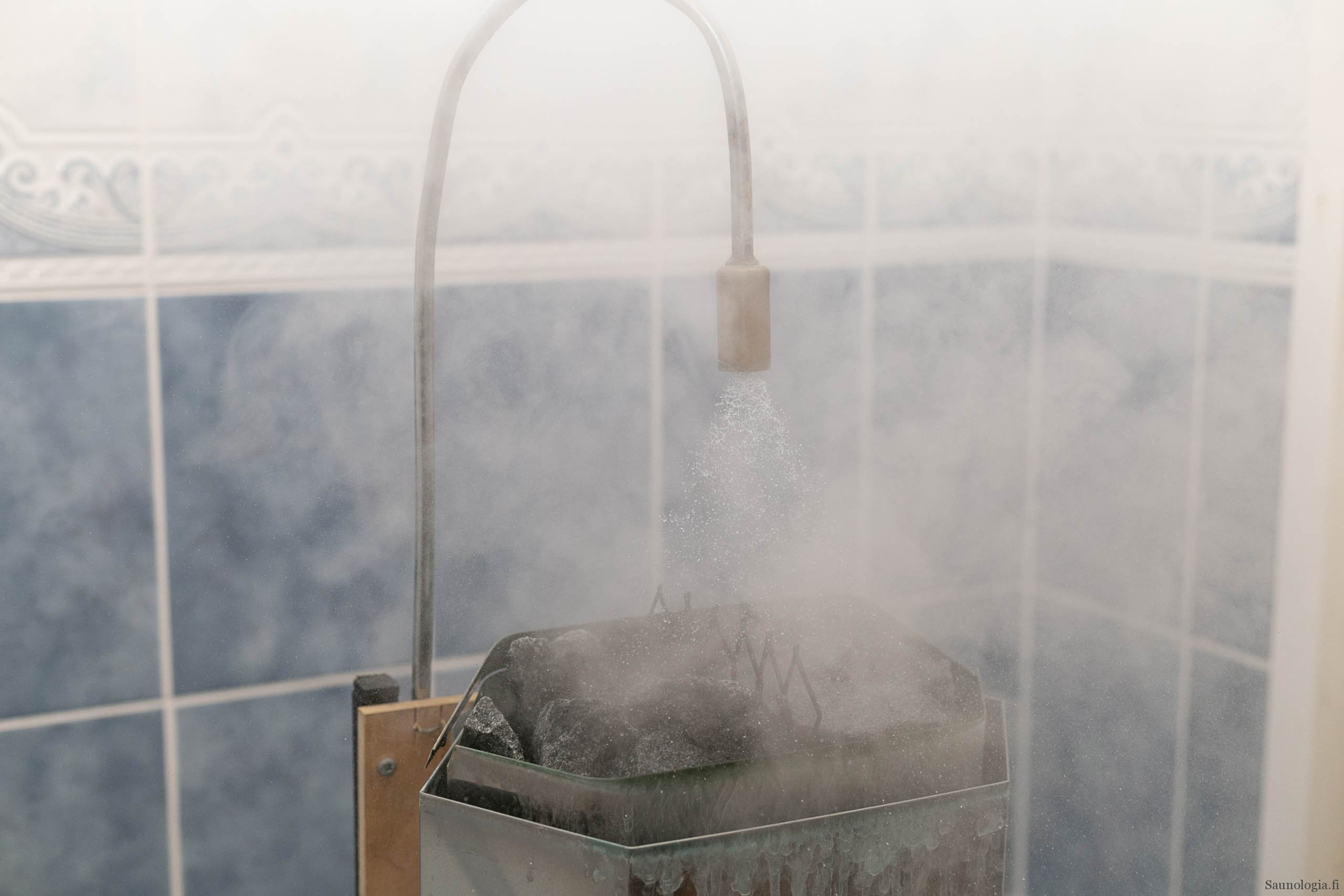
The use period is three hours long, and the heater is allowed to cool for five hours between periods. In retrospect, I am not fully convinced whether the cooling period is necessary or not, but it has remained as a part of the protocol.
The heater is set to remain continuously at full heating power during each use period. It never switches off regardless of ambient temperature. Taking timing accuracy into account, three use periods can be carried out per day, during each of which water is thrown 14 times: in other words, 9 hours of use and 42 thermal shocks.
The strength of the arrangement is that after the initial measures, the test proceeds automatically. A human is needed only to monitor that the system remains operational or to correct any faults that appear.
The other side of the test setup is the dependent variables, or the metrics. In this respect, the Rakennusmaailma example is usable. The variables used there were: sample breakage, visual inspection, and changes in the sample’s mass. For the last variable, the samples are weighed and photographed before the test. The integrity of the samples included in the test is checked by striking two stones from the same test batch against each other. If a stone crumbles at this stage, it is left out of the test. After the test, the same arrangement is repeated.
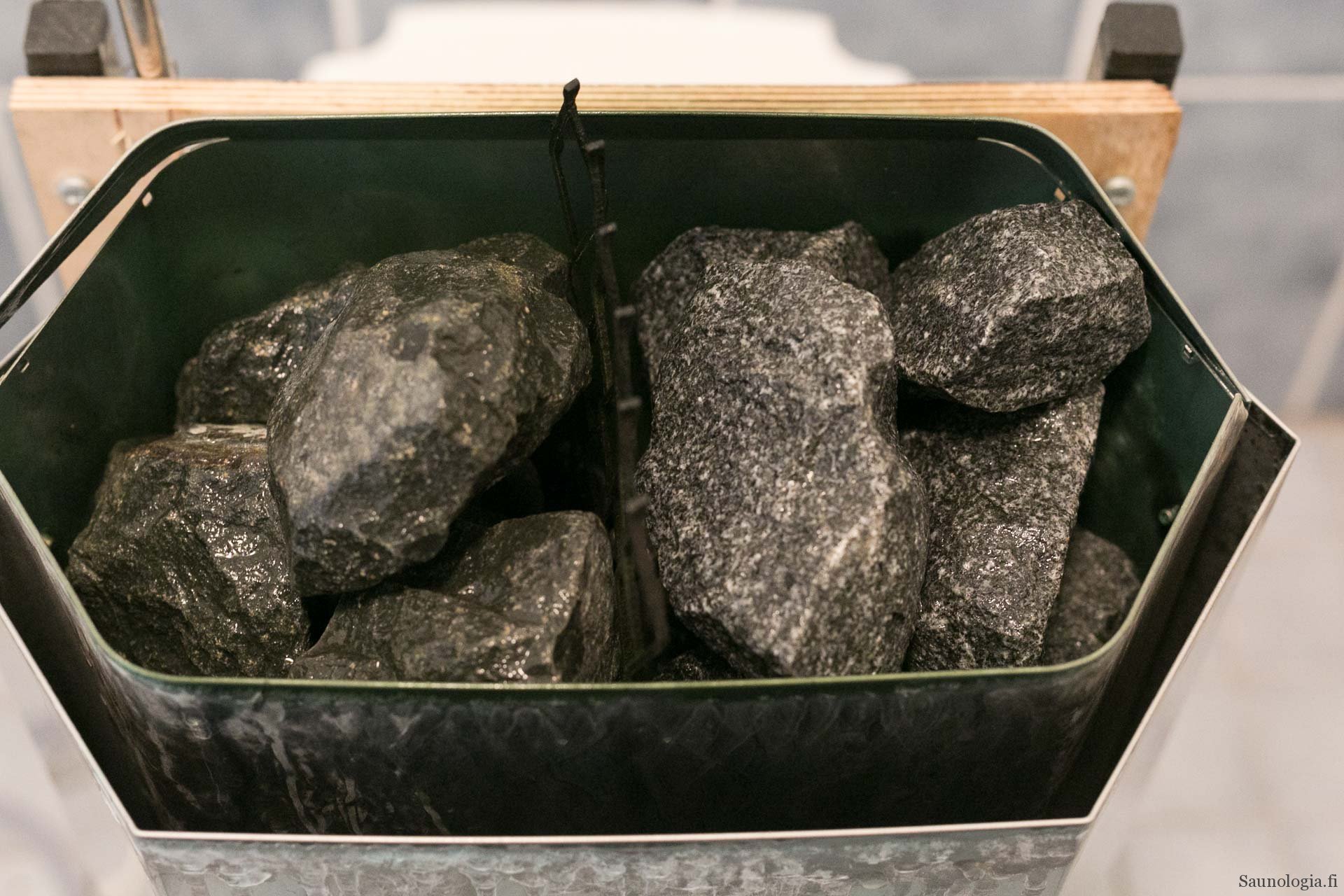
Rakennusmaailma tested six samples, but in the arrangements for this experiment it immediately became clear that a realistic test even with the smallest commercial heater (3 kW) requires a much larger amount of stones. The heater’s stone volume was divided in two with a steel mesh, after which space outside the heating elements remained for about 15 to 20 stones, with a total mass of under 5 kg. The unusually small stone volume was due to the test-series samples being stacked on top of ceramic stones placed at the bottom of the heater. The water spray was aimed at the stones from about 20 cm above.
Test series and sample selection
The proposed test setup was tested during the winter season of 2018-2019. The biggest questions in this new trial concerned how long one test has to be run before signs of aging can be detected with the selected variables.
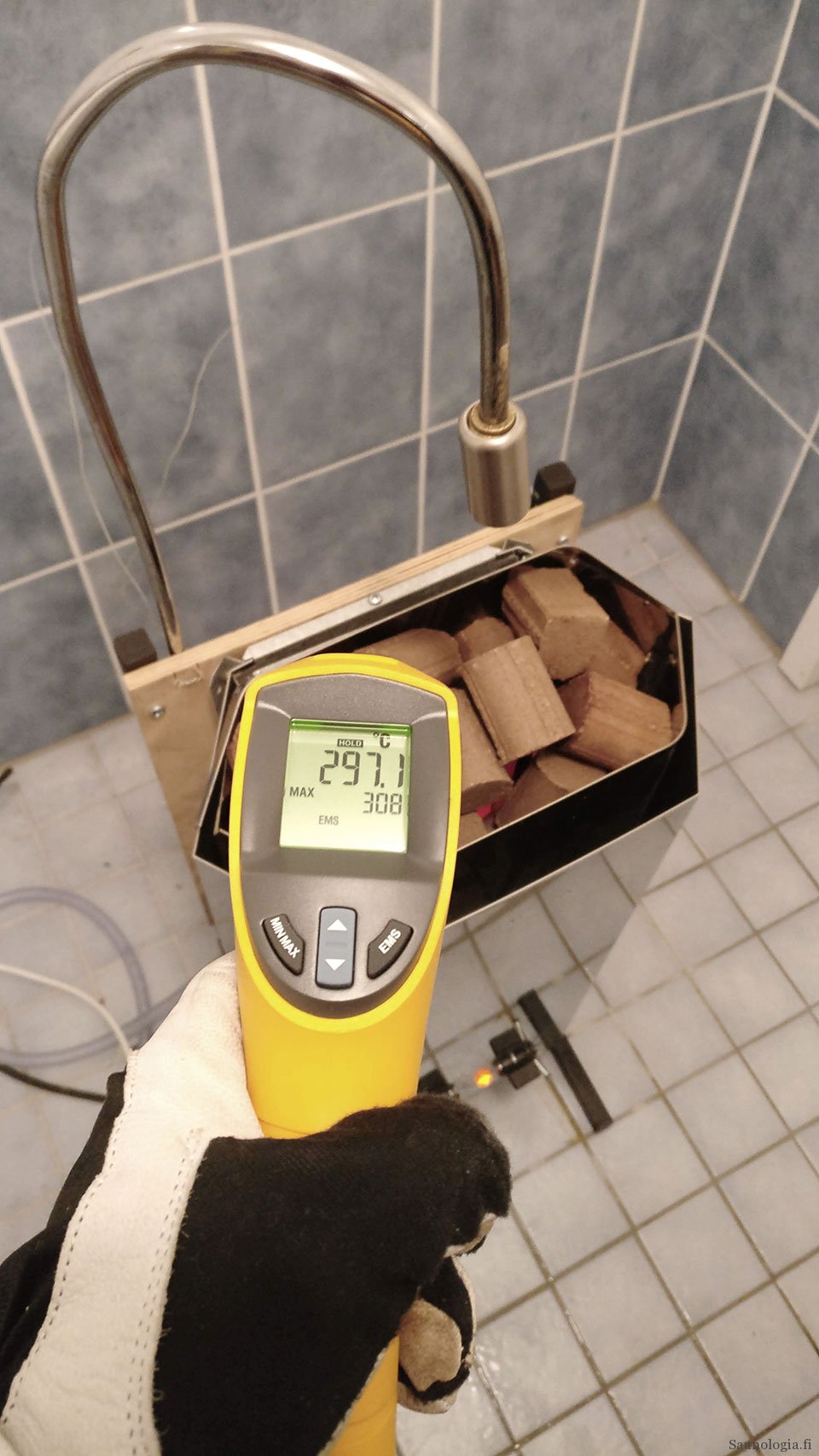
For this purpose, a short pilot period was started, during which aging was observed as well as the temperature and humidity behavior of the laboratory established for the purpose during the study. Within about twenty days, it was observed that the arrangement worked and that the laboratory conditions remained as desired (temperature range about 12 to 38 degrees Celsius) during the study. The temperature of the sauna stones also rose above 200°C during the period, and the water dose used evaporated almost completely.
Another important parameter was a calculated estimate of heater use in private saunas. If we estimate that a sauna would be heated year-round 1.5 times per week, and that on each occasion water would be thrown on average nine times during one and a half hours, the number of water throws would be 702 and the heating time 156 hours. However, not all of the heating time would necessarily be at full power.
Recommendations for replacing sauna stones are vague, but in home use replacement every couple of years is recommended. From this it can be estimated that the simulation should at least reach this level. I finally ended up with test series lasting as close as possible to 50 days, producing 150 heating cycles, 450 heating hours, and 2,100 throws of water on the stones.
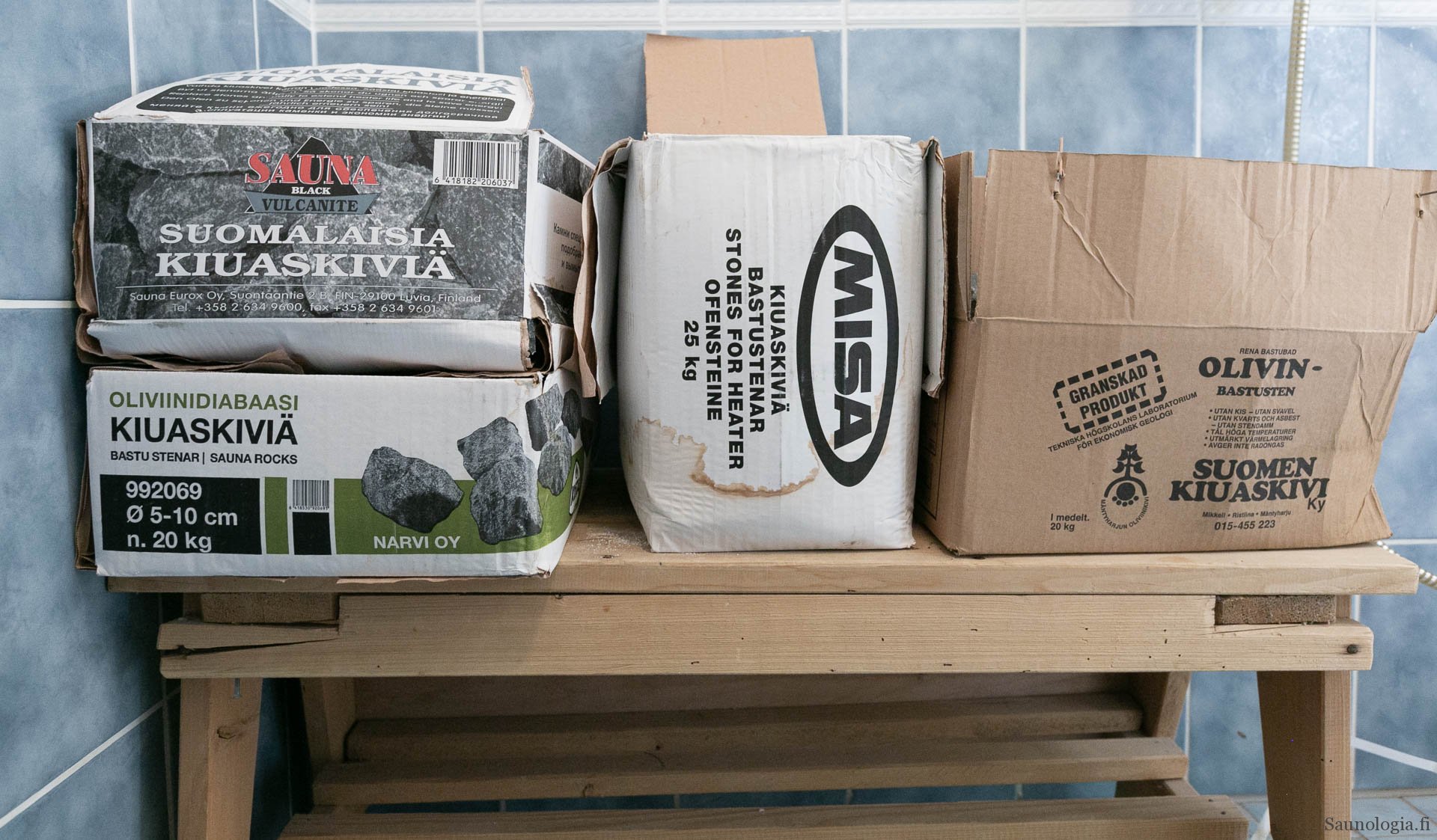
The test series was carried out in three parts, each of which tested two different types of stone. Conditions between the series otherwise remained the same, and no changes were made to the setup. The stones were carefully stacked according to the same principles (see the article on changing stones in an electric heater), vertically, with just enough stones in the surface layer that the heating elements were not visible. The exact number of stones was therefore determined by how successfully the stacking worked. After the test, the samples were removed one sample type at a time and the heater was cleaned of stone fragments that had detached from the samples.
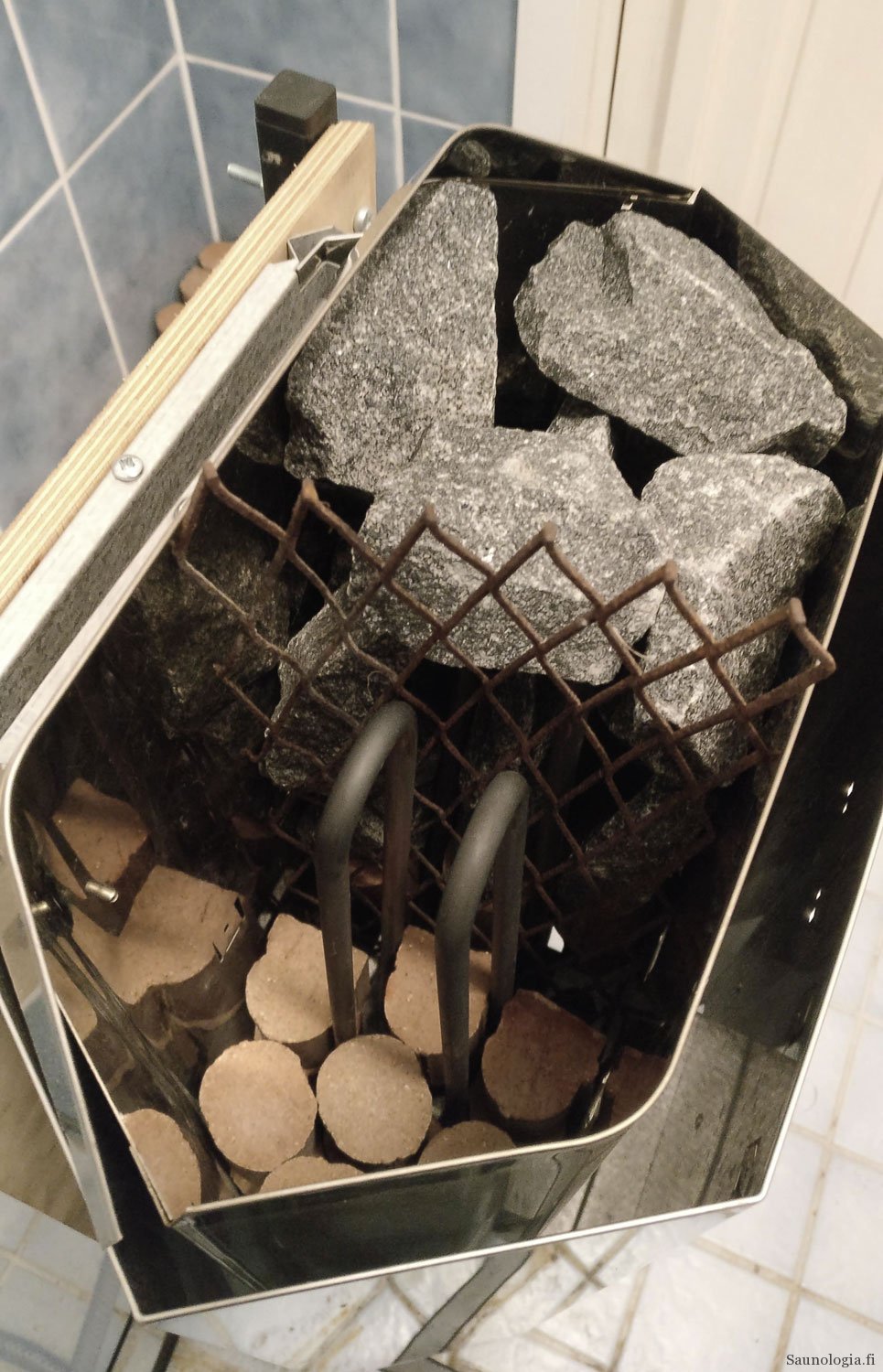
The test setup was implemented so that two stone sample series could be tested side by side in the same heater. The primary aim was to test affordable and commonly available natural stone types. The stone samples were primarily acquired from hardware stores by random sampling, buying boxes of 20 to 25 kg (44 lbs to 58 lbs) of 5 to 10 cm stones intended for electric heaters. The exception was the olivine stone samples from Suomen Kiuaskivi, which the manufacturer supplied on request after purchasing suitably sized stones proved difficult after a couple of attempts. Despite this, the stones were larger than the other tested stones, especially in mass, with an average weight of 480 grams.
The number of stones in the test series varied between 10 and 20 pieces, with weights between 249 and 480 grams. However, the total weight varied more moderately, between 4.2 and 5.2 kg. The weight variation is partly explained by the higher specific gravity of olivine and peridotite. Size variations also affected stacking and how many samples fit into the heater. Stacking smaller stones inevitably becomes denser, which is why the total batch weight does not vary as much.
| Tradename_ | OD small | Olivine | vulcanite | peridotite | OD large | peridot, Ural |
| total weight | 4971 | 4796 | 4884 | 5261 | 5202 | 4273 |
| pcs | 20 | 10 | 17 | 17 | 14 | 14 |
| average weight g | 249 | 480 | 287 | 309 | 372 | 305 |
| survival % | 60% | 80% | 76% | 88% | 71% | 86% |
| residual mass | 99% | 99% | 95% | 95% | 100% | 96% |
| Place of purchase | Bauhaus | Rautanet + manufacturer | Hong Kong | Bauhaus | K Parkon Kauppa | – |
| Brand | Parhaat Löyly | Olivine sauna stone | Parhaat Löyly | Misa | Parhaat Löyly | Vitau, Estonia |
| Original manufacturer | Sauna-Eurox | Suomen Kiuaskivi Ky | Sauna-Eurox | (Finland) | Sauna-Eurox | Unknown, Russia |
The Russian peridotite does not fully correspond structurally to the domestic material, but because it is sold under this trade name, it has been classified the same way. According to the reseller, the main mineral composition of the Russian sample is dunite, a variation rich in olivine (see http://www.geologia.fi/index.php/2018/06/25/magmakivien-luokittelu/). Based on images presented later, the mineral content of the peridotite marketed by Misa, apparently produced in Pennala, resembles hornblendite, or hornblende.
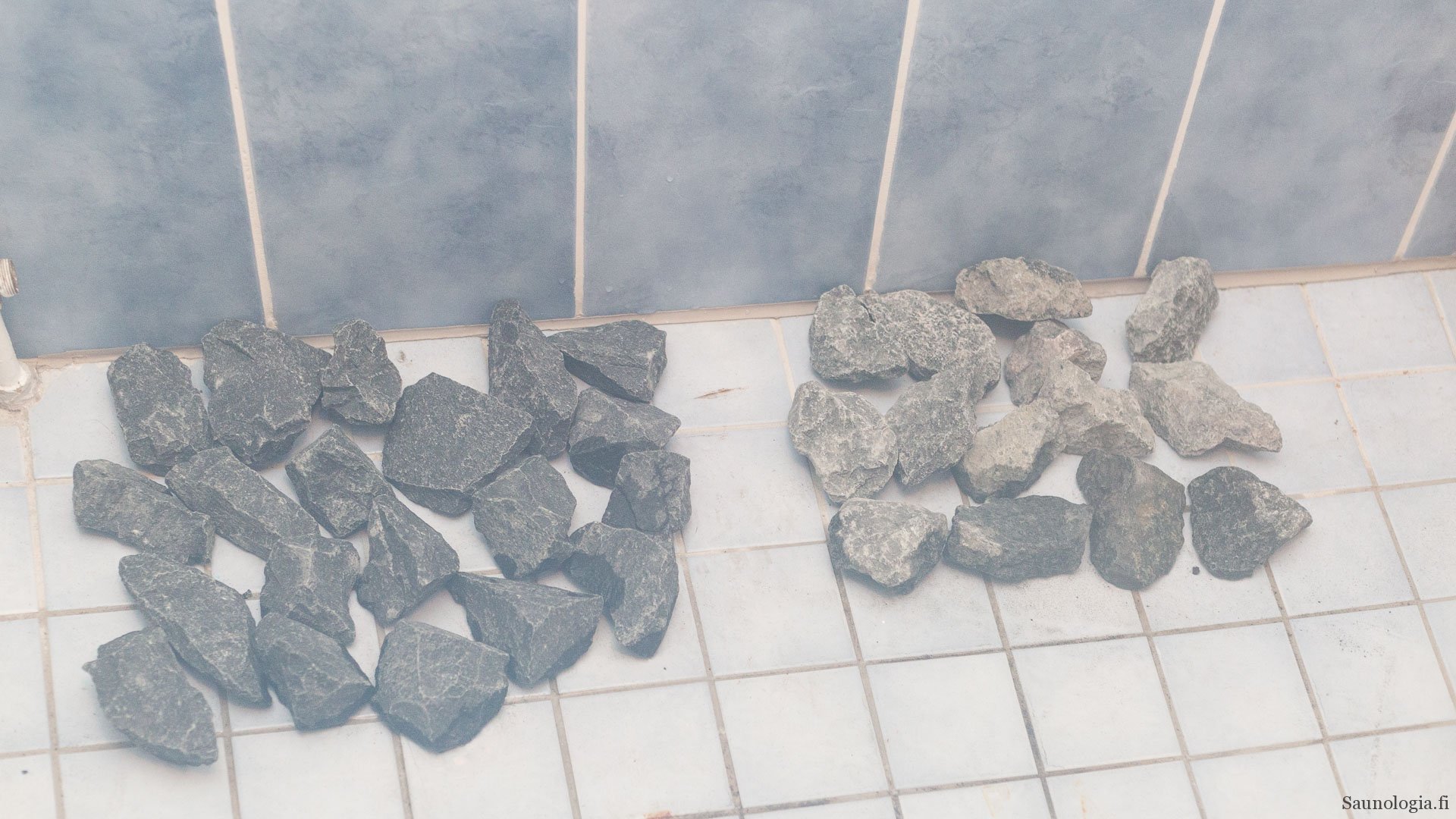
The sample pairs in the test series were as follows:
- Olivine and small 5 to 8 cm olivine diabase
- Vulcanite and domestic peridotite
- Russian peridotite and medium-sized 7 to 12 cm olivine diabase
The test series were carried out between November 2018 and April 2019. The research equipment worked surprisingly well overall, even though it had been assembled from inexpensive components. Only occasional fuse trips and the failure of the timer extended the test periods by a couple of days until the problems were detected and corrected. It was downright surprising that the heating elements of the small heater used as the heating device remained functional for more than 1,300 hours of use! If a sauna were heated only once a week for an hour at a time, one could predict that heating elements loaded in this way would last more than 15 years.
An overview of the results
The standard protocol proved to be a functioning way to age stones. In all sample batches, thermal stress broke several stones, so these samples did not produce the ceiling effect encountered by Rakennusmaailma (meaning all stones did not survive my protocol). On the other hand, the test did not include heat-treated natural stones or ceramic stones, which are generally thought to be more durable.
The sample pairs in the test series were as follows:
- Olivine and small 5 to 8 cm olivine diabase
- Vulcanite and domestic peridotite
- Russian peridotite and medium-sized 7 to 12 cm olivine diabase
Results
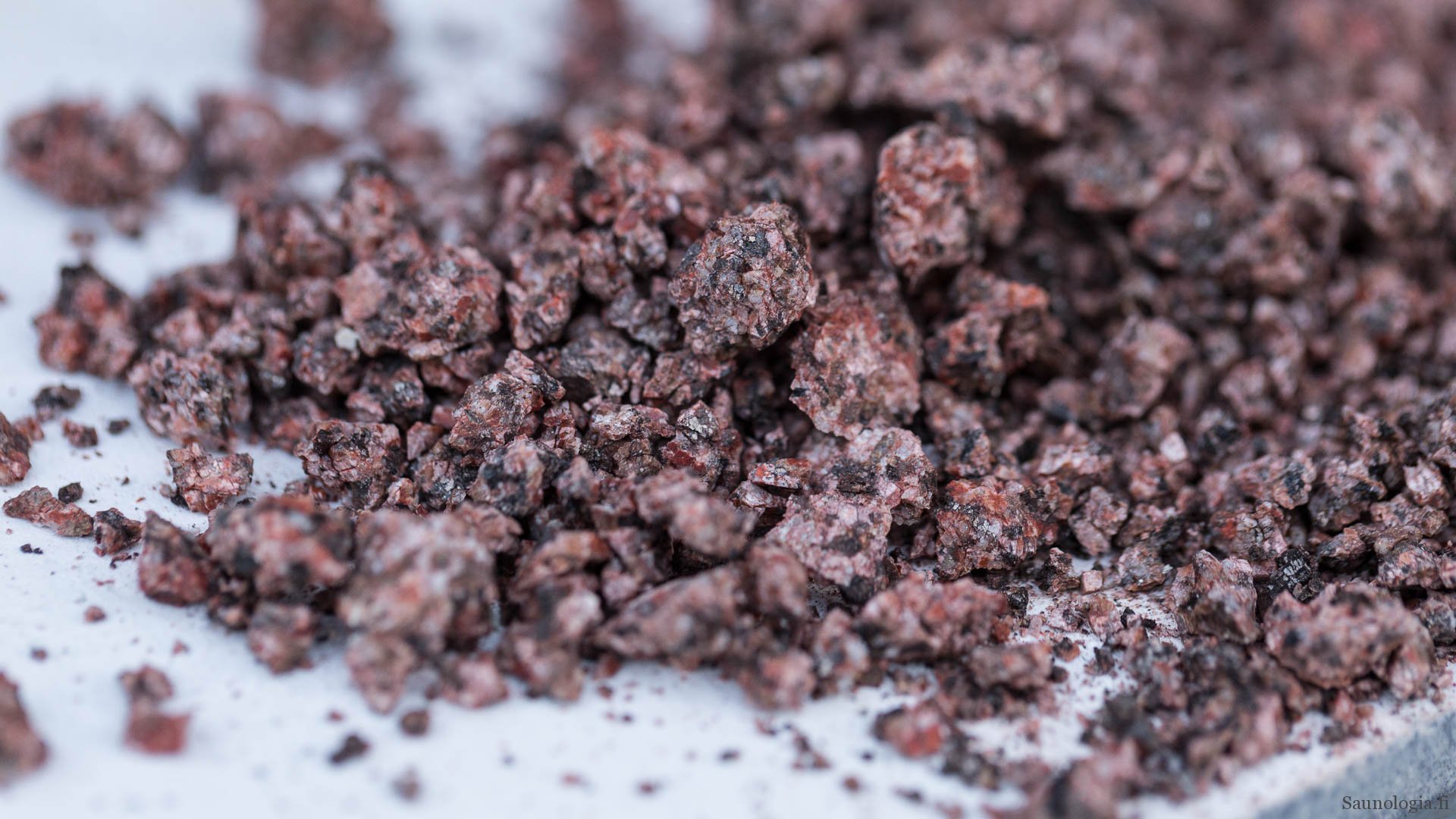
In the visual inspection, the effects of aging were clear. When installed in the heater, the most striking observations were the discoloration of the surface stones caused by the water thrown on them, the partial collapse of the stone stacking, and severe cracking of the surface stones. Visible stone debris also accumulated under the heater. Similar effects can also be observed in normal use, but only now do we know over what time span the problems arise.
Cracking of stones occurred in all test batches. The main metric was how large a share of the stones in a test batch remained completely intact. The small olivine diabases cracked the most, while domestic peridotites cracked the least.
There were also clear qualitative differences in cracking, which affect what kinds of adverse effects aging has on the heater. Some samples crumbled into a fine powder, while others cracked into larger pieces. From the viewpoint of heater operation, finely fragmented products are the most troublesome, because in an electric heater they prevent normal air circulation, in wood-burning and electric heaters they insulate heated surfaces, and they litter the heater and the floor. When using stone types that break down into fine particles, special attention must be paid to the inspection and replacement interval of sauna stones.
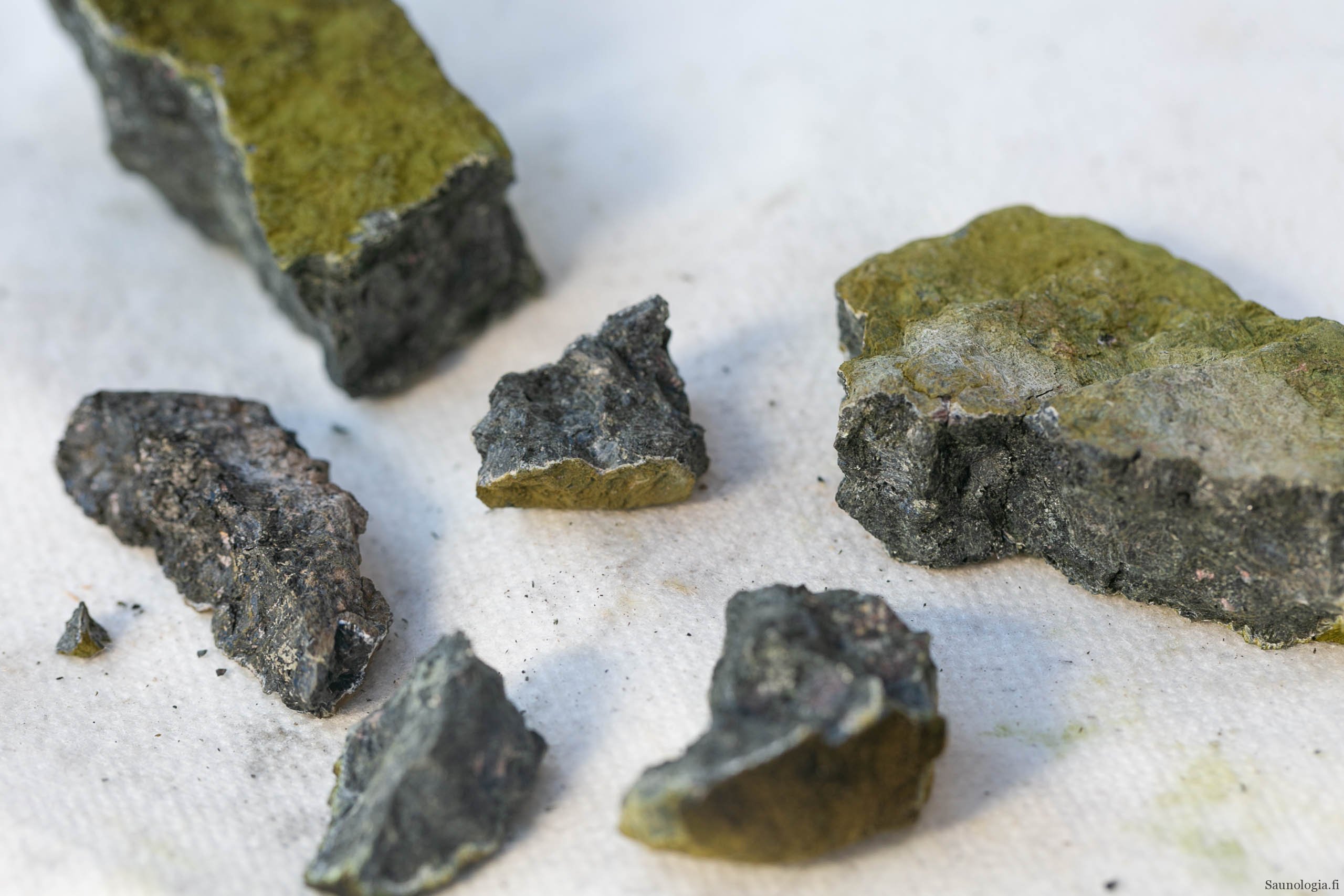
However, even large pieces are not problem-free. Large cracking products can also be harmful to an electric heater, because a roughly rounded stone that has split in two in the middle becomes two pieces with a sharp edge, which may damage a hot heating element if it happens to shift in the wrong way.
| Type | Intact / total | Share intact | Crack type |
|---|---|---|---|
| Olivine diabase, small | 12/20 | 60 % | Small pieces |
| Olivine diabase, medium size | 10/14 | 71 % | Pieces |
| Olivine stone | 8/10 | 80 % | In two |
| Peridotite, Finland | 15/17 | 88 % | Large slabs |
| Peridotite, Russia | 11/13 | 86 % | Large slabs |
| Vulcanite | 13/17 | 76 % | Small pieces |
In the visual inspection, the most striking effect was the mineralization of the upper surfaces of the top stone layers. In this case, the discoloration and coating were very strong, even though the amounts of water used were moderate. The strength was probably due both to the high mineral content of the water and to the water-dosing system used, which maximized evaporation from the surface stones. This effect treated all stones in the same way.
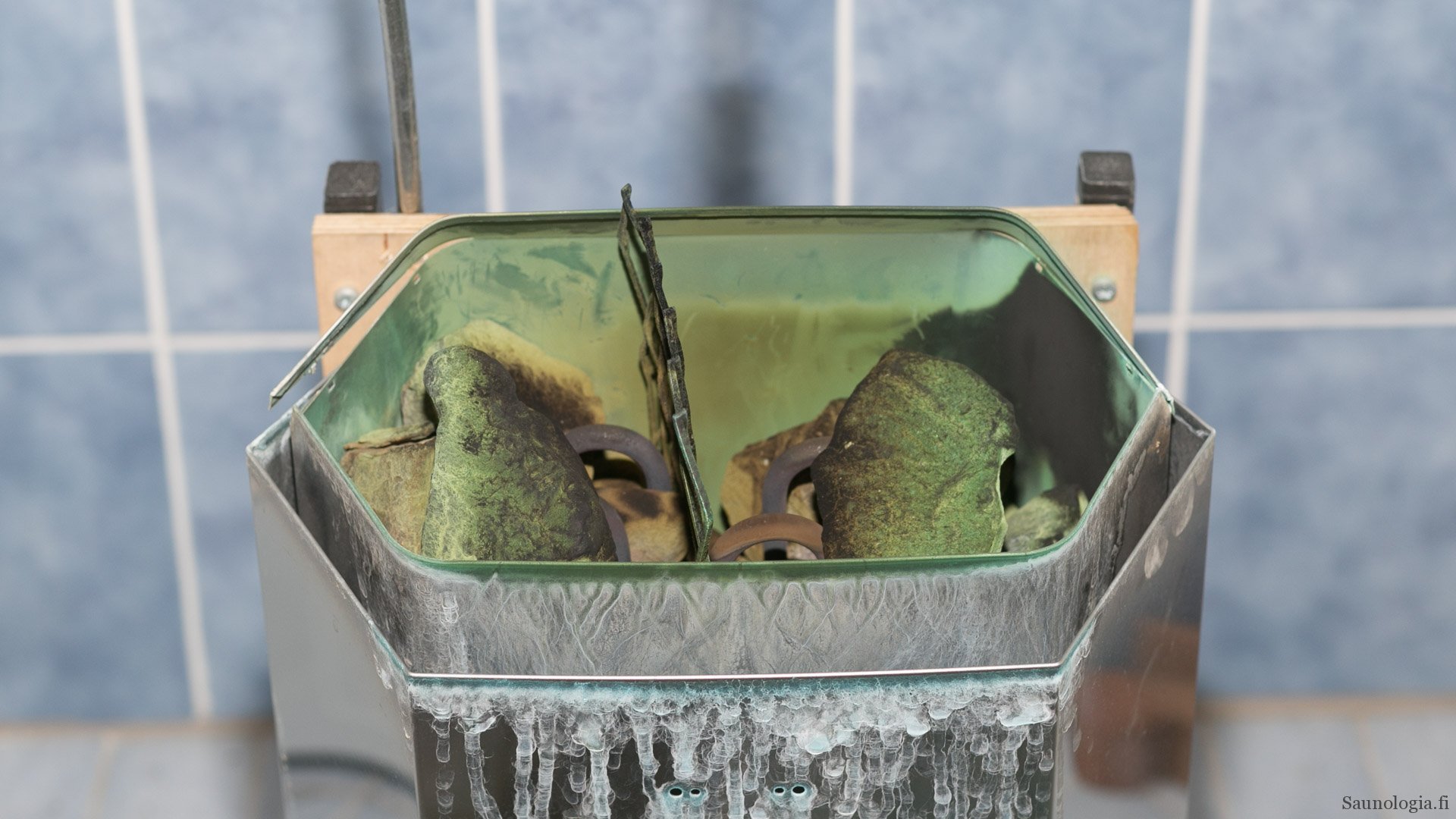
On the other hand, it was observed that stone mineralization does not necessarily mean the stone has become brittle. Not at least in this test environment, where water is thrown very frequently. It also serves as a reminder that the stones need replacing. Under the test conditions, most stones would have been worth replacing as soon as discoloration became visible, because it often happened before the stone began to crumble. It was therefore a good predictive sign. However, this is not a universally valid rule of thumb, because it depends on the number of water throws relative to heater heating.
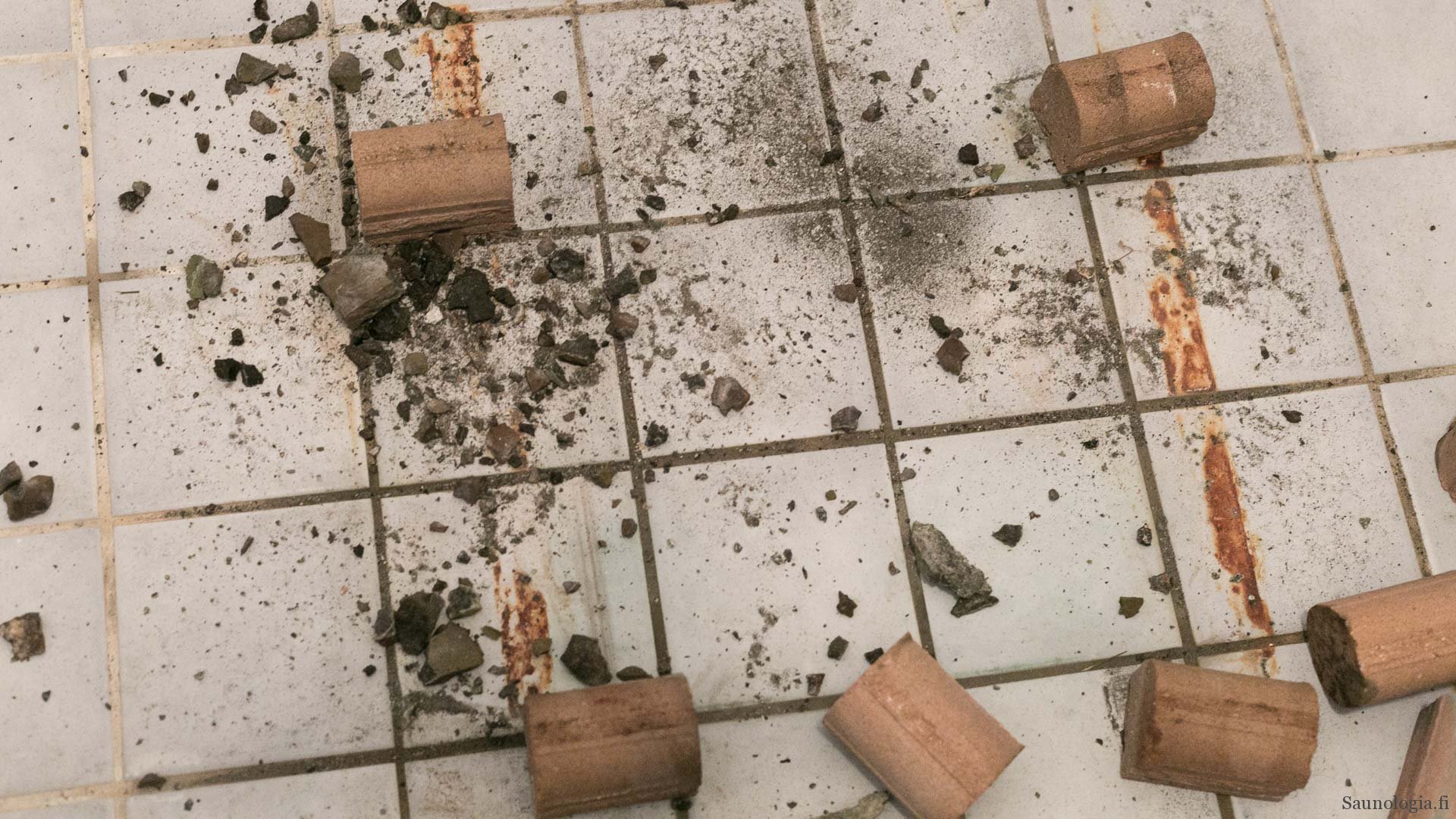
The next most visible effects are cracking and crumbling of the stones. Fine crushed stone and stone dust accumulate under the heater, and inside the heater where that is difficult to observe. Because of the test arrangements, no conclusions can be drawn from this effect about differences between stone types. However, the impression was that most of the visible debris came from stones that had not been thoroughly washed (peridotite and olivine).
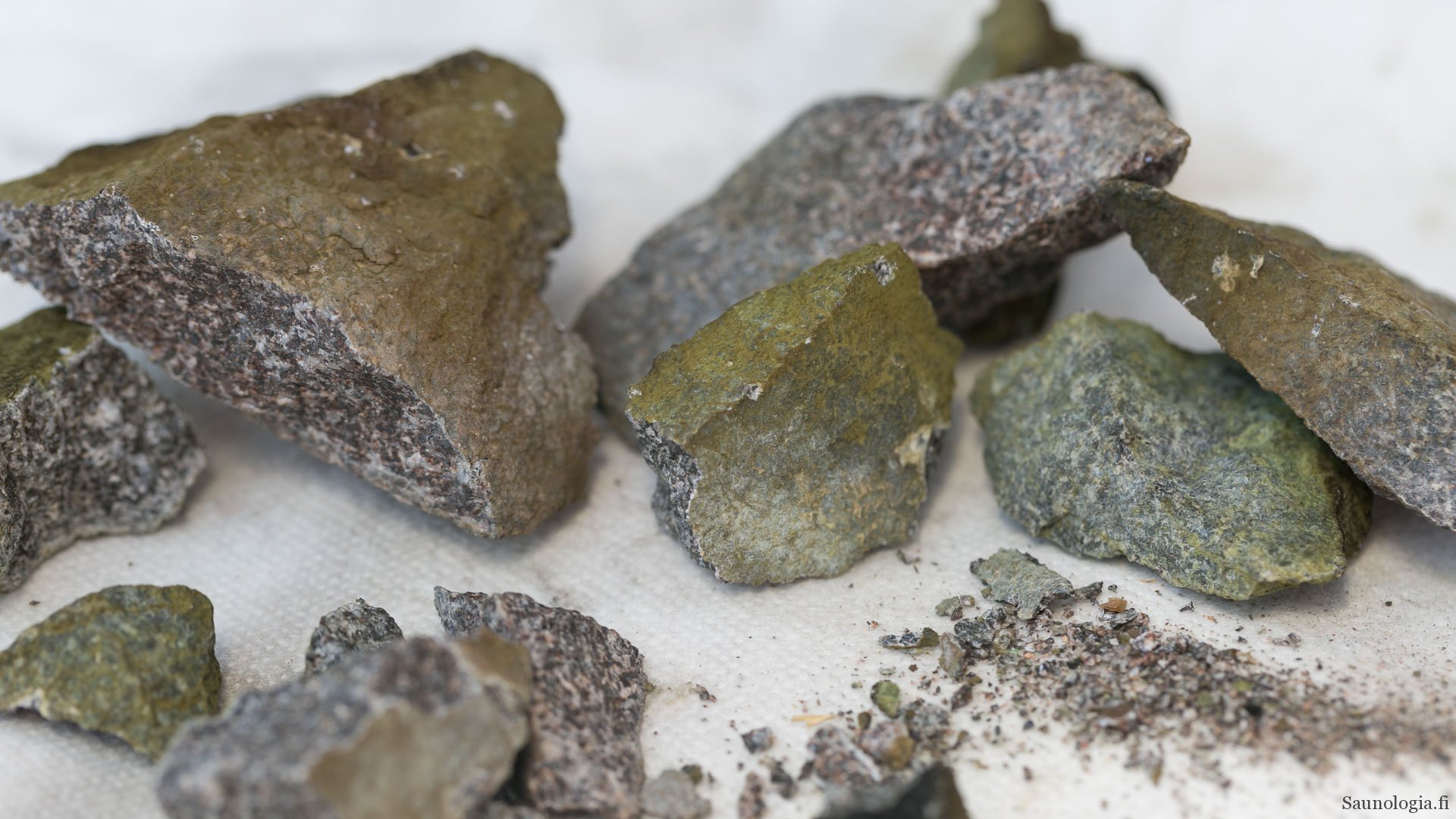
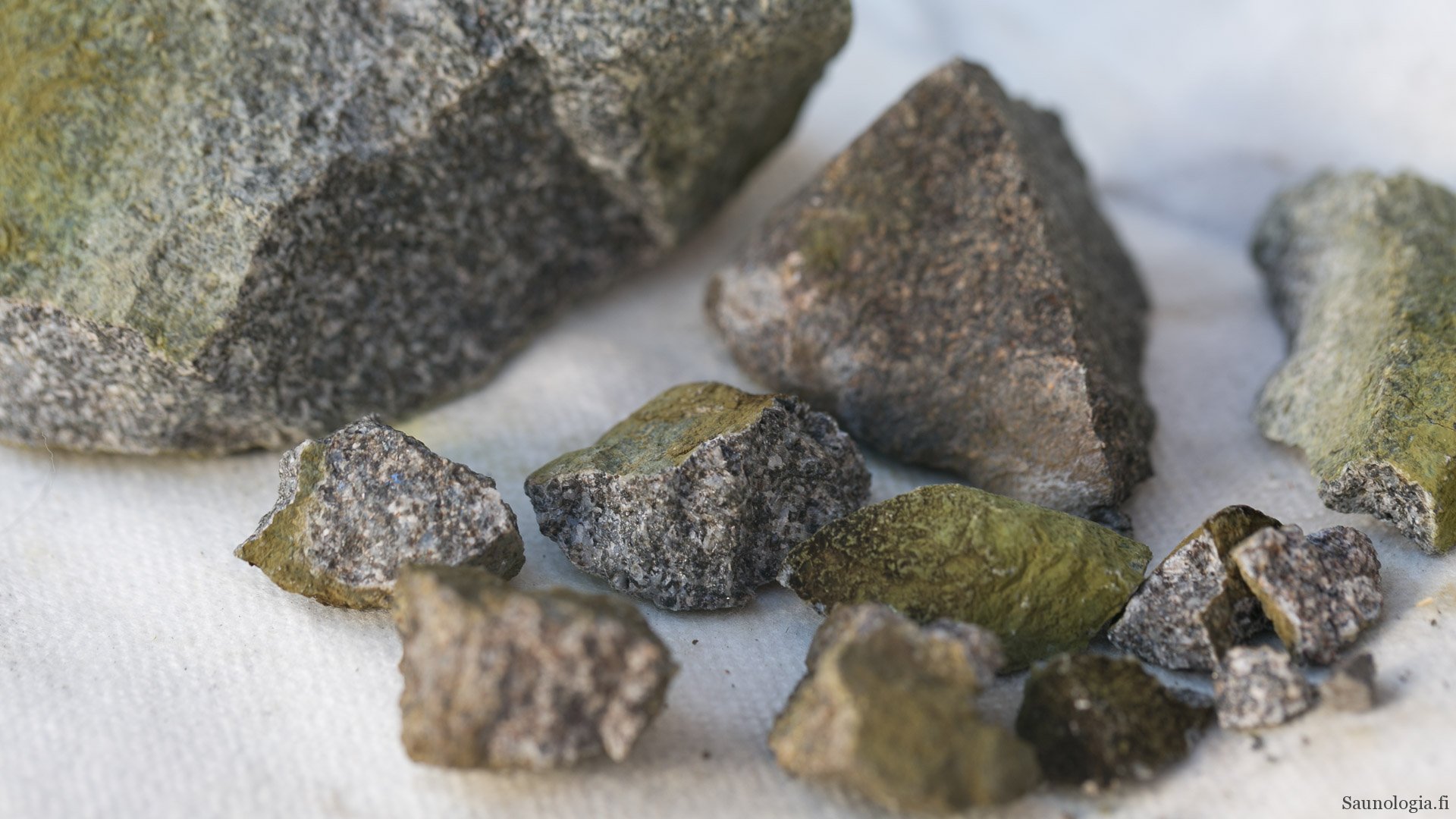
The examination of weight changes did not produce the desired results. The residual mass was 95 to 100% of the original, and differences between samples cannot therefore be considered statistically reliable (ceiling effect). It also proved methodologically unreliable, because after the test it was not possible to match the samples with certainty to the measurements made before the test. Otherwise, sample-specific mass change could have been determined separately for intact and cracked stones.
The study provided preliminary evidence of differences between stone types. However, it is essential to point out that based on the tests carried out here, no absolute claims can yet be made about differences between stone types, because all tested stone types represent only one batch from a random retail package. If durability happened to vary substantially between batches and packages, this could affect the results, but would have remained undetected in this method-focused research trial. On the other hand, two stone varieties were tested twice with results pointing in the same direction, so I personally consider it credible that real differences exist.
Discussion: applications, further research, and improvements
Saunologia has introduced a new method for studying the durability of sauna stones. It is intended to simulate natural use conditions corresponding to those of a continuously heated heater in a private sauna. After describing the method, the first results obtained with it were presented. The results showed that the method brought out differences between the stone types used in terms of their survival in the test conditions, and revealed how differently stones weaken as they age. In addition to crumbling and cracking of the stones, strong discoloration of surface stones was observed as a result of water evaporating from the stone surfaces.
One achievement of the study, alongside the presentation of the method, is that it produced for the first time a reliable data point on the speed at which combined thermal stress and thermal shock affect stones. Based on this, recommendations can be derived for stone inspection and replacement intervals. The effect of 150 heating cycles was simulated here. It is clear that when using all stone types, the condition of the stones should have been checked, and at least surface stones replaced, much earlier.
Ideas for further research
The test arrangements appear promising, although they still need refinement. A fundamental improvement would be the possibility to follow stone aging as a time series. This time the heater was not touched during the test series, because the aim was to simulate a device with nonexistent maintenance. This could be improved visually with time-lapse camera monitoring, which would show the aging of surface stones and changes in the stacking. If, on the other hand, the stones were systematically maintained, for example every 50 heating cycles, it would form a completely different test.
The sizes of the stone samples should be standardized well. Based on the research results, there is evidence that larger stones survive longer, so this factor should not be varied if the aim is to compare stone types. In future tests, it would be good to increase the stone volume of the test heater slightly so that about 20 samples of around 300 grams would fit into the heater, meaning about 6 kg of stones. For this purpose, when acquiring samples, one should be prepared to buy several boxes and select similarly sized samples by eye and scale. In practice, my attempts to use larger samples fell short because the heater used was too small. Upgrading the heater to a larger model would have increased the costs too much so that remains to be done.
The calibration of the water-throwing automation turned out to change slightly over time in the test. Dosing was 2 dl at the beginning of the test series and 1.7 dl at the end, meaning 13% less. This was not noticed in between, and in the future it should be controlled between test series or even in the middle. However, the results do not show that the reduction in a single water dose would have had a substantial effect on survival rate, but it must be kept in mind as one explanatory factor.
Saunologia’s sauna stone protocol 1.0 is now ready for use!
In the follow-up post, I will present and discuss the results in depth.
Thanks to Matti Hämäläinen for help in building the research equipment, to Narvi for donating the test heater and spare heating elements, Harvia for the Autodose, Henkka for monitoring the laboratory, and to the research and culture section of the Finnish Sauna Society for grants toward material costs in 2018.