


How to Replace Electric Sauna Heater Stones: Step-by-Step Guide
By following this guide, you can replace the stones in an electric sauna heater quickly, safely, and professionally. Get new stones, empty and clean the heater, rinse the stones, stack them correctly, and enjoy the sauna! Read the detailed instructions for replacing electric sauna stones and watch the stacking guide in the video.
Time required: 15 to 45 min
Difficulty: Easy
| Read also: |
|---|
When should the stones in an electric sauna heater be replaced?
Sauna stones gradually deteriorate over time. The more often the heater is used and water is thrown on the stones, the more the stones are damaged. One sign of this is that stone debris and dust accumulate on the sauna floor in front of the heater. On the surface of the heater, the stones turn light gray or become discolored depending on the mineral content of the löyly water.
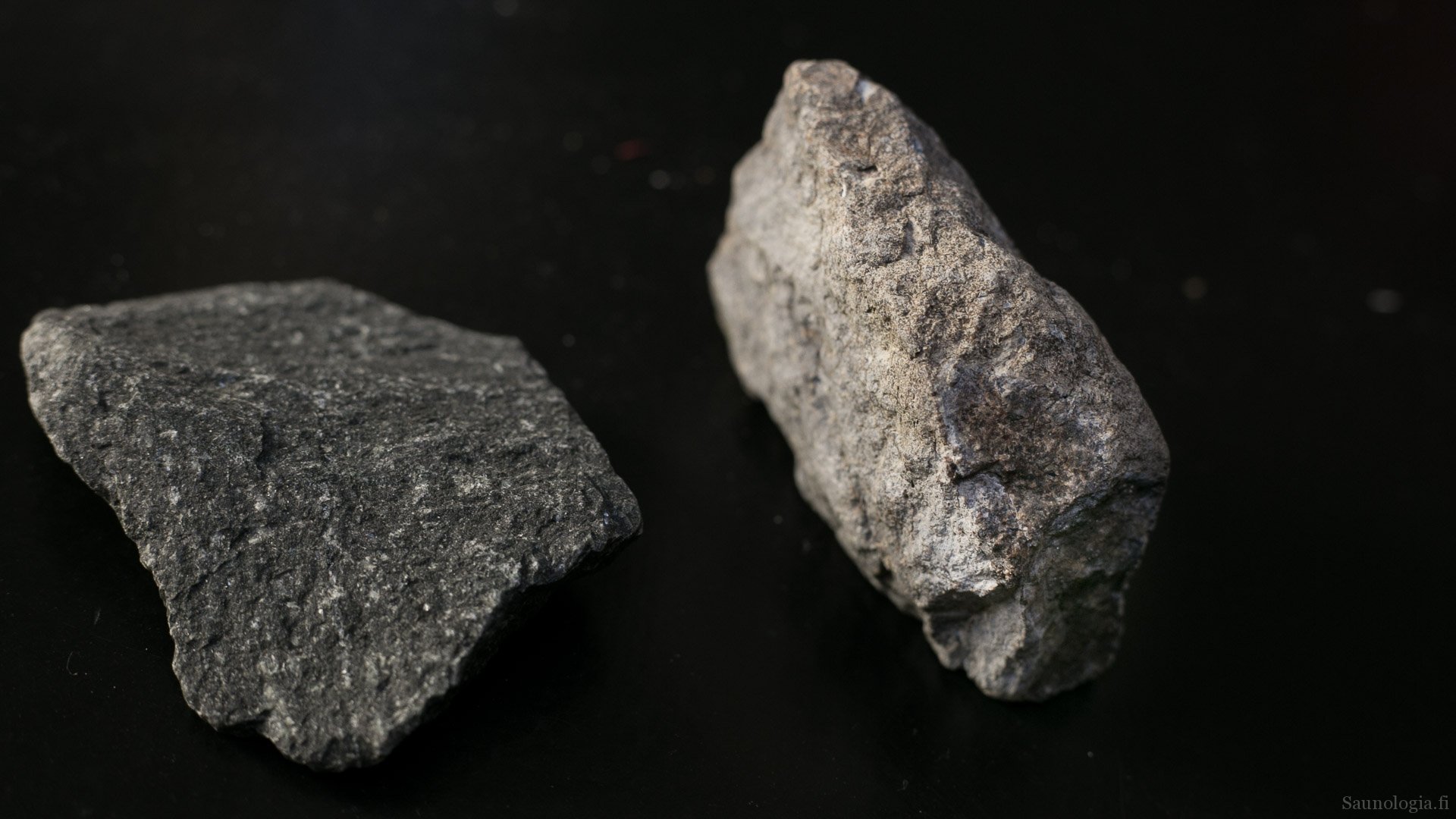
Right: a stone that has been in use for a long time is clearly lighter in color and rounded at the edges
Old stones can also be recognized by the fact that they chip easily when struck together and sound dull or soft. In an electric heater, stones tend to age fairly evenly. It is not absolutely necessary to replace older stones that are still in good condition, but if you use inexpensive stones sold by weight, there is little point in spending time selecting or testing them.
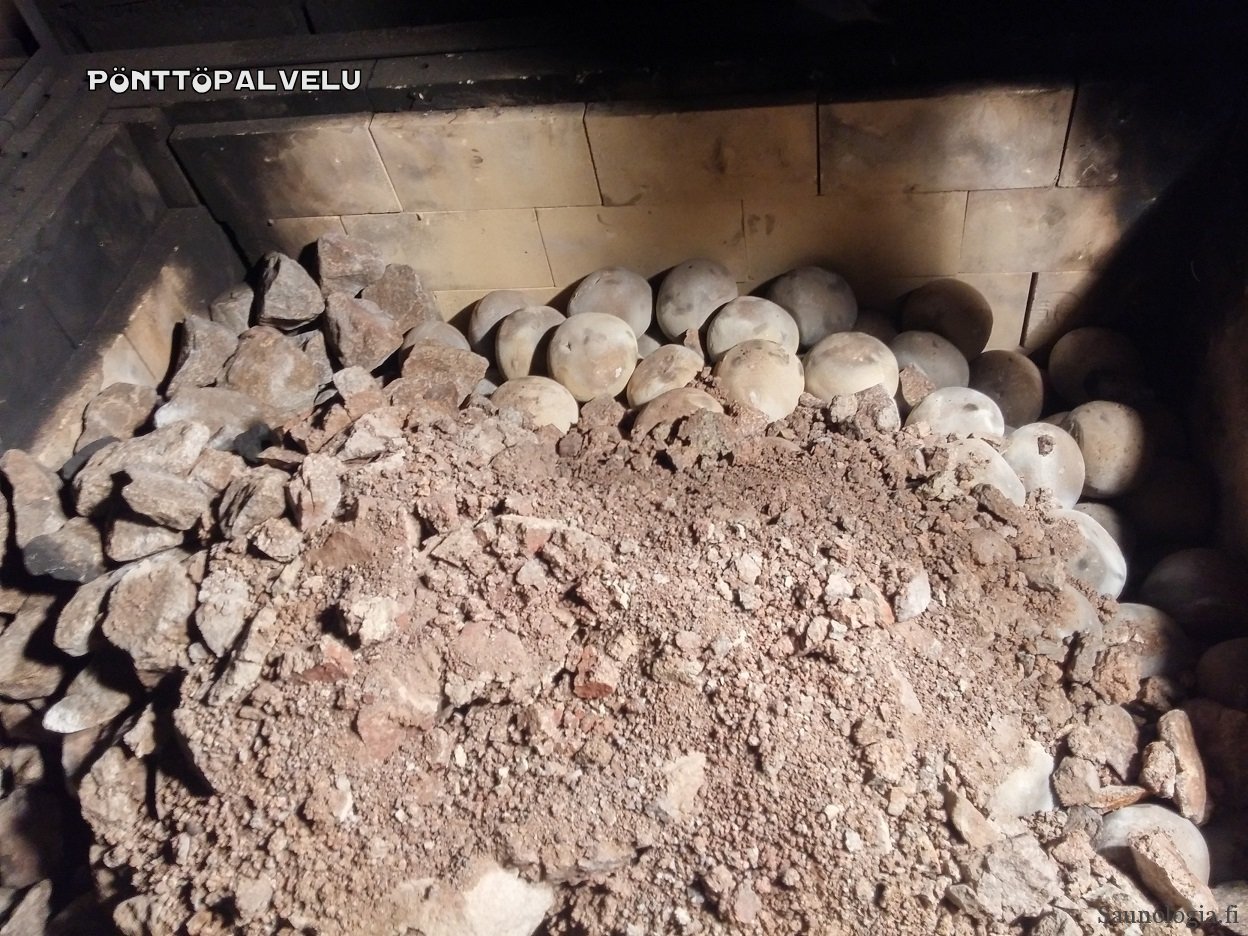
For home use, it is worth checking the stones at least once a year by restacking them (see instructions below). This also reveals the condition of the stones beneath the surface, and any stones wedged between the heating elements can be removed before an element is damaged. If the heater contains clearly aged stones, it is worth replacing them.
If you do not replace the stones, the sauna will heat up more slowly, electricity consumption will increase, and the quality of the löyly will decline.
Before replacing the stones: first get new stones
How many sauna stones are needed?
Check the heater manual, or if that is unavailable, look online using the heater’s photo or model name to find out how many stones the heater holds. The stone capacity is given in kilograms (pounds) and is approximate. Sizes vary from 20 to 200 kg (44 to 441 lbs).
If you cannot find the information, it is best to start the job on a day off in the morning, reserve a couple of large buckets, and remove some stones from the heater. Once you have a rough idea of how much the stones weigh, you can go to the hardware store and buy a corresponding amount of new stones. One 10 liter bucket (about 2.6 US gal) of stones weighs about 15 kg (33 lbs).
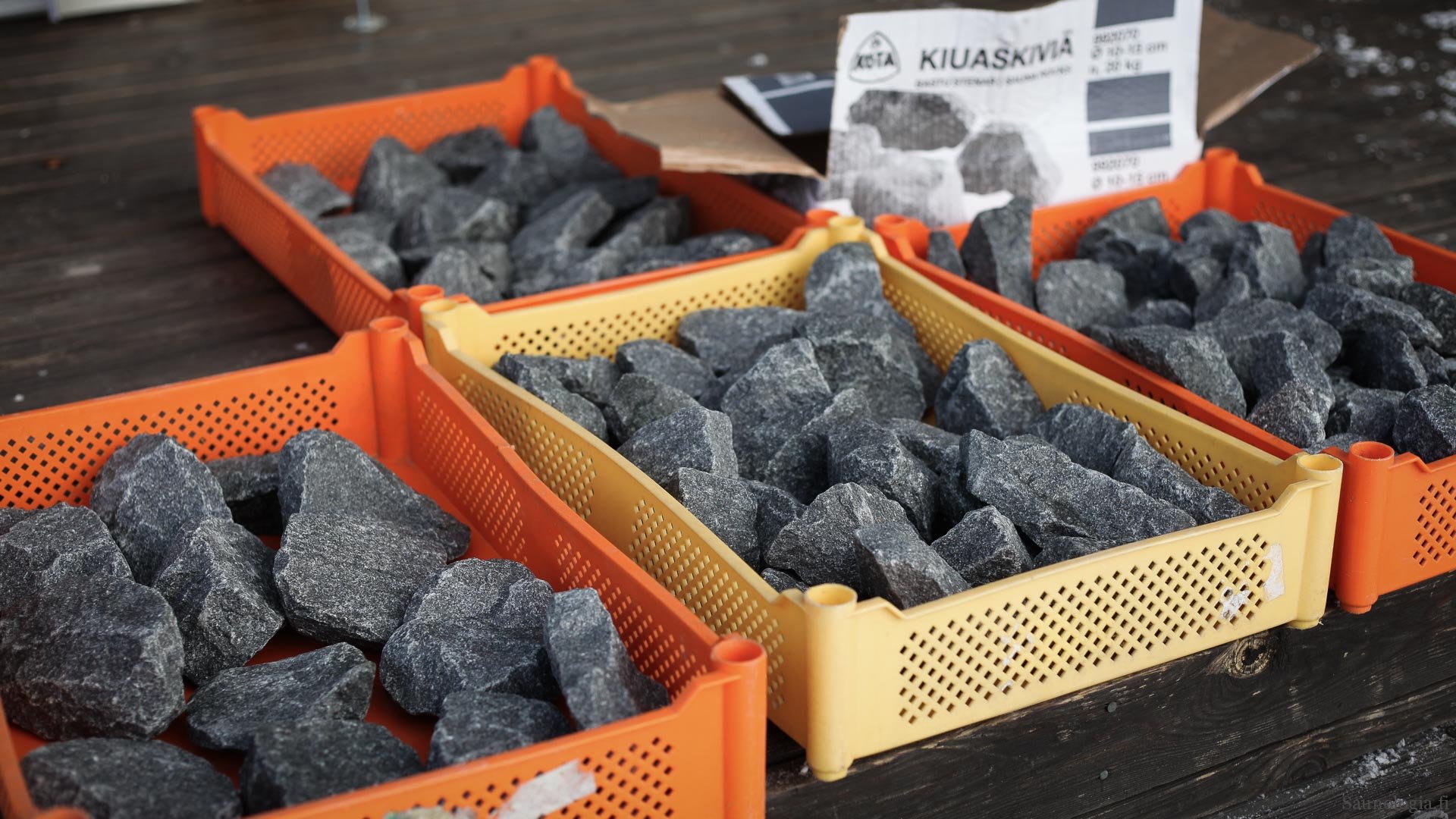
Sauna stones are usually sold in 20 to 25 kg packs (44 to 55 lbs). The sizes of individual stones vary quite a bit in so-called natural stones, such as olivine diabase. If your heater is recommended to hold 20/40/80/… kg of stones (44/88/176/… lbs), I recommend buying one extra box. That way you can be sure to fill the heater with stones of the right size. The extra stones will get used eventually the next time you replace them. They store well even in a cold outdoor shed, although the cardboard box itself may suffer.
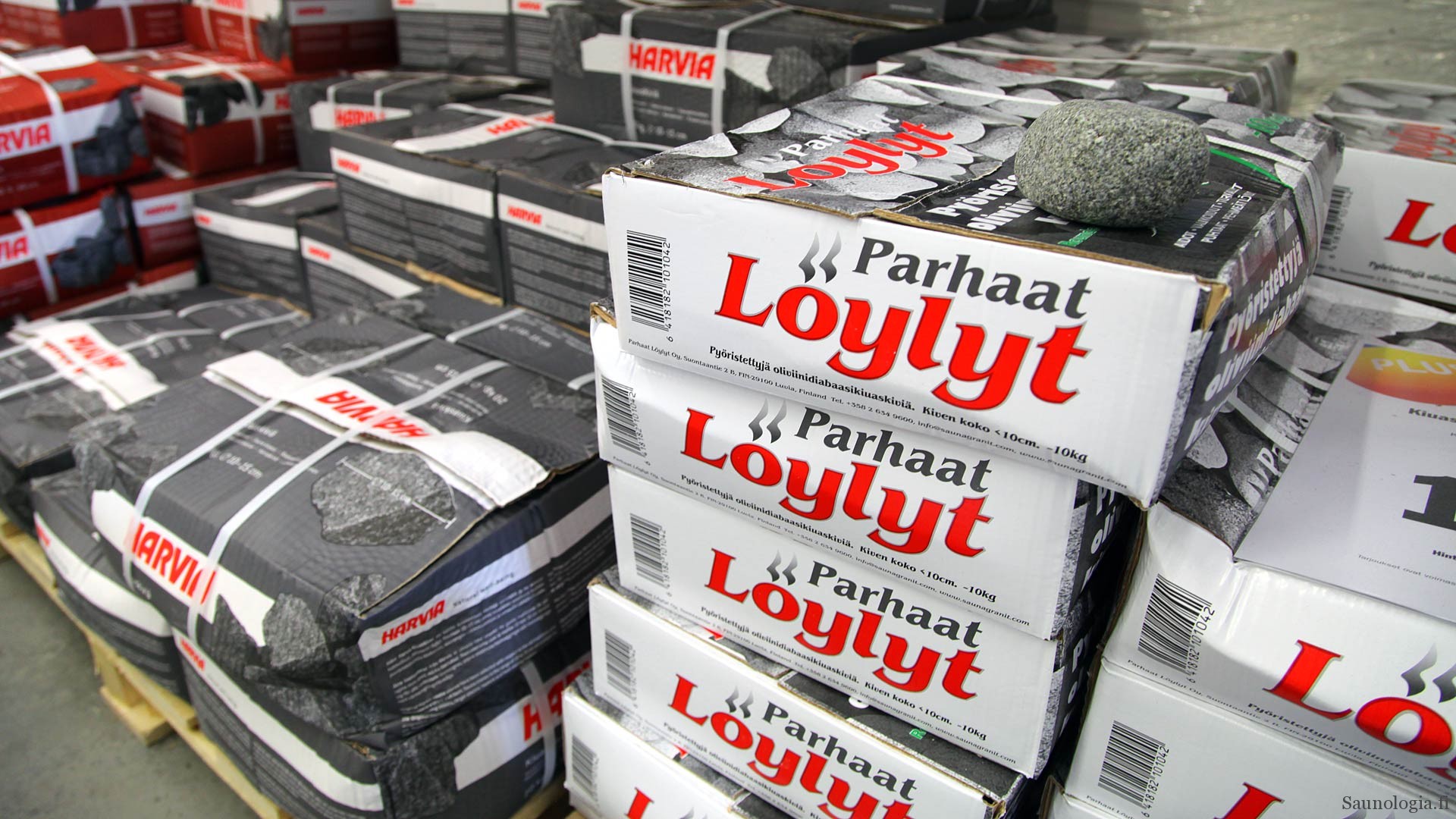
What kind of stones should be used in an electric sauna heater?
Electric sauna heaters usually use the smallest stone size, 5 to 10 cm (2 to 4 in). Large electric heaters can also use 10 to 15 cm stones (4 to 6 in). The manual usually also states what size of stones should be used. On the other hand, for example, the Helo Himalaya heater manual recommends a size of 80 to 120 mm (3.1 to 4.7 in). That size category does not really exist as a standard retail size. For the Himalaya, it is not advisable to buy 10 to 15 cm stones (4 to 6 in) except perhaps as top stones. Stones that are too large create a stack that is too loose in the Himalaya, and the stones can remain too cool during heating if they don’t get to absorb heat.
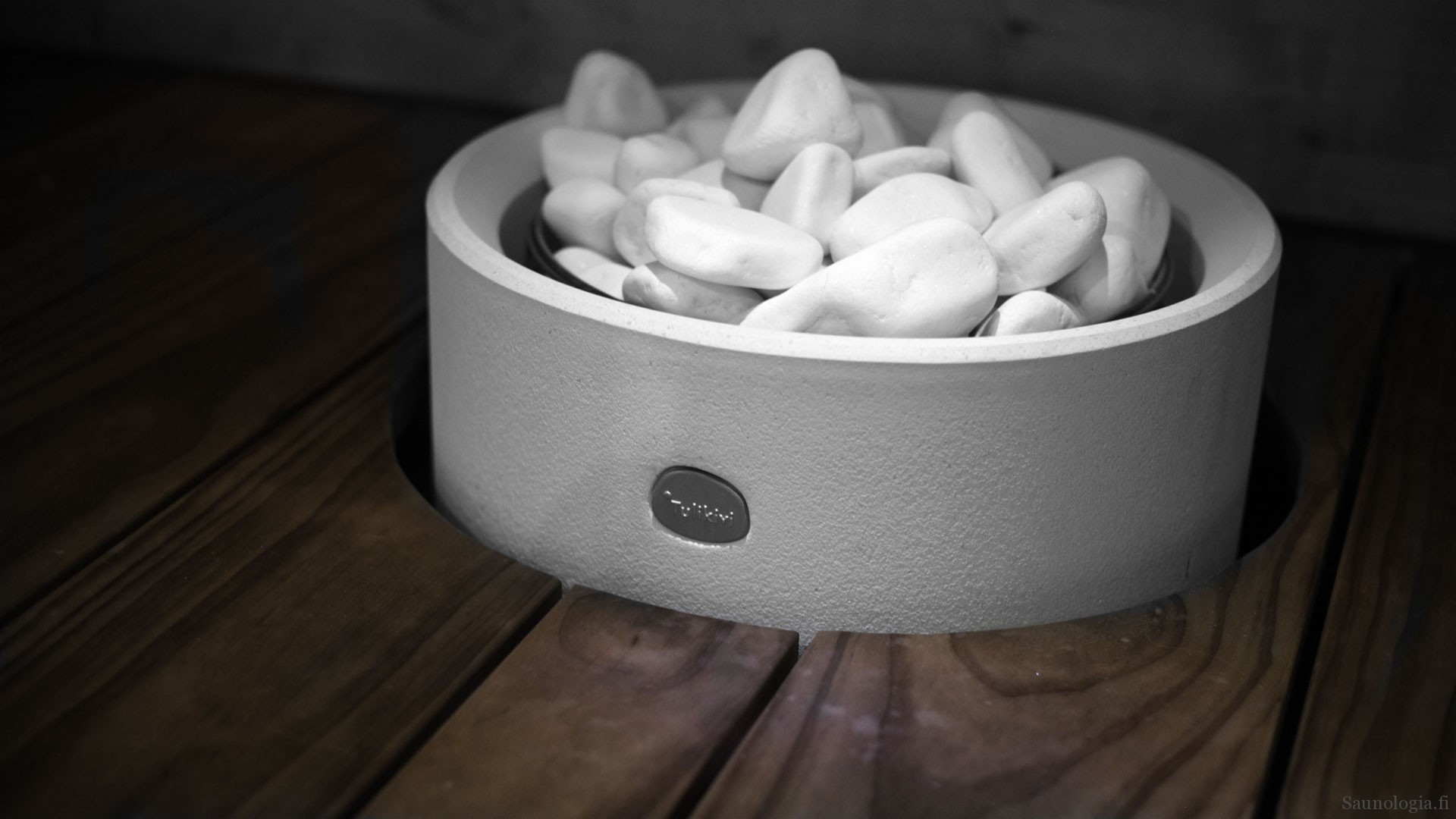
There are a number of stone types on the market, and their prices vary, starting from about 50 cents per kilogram. Sauna stones are relatively inexpensive. The most expensive are specially manufactured ceramic, heat-treated, and volcanic stones. Soapstone and white sauna stones are also more expensive, although both are suitable only as top stones or decorative stones to be used on the surface of the heater.
Step 1: Empty and clean the heater
Before you start, wear durable protective gloves that will not leave fibers or plastic residue on the heater or the new stones. Electric heaters often have sharp sheet-metal edges, and chipped stones can be sharp. Also, make sure that the heater cannot be switched on accidentally during the operation. The safest way to ensure this is to disconnect the fuse or breaker for the duration of the work.
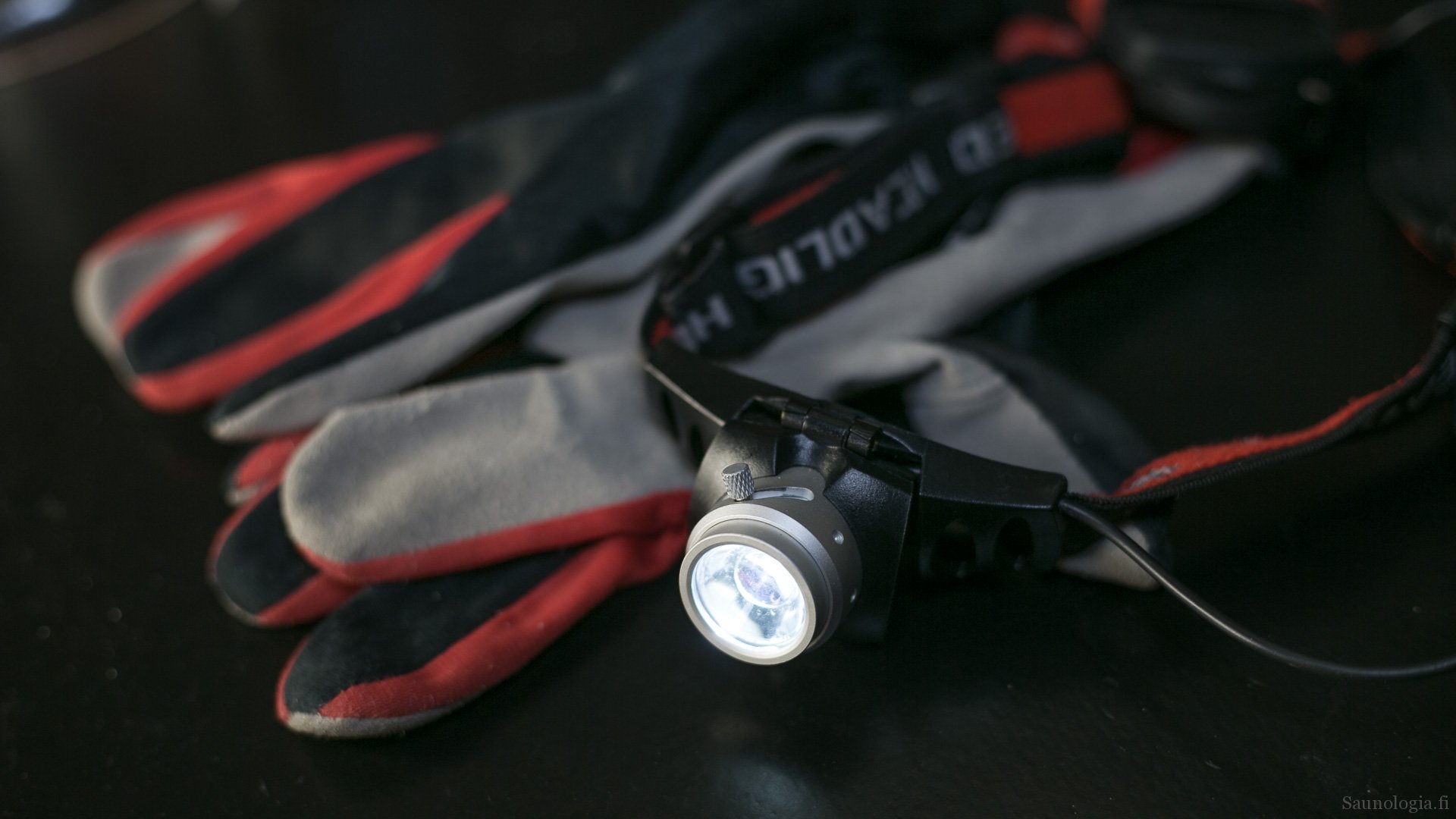
Empty the old stones into buckets, a wheelbarrow, or another container sturdy enough to carry the weight. Use a headlamp or flashlight and inspect the heater carefully to remove any broken fragments from the old stones.
The heater does not necessarily need to be vacuumed, but stone dust should be removed by brushing or by whatever method works best. Otherwise, it will end up on the floor sooner or later.
It is also worth cleaning the floor beneath the heater once the stones have been removed. At that point, the heater can often be lifted slightly if possible.
What should I do with the old sauna stones?
Sauna stones are not hazardous waste. They can be used to decorate a flower bed or roadside edge. In small quantities they can also be disposed of with regular waste, but I recommend returning them to nature.
Step 2: Rinse the new stones
Sauna stones are washed several times before packaging, so washing them is not absolutely necessary. In any case, dust will continue to come off the stones during use.
On the other hand, the stones rub against each other during transport and dust remains on their surface. This can be removed simply by quickly rinsing each stone in water. Do not leave ceramic stones in water for too long, however, because they absorb moisture.
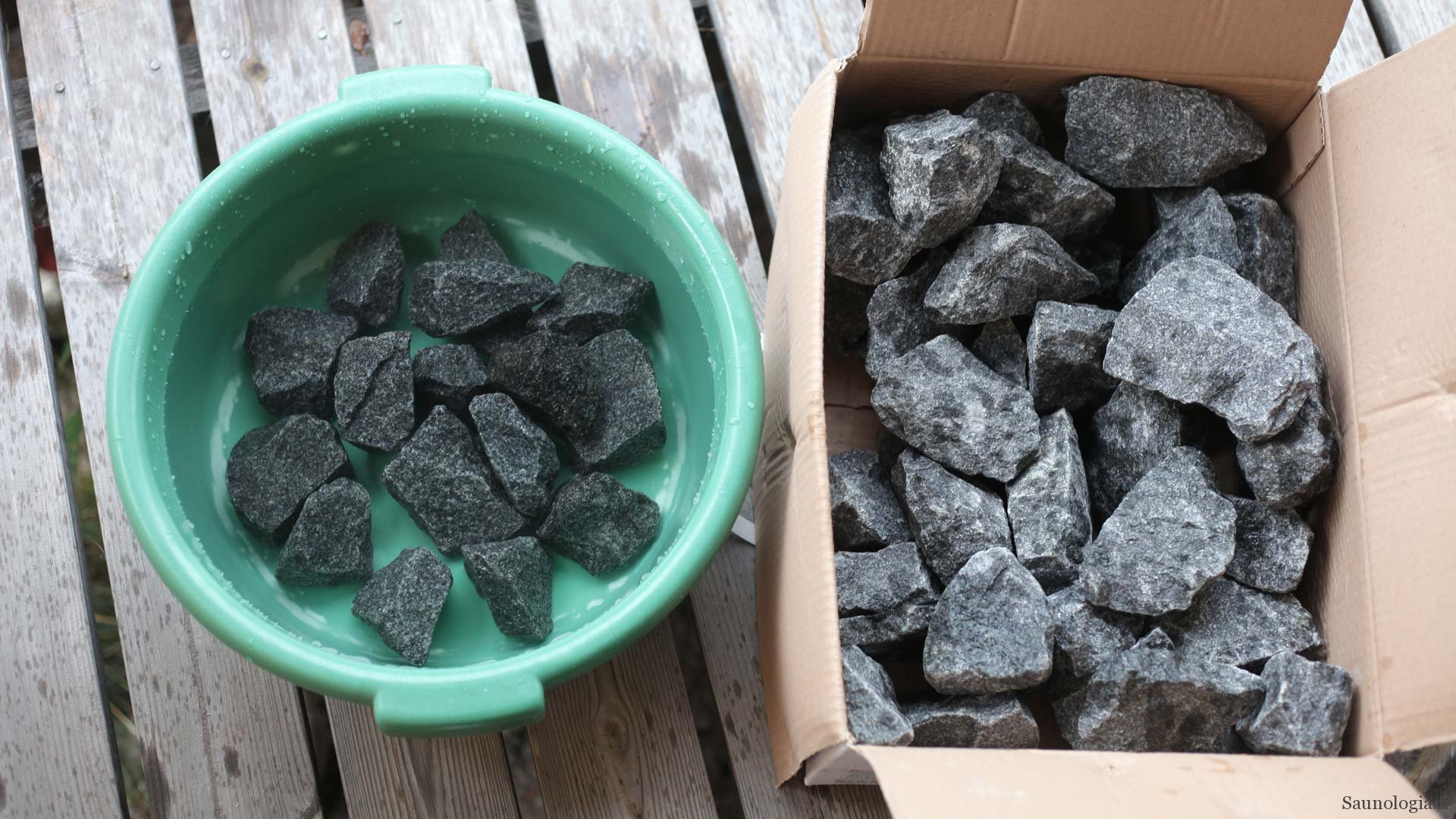
At this point I usually sort the stones into piles of different sizes. In a batch of 5 to 10 cm stones (2 to 4 in), the trained eye of a saunologist will usually spot at least three different size groups.

Step 3: Stacking the stones in an electric sauna heater
At the end of replacing or inspecting the stones, the stones are placed back into the heater. It is worth using a headlamp and gloves during this step as well.
If the heater has special structures or accessories, such as a water tank (Veto or Helo) or a Kastee system, consult the manufacturer’s instructions for how they are installed and how they affect stacking.
There are two rules for stacking:
- Do not wedge the heating elements
- Place elongated stones upright
Stacking stones in an electric heater is done on the heating elements’ terms. The heating elements are the stone-heating electrical components that look like thick wires. The stones are packed snugly between the elements, but not so tightly that they wedge the elements in place. Sharp edges on the stones can damage the elements when heated.
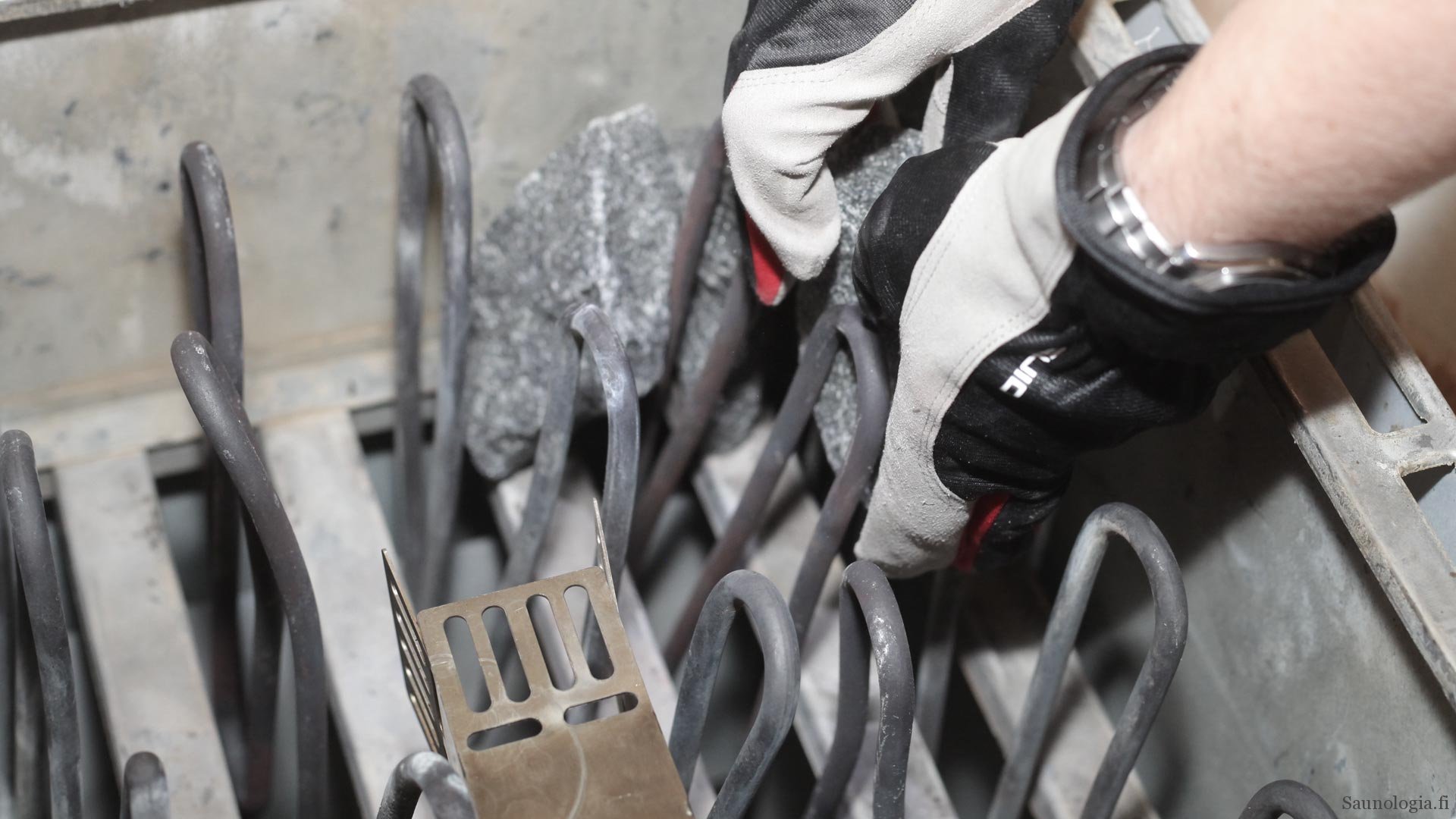
In small heaters, the spaces between the elements can be tight. Select stones so that they fit into place without forcing the element to bend strongly in the opposite direction. This is one reason it is good to have enough stones. It is also best to stack the stones evenly, one full layer at a time, so that all the gaps remain about the same size.
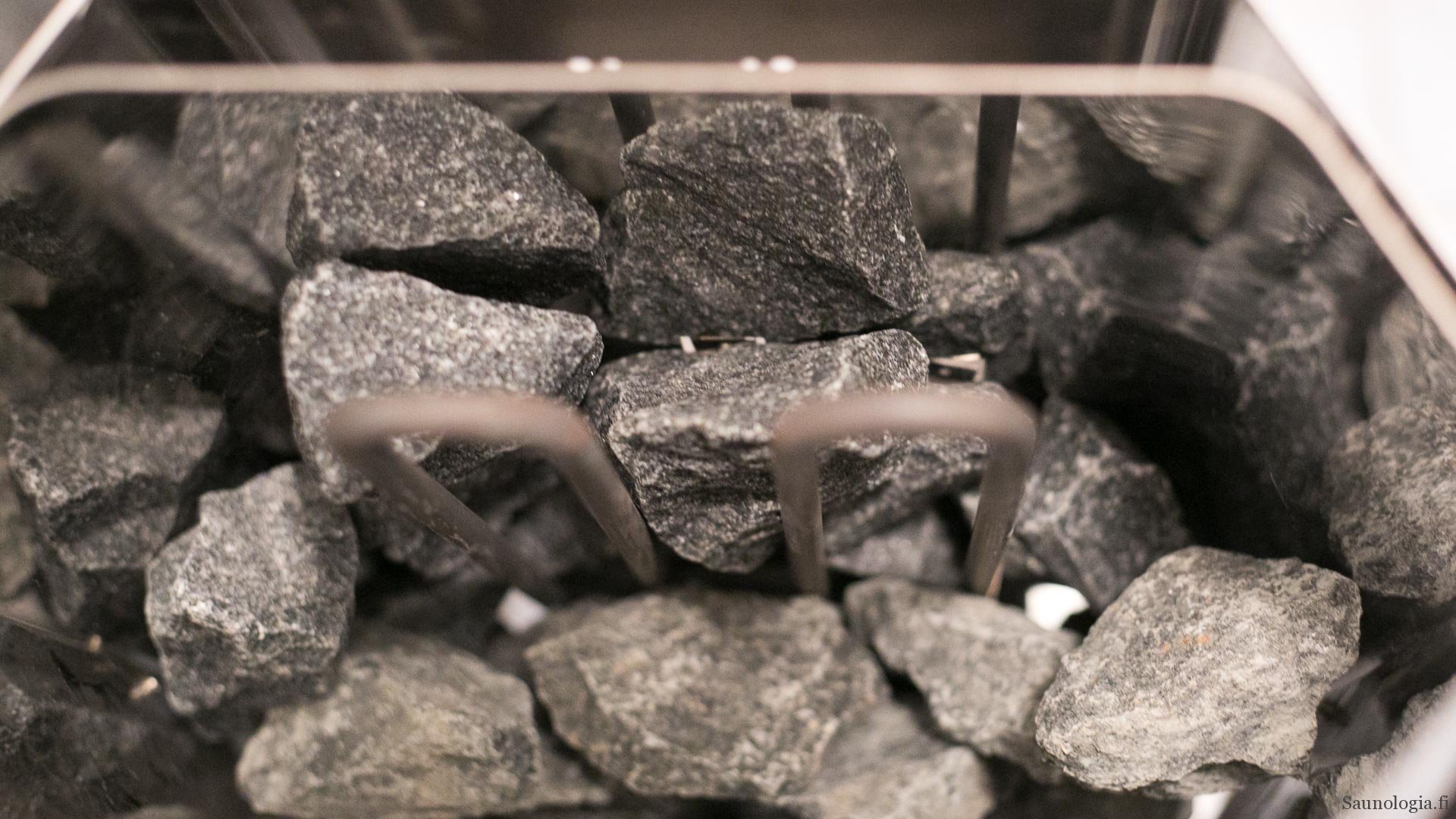
Split natural stones are usually elongated. The sauna stone size marking (5 to 10, 10 to 15, 15+ cm / 2 to 4, 4 to 6, 6+ in) refers more to the mesh size of the stone sieve than to the actual length of the stones.
Elongated stones should preferably be placed upright. This leaves as much vertical air space as possible between the stones, allowing the hot air from the heating elements to rise upward without obstruction. With this kind of stacking, the heater and the sauna will heat up as quickly as possible.
If you place elongated stones flat, airflow will inevitably be reduced.
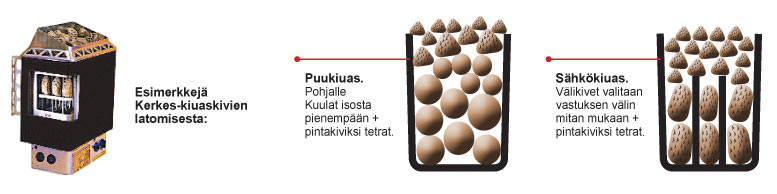
Continue stacking according to these instructions until the heating elements are hidden. Above the elements, you can still place top stones or the same inner stones used in the lower layers. Do not build a large mound above the surface, because the farther away the stones are from the heating elements, the less effectively they heat up, unless you specifically want to soften the löyly.
Finally, clean up the mess in the sauna.
Step 4: Ready!
At this point, there is usually a strong urge to test what kind of löyly the new stones will give. Natural stones do, however, produce a fairly strong smell during the first few heatings. I recommend preheating the heater in advance so that you can throw a few rounds of löyly and ventilate the sauna before actually bathing in it, so you do not need to wonder how healthy the fumes are.
Enjoy the löyly with your new stones! You will most likely notice that the sauna heats up faster than before. If you changed the stone type, the character of the löyly may also be different.
Thanks to Pekka Paasonen for his diligent comments on the article!
Read also these articles about sauna stones:
| Read also other sauna stone related articles (in Finnish, sorry) from the Saunologia sauna blog: |
|---|
This article is a fresh translation of one of the most loved Finnish Saunologia posts of all time!
About Us
Saunologia is the provider of premium Finnish sauna design services for clients worldwide through FinnishSaunaDesign.fi. Led by Dr. Lassi A. Liikkanen, our work combines authentic Finnish sauna expertise, modern design thinking, and technical know-how to create exceptional sauna experiences for homes, hospitality projects, and wellness destinations. From concept design to expert guidance, we help bring world-class sauna ideas to life with credibility rooted in Finland.
Learn more at FinnishSaunaDesign.fi