



A New European Sauna Standard is Here and It’s Both Promising and Flawed
For a long time, there were no widely applicable standards about saunas in Europe. Since February 2026, things have changed as a standard called EN 18164 “Wellness facilities for public use – Climated rooms – Requirements” was released. It will be applicable across the European countries by the end of the year. In this article, I describe and analyze the new standard and its implications for Finnish sauna design and utilization from both a Finnish and a global perspective.
How did the standard emerge?
Before the new standard, there were only two notable, widely recognized sauna-related standards in existence. These were the international electric sauna heater standard (IEC 60355-2-53), which was also adopted by UL in 2025 as the basis for a new American standard. The other was the European wood-burning heater standard (EN 16510-2-10) that was updated last year and is coming into full effect by February 2027. So, there was clearly a sauna-wide gap in the standards.
Preparing the new standard began in 2018, recalls Austrian Peter Jeitler, a participant in the working group responsible for the release. Besides Austria, Sweden, Germany, Spain, Italy, and the UK were represented in the group during the years of preparation. They were delegated by the national standard institutes. Participation in CENELEC work requires a financial commitment from members, and the only Finnish participant in the group withdrew as the participation costs increased.
The history of sauna regulations in Central Europe dates back many decades. According to Peter, there has been a hygiene law for public baths (including saunas) since 1976, and a national standard for saunas in Austria since 1984. In Germany, there are guidelines since 1972 that are taken seriously in the industry. In developing the new standard, it was therefore possible to draw on the practical experience of the two localities. Both sources are cited in the new standard’s references
Both sources are cited in the new standard’s references.
What does the wellness facilities standard contain?
The new European Standard EN 18164 has an obscure name, referring “Climated rooms.” The rooms we are talking about are all warm, even hot, not cold. The plural indicates that besides saunas, the standard acknowledges three other types of rooms: steam room, warm-air room (akin to Roman tepidarium), and a soft steam room (original spelling, not soft-steam with a dash). Each room has its own technical classification, with the main difference based on climate conditions: temperature and humidity.
I have created the following graph to help relate the different types of rooms to each other by visualizing climate zones covered by each. Besides climate, the room requirements can also be described by other details, such as the floor, doors and windows, interior, lights, ventilation, and heating control. For example, 65% of a sauna room’s walls and ceilings must be covered by wood.

How sauna is defined in the European standard
The section 4.1 of EN 18164 gives a clear definition of sauna.
“The sauna room is made of timber with ascending stepped benches and with a room climate of 80°C to 105°C and a relative humidity of < 10 % measured 1 m above the top bench, which is set by a stone-filled heater.”
If the room cannot achieve these specifications, it would not be classified as a sauna.
That’s bit of a monster clause that pulls together most of the significant sauna room properties. It goes further by mentioning the option for löyly (sauna infusion in particular) and that the room should heat up in under 60 minutes. For copyright reasons, I don’t quote the standard further as it is a short, copyrighted volume, and I do not want to push the limits of fair use and encourage readers to acquire it themselves as Saunologia has done.
Other important, sauna relevant points in the standard
The standard points out other key aspects of sauna. To me, the most advanced is the ventilation specification that states that a sauna must have at least five air exchanges per hour OR be regulated by a CO2-sensitive system that keeps the CO2 under a specific threshold. Use of heat recovery is implied.
Wooden structures, like benches, must never be in contact with the floor. The minimum gap is 20 mm. One must be able to remove the benches. All of these facilitate maintenance. All surfaces that have temperatures under 55°C, special care must be taken to avoid microbiological growth. This is in good accordance with Finnish practice.
Sauna door must always open outwards unobstructed by any locking mechanism. This is an important feature I discussed in association with a recent Tokyo sauna tragedy. There is a recommendation, not a requirement, about an emergency call system, which would also have been valuable in the Tokyo case.
There are minimum insulation requirements for sauna construction. These are modest, but at least something. Stud wall insulation should have at least 45 mm of mineral wool thickness equivalent insulation, and a solid log wall should be at least 60 mm.
There are more details about the sauna available, but these are the crucial ones.

Sauna standard overview by AI ( Gemini Pro 3) based on this article as input. Consider the image as illustrative and refer to the details in the text.
What the standard gets right about saunas
The new release has addressed many crucial aspects of sauna construction, critical to achieving the Finnish-style sauna experience. For the most part, it has achieved very good balance in being enough but not too specific in its definitions, especially for sauna and steam rooms. The definition aligns well with the ISA sauna definition, giving it further credibility.
I believe this can be helpful going forward in the world where many sales and marketing people try to benefit by selling infrared and steam technologies as saunas. Some actual sauna technology companies have also erred, but I hope the established nomenclature will convince all domain players to stick to common labels in the future.
For a decade now, I’ve been actively championing air quality as a key design component in saunas. I am very pleased to see the standard to include specific ventilation requirements, which is definitely not a self-evident feature given the state of ventilation globally, and even in continental Europ.
What the standard misses about the Finnish sauna
I have some issues with the standard. The first concerns the extremely narrow climate zone in the sauna definition. This does not depict the Finnish sauna we attend here in Finland. Most Finnish people do not have their sauna in the temperature of over 80°C, which has long been how other Europeans think of us. I admit that we Finns are to blame for that because many of our vocal sauna proponents have been repeating this claim for decades, most notably including the International Sauna Association, whose definition references the same exact temperature range. The consequence is that here in Finland, we will have much more ”climated spaces” that the Finnish people would recognize as saunas, but that would not meet the standard criteria because they are too cold or don’t have enough wood cladding.

The temperature range is debatable by both historical and contemporary Finnish sauna records. In the associated graph depicting a unique 1940’s smoke sauna study by Aino Keränen, we can tell that back in the days, the average temperatures during bathing (”Keskivaiheen aikana”) averaged below 80°C. In the very famous epidemiological studies by Professor Jari Laukkanen’s research group, the thousands of KIHD database participants reported average sauna temperature of 76°C.

The temperature disagreement also touches humidity limits. For saunas, they are fine. But the sauna-looking spaces are not saunas anymore are a problem. In my interpretation of the standard, it is ambiguous whether the rooms are warm-air rooms or soft steam rooms, I think neither.
I particularly dislike the all-encompassing soft steam room definition that can by climate alone include extremely variable conditions, including ones that are uninhabitable for humans (say, 70°C at 90 % RH). Even the warm air room can be quite humid, to a level impossible without infusion or mechanical steam generation. I think the standard would have been clearer without the “soft steam room” altogether.
The second issue is that the heating time requirement will be difficult for some heater manufacturers to digest. This invalidates the use of heaters with a notable stone mass compared to heating power, as they are not designed to reach 80°C temperature within an hour, Instead these models are usually operating at a lower temperature and give more steam. The same conundrum is familiar from the wood-burning heaters’ CE certification test but will now harass electric heaters as well.
The third blind spot in the standard concerns accessibility and thermal comfort. Given that the EU (which most CEN countries are part of) is committed to the equality and inclusion agenda, it is a bit surprising to see hardly any points on “universal design or accessibility” in the standard. Although I expect most participating countries have basic accessibility requirements for public spaces in place, I am disappointed that the standard does not require, or even imply, more inclusive design for thermal comfort.
What I mean is that many “climated rooms” may be physically accessible, but the thermal experience might be lacking if you can’t normally access the space. There are technical ways to work around this limitation, for example, air circulation solutions and mechanized sauna benches that could have been suggested for accessible saunas and soft steam rooms.
Some requirements may turn out too vague. Although I highly appreciate the inclusion of ventilation demands, I have long argued that the ventilation rate alone is an inadequate measure of air quality. A carbon dioxide concentration is a much better goal, and I would have preferred that the standard start from the CO2 and then suggest a flow requirement that could produce it. It is more important to control CO2 than produce a certain ventilation volume.

How about quality differences among saunas?
One sauna-specific shortcoming is the minimal treatment of sauna’s capacity for löyly (i.e., steam by infusion). Although stones of non-specific character are mentioned (leaving open whether “artificial stones” are stones or not), the sauna specifications would not guarantee that an adequate quantity or quality of steam can be extracted.
Then finally, it seems obvious that the standard, while pointing out a large range of technically qualified saunas, does not address quality differences: there is room for good and bad saunas. When I talk about “good saunas” (or desirable saunas in the graph above), I am referring to behavioral and subjective measures that could indicate quality differences: have users enjoyed the saunas and will they return to them. These are absent from the standard.
An obvious way to objectively address quality differences is to use a measure of thermal comfort, such as a 20°C temperature difference between the standard measurement point and the bench level below the top bench.
So, in Saunologia design work, we aim to “exceed” the standard requirements in our sauna designs, or, at least orient towards the best saunas afforded within the definition.
Reflection: What does the standard signify for the sauna industry and sauna fans?
The presence of the first standard sauna definition adds credibility to the entire sauna industry. Although we are neither talking about an international standard nor a perfect one, this should at least bolster uniform sauna applications in Europe as never before.
On the other hand, there are no requirements for any player in the sauna industry to follow the standard. The consequence is for the countries, such as Germany and Austria, in which their existing national standards will now have a European counterpart. According to Peter Jeitler, this does not mean that national guidelines go to waste, but rather there is for now a level of regulation.
One important note is that this standard targets only public sauna facilities. What counts as public is described broadly, so, for example, in Finland, housing co-ops, saunas shared by multiple facilities inside an apartment building, are considered public. Private saunas are not in scope. Importantly, the standard says hardly anything about sauna use, which is good. As I see it, a sauna that can perform as a sauna per the standard, but is used at a lower temperature, still qualifies as a EN 18164 Sauna room.
Let me know what you think by commenting on this article below!
Want to make sure your sauna is EN 18164 compliant?
Saunologia can design you a sauna matching EN 18164 requirements any day, or do an unofficial review to check whether your sauna meets the standard requirements. Get in touch over email!
More information and purchases:
Acknowledgements:
I wish to thank Peter Jaitle for the interview and Risto Elomaa for the general information about the standard preparation.
The featured image was created using ChatGPT 5.4 Pro.


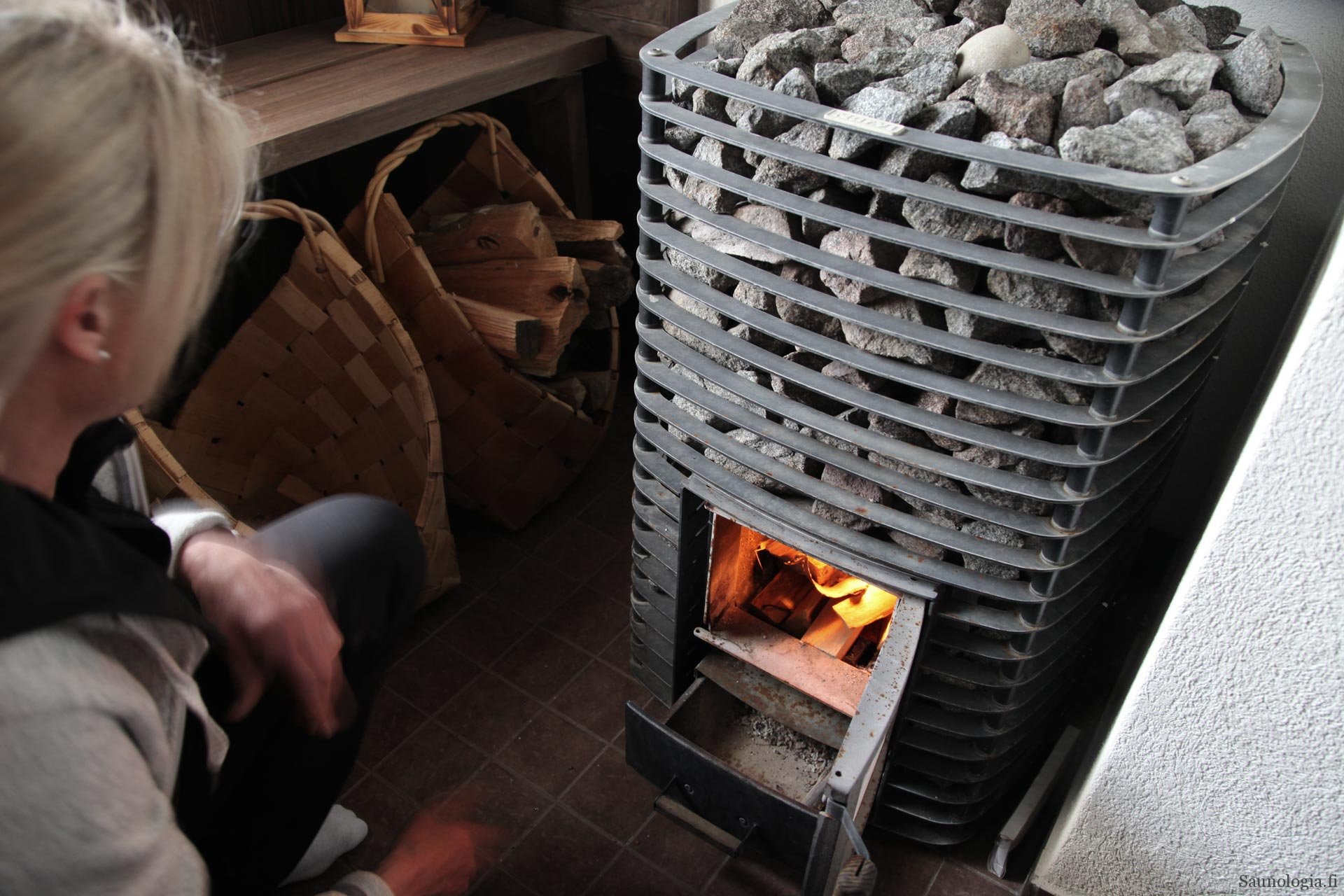

Ilman pitää vaihtua aika paljon. Mä olen vähän muuttamassa mieltäni korkean hyötysuhteen kiukaista, koska ne vaihtaa saunan ilmaa paljon vähemmän. Ainakin oma Misa imee reilusti enemmän ilmaa, kun kanavasta ottaa ilmanohjaimen pois tekemästä turbulensseja. Koska veto kasvaa niin korvausilman määrä kasvaa ja sitä pitää lämmittää suuremmalla teholla eli vaihtuvan ilman määrä on hieman suurempi kuin pelkän hyötysuhteen muutoksesta voisi päätellä. ChatGPT laskeskeli, että tässä saattaisi olla jotain perää, mutta en nyt ihan vielä ole täysin varma. Mitä tuumaat?
Tulin jossani määrin samaan tulokseen testatessani HUUM Hive Flow Mini kiuasta Test HUUM HIVE Flow – A fiery heater revolution.
ISY:n tutkimusten perusteella tyypillinen ilmamäärä on vajaa 10 m3 per 1 kg kuivaa puuta. Jos hyötysuhde nousee, niin IV supistuu.