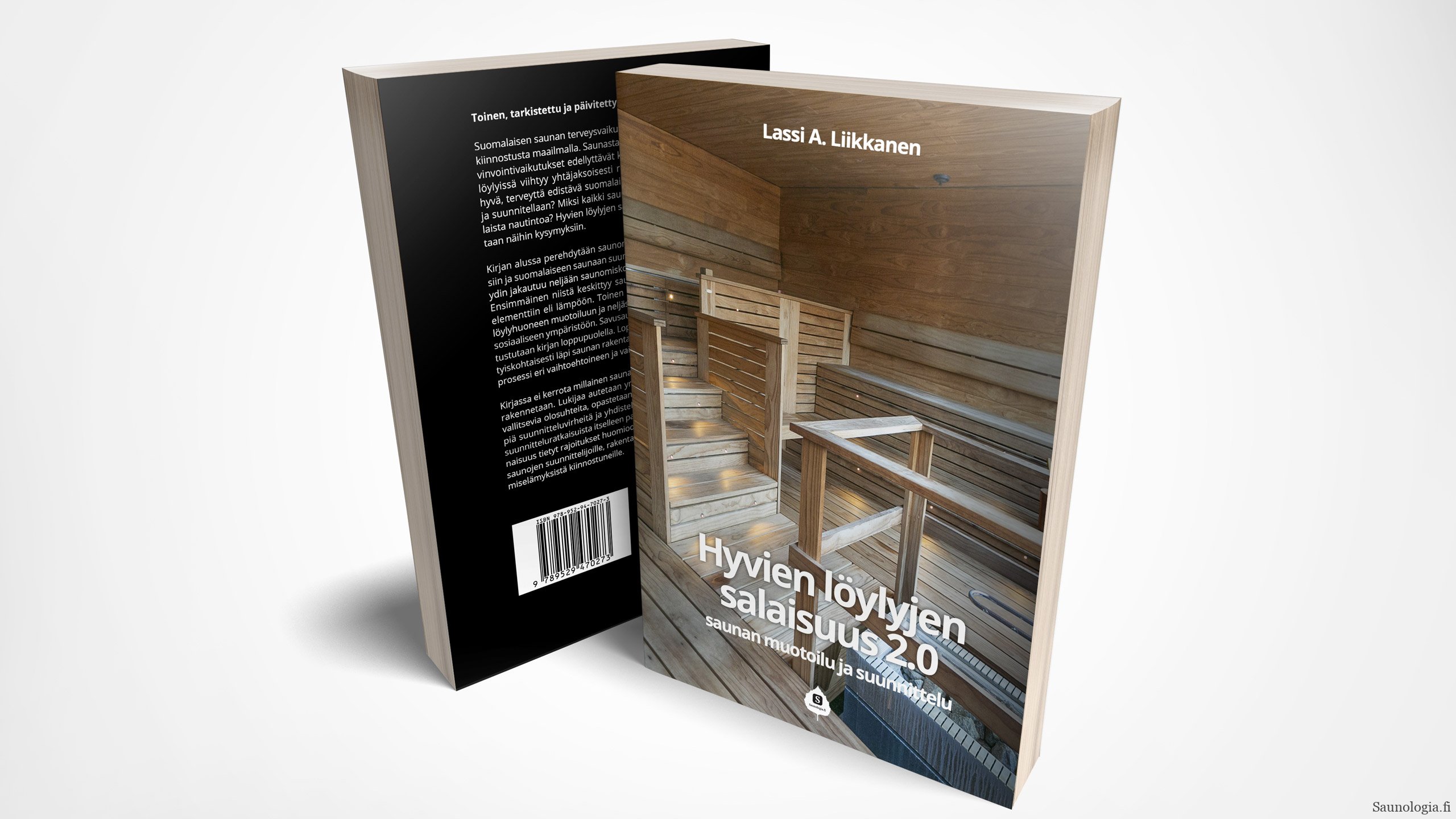




Comparison: Electric heater ventilation recommendations from manufacturers
Good ventilation design is a key to a great sauna, but can a customer trust recommendations provided by sauna heater manufacturers? Saunologia compared six well-known heater brands from the North American market for their ventilation guidelines. The review of user manuals demonstrated that the manufacturers provide usually sound advice but tend to provide so compact instructions that users may have trouble adapting the instructions to their own circumstances. Also, some brands left out critical information that can considerably reduce the usefulness of the provided information requiring the users to consult external sources or even use the equipment against explicit instructions.
Summary in Finnish / Suomenkielinen tiivistelmä
Saunologia vertaili kuuden Pohjois-Amerikan markkinoille suunnatun kiukaan ilmanvaihto-ohjeita. Havaittiin, että ohjeet ovat yleensä päteviä, mutta usein niin tiiviitä tai puutteellisia, että soveltaminen vaihteleviin tapauksiin voi olla vaikeaa. Vaikka useimmat valmistajat suosittelevat luonnollista ilmanvaihtoa ja ristivetoa, eli matalaa tuloilma-aukkoa kiukaan takana ja korkeaa poistoilma-aukkoa vastakkaisella seinällä, joissakin ohjeissa on merkittäviä puutteita, kuten ilmanvaihtomenetelmän (mekaaninen vs. luonnollinen) epäselvyys. Harvian ja HUUMin ohjeet olivat parhaat, kun taas Homecraftin ohjeet saivat heikoimman arvosanan.
Background
The sauna heater is a key component to the function of a sauna and the electric heater is a common heating solution. Even though we Finns tend to see it as a stand-alone device, the heater does have to fit in the sauna room in several ways, including the power rating, safety distances, and appropriate height.
Heater manufacturers have realized this and tend to take the creation of heater manuals quite seriously, giving out advice on how to construct the room. In fact, they might require that the user installs the heater and configures the room in a certain way not to void the warranty.
As the success of ventilation is the second most important part in the bigger picture of a well-functioning sauna, this article focuses on ventilation recommendations from manufacturers which tend to set expectations for individual customers.
In the US, ventilation requirements are further complicated by the existence of UL 875 heater standard that deviates from the international standard equivalent. It includes two relevant sections. First, most compliant heaters include an internal temperature safety switch that provides an extra security to the 194°F (90°C) upper limit. Second, the standard refers to UL 875 sauna units for which a clear natural ventilation requirement is set. Some manufacturers, such as Tylo who provide both heaters and sauna kits, have adopted this as is. Although UL 875 was in June 2025 set to be replaced by UL 60335-2-53 that brings the UL standard much closer to the international one, nobody expects the heaters to change overnight.
How the comparison was made
I choose six well recognized brands for the comparison and picked one appr. 6 kW product from each. Although I was interested in heaters from the US market, ironically the heaters are all exports, two Finnish (Harvia and IKI), two Estonian (HUUM and Saunum), one Swedish (Tylo), and one Canadian (Homecraft). Although there are some US-only brands out there, they are not made in the US as far as I know and have not gained huge prominence so far.
The comparison was solely based on the manufacturers’ installation or user manuals (PDF files) that were downloaded from the respective websites. I extracted both verbal instructions and illustrations of the sauna room setup from the manuals. I discarded the idea of interviewing brands in order to get a realistic view of how a random consumer might get informed.
Findings
All heater brands support a natural sauna ventilation. Most manufacturers also have a clear and surprisingly consistent suggestion for the airflow, expressed as the number of room air exchanges in an hour. All brands make recommendations for the placement of vents, which follow the pattern of UL 875, producing what I call the cross-ventilation. This means a low intake behind the heater and high exhaust vent on the opposite wall. Most brands also illustrate and provide sizing information.
The combined summary of all manuals is found within the following comparison table.
|
Harvia KIP |
Homecraft Revive |
Huum Drop |
IKI Pillar |
Saunum AIR |
Tylo Sense Sport | |
|
Document Year |
2024 |
2024 |
2025 |
2022 |
2024 |
2022 |
|
Natural |
✓ |
✓ |
✓ |
✓ |
? |
✓ |
|
Mechanical |
✓ |
✓ |
✓ |
? | ||
|
Flow |
6 x / h |
6 x / h |
5 x /h |
≥ 6 x / h |
6 x / h | |
|
Placement |
✓ |
✓ |
✓ |
✓ |
✓ |
✓ |
|
Sizing |
✓ |
✓ |
✓ |
✓ |
✓ | |
|
Illustrated |
✓ |
✓ |
✓ |
✓ | ||
|
Serious flaws |
✓ |
✓ |
✓ | |||
|
Ventilation Guidance Rating |
4/5 |
1/5 |
4/5 |
3/5 |
3/5 |
3/5 |
As an interesting example of ventilation specifications, Tylo follows UL 875 requirement to the letter with the following formula for vent area, in which (V) vent area is based on ® room area:
For R< 31, V ≥ 9 .3
For R ≥ 31, V ≥ 0.3*R
R = the floor area of the room in square feet, V = the minimum vent size in square inches
The reference material was of variable age, but all manuals had been produced within the past three years. As the production and printing of multi-language manuals is laborious, it seems understandable that manuals are only updated when the product changes.
Illustrations of ventilation are generally useful and correct. The best example is from Harvia, which is very information dense presentation that still provides all information.

However, both IKI and Saunum fail to specify the exact nature of the ventilation which can be confusing. IKI displays two supply air options but seemingly only the exhaust vent is fan operated. If so, this would be a hybrid solution and one that would not work too well because the high supply vent requires a fan too or else the cool air won’t just overcome the natural pressure of hot air pushing outwards.

Saunum instructions are otherwise clear, but they forget to make a distinction between mechanical and natural ventilation. Saunum illustrations seem to be specifically for a fully mechanical system.

Discussion
Generally speaking heater manufacturers do a decent job in providing what I think reasonable suggestions for ventilation. I gave both Harvia and HUUM a score of 4 out 5 indicating they are good enough to inform most sauna builders. I think within the reasonable space that especially printed manuals can devote to the topic, a longer discussion about the general applicability of mechanical vs. natural ventilation is not expected.
I believe every electric heater manufacturer should make a clear distinction between (fully) mechanical and natural ventilation. I rated Homecraft with only a single point to due to its neglect of this issue as well as its general brevity, among many.

Beyond what these recommendations say, there are somewhat open questions to “common truth” behind all the suggestions I rated most highly. For instance, the desired flow rate (air changes per hour; ACH), is quite crude. While the target figure of six is well known from Finnish reference materials, it is only approximately accurate. The main goal for ventilation is the removal of human generated carbon dioxide from the room air, secondary excess humidity.
It follows that ventilation is only needed during bathing (and soon after) and its volume should be dependent on what happens in the sauna. The need will be greater if there six people rather than one. Because the ventilation is the biggest source of energy loss, optimization of ventilation, regardless of whether it is natural or mechanical, is a major factor for the sustainability of the sauna. I thus recommend considering the actual sauna usage especially in public sauna design.




Thanks for this helpful article. Do you think it is correct to consider externally-fed woodburning heaters as equivalent to electrical heaters for the purposes of ventilation? For example, they don’t draw any air for combustion from inside the sauna room. The source of heat is different of course, but functionally, in terms of ventilation, do they operate like an electric heater?
I’m planning an externally fed heater (fed from the changing room, not from the outside of the building) but it’s difficult to find trustworthy ventilation instructions, even from manufacturers. It often seems that they provide the same ventilation guidance for both internally and externally fed heaters, which surely cannot be correct.
Any advice?
I would say that’s pretty much correct. My recommendation would likely depend case by case, but generally that’s the way.
Not surprised by the manufacturers’ lack of guidance there